

The minimum wage puts Bangladeshi workers facing harsh choices: food or treatment?

The minimum wage puts Bangladeshi workers facing harsh choices: food or treatment?
The repercussions of the crisis continue Minimum wage In the clothing industry in Bangladesh, its effects extended from the factories that witnessed labor protests to the details of the daily lives of families. With the rising costs of food and housing, some workers find themselves facing tough choices between providing food, receiving treatment, and spending on their children’s education.
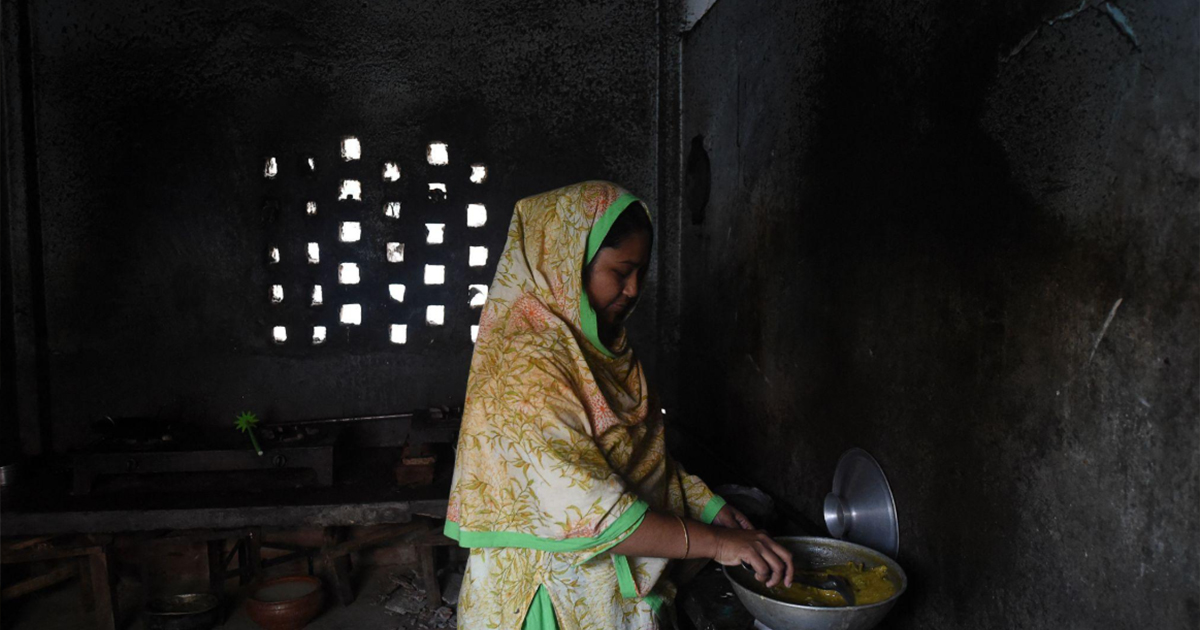
In the industrial city of Gazipur, near the capital, Dhaka, worker Shilpi Khatoon begins her day before dawn, preparing food on a clay stove that burns with wood, after her family became unable to afford the cost of gas. Then she heads to the clothing factory where she works, bearing the responsibility of supporting her unemployed husband, members of her family, and her husband’s family.
The story of the 27-year-old worker reveals a human side of the wage crisis taking place in Bangladesh, the second largest clothing exporting country in the world, where the gap is widening between the importance of the industry to the national economy and the ability of some of its workers to meet their basic needs.
Salary runs out before the end of the month
Shilpi Khatun has been working in the clothing industry for five years, during which her monthly salary rose from 9,000 taka to 13,500 taka, or about 108 dollars, and her income reaches approximately 16,000 taka when overtime hours are included.
Despite this increase, the worker confirms that her income is running out before the next salary is due, in light of the rise in rents, food prices, and other living expenses.

Khatun lives with her husband in a small room with a metal roof, and on some days her family is forced to make do with puffed rice, after the cost of regular meals has become a burden on her limited budget.
The impact of financial distress extends to health care; She says she has not seen a doctor in three years, despite suffering from worsening health problems.
These details reflect the difficulty of balancing basic needs when wage growth lags behind price increases, especially for families that depend on a single source of income.
Industry is booming and wages are under pressure
The ready-made garment industry represents a fundamental pillar of the Bangladeshi economy. It provides jobs for more than four million people, and contributes more than 80% of the country’s export revenues.
Lower labor costs have helped strengthen Bangladesh’s position as the world’s second-largest clothing exporter after China, and made it a manufacturing hub for international brands and companies, including H&M, Zara, Gap, Primark and Walmart.

But this commercial success comes amid increasing living pressures; Since 2022, the country has suffered a continuous rise in the costs of living, with average inflation recorded at nearly 9% during that period.
Food prices were among the most prominent drivers of inflation in the beginning, while the costs of other goods and services continued at high levels, increasing the burden on low-income families.
In contrast, factory owners warn that large wage increases could reduce Bangladesh’s competitive advantage over countries such as India and Vietnam, especially with rising energy costs and pressure on profit margins.
Manufacturers also point out that workers receive an annual increase of 9% and two bonuses on the occasion of the holidays, considering that their ability to bear additional large increases is limited, and thus the demands of improving income overlap with the challenges of maintaining the competitiveness of the industry and continuing job opportunities in it.
Will increasing the minimum wage end the crisis?
The new certificates came after a wave of protests in the garment industry in Bangladesh, during which workers demanded a raise Minimum wage From 12,500 taka per month to 30,000 taka, equivalent to about $243.
The unrest led to the suspension of hundreds of factories, and some areas witnessed confrontations between demonstrators and the police, who used tear gas and sound bombs to disperse the protesters.

And it was The Earth Guards Foundation It has been discussed in a previous report Minimum wage crisis in BangladeshThe protests that accompanied it caused 529 factories to stop and large numbers of workers were affected. The new certificates reveal another aspect of the crisis, which is the impact of the decline in purchasing power on families’ lives and basic needs.
In a new development, the Government Wage Board approved on… November 4, 2026 A revised wage structure will be implemented starting in December, with workers receiving their first salary under the new system in January 2027.
But the value of the increase has not yet been determined, which leaves questions about the ability of the expected amendments to reduce living burdens.
The importance of the decision depends on the amount of the actual increase, and its ability to keep pace with the costs of food, housing, and health care borne by working families.
When food and education become a difficult choice
in Ashulia region In the industrial area near Dhaka, Roxana Parveen, 29 years old, faces similar pressures, after living expenses began to limit what she could provide for her two daughters in terms of food and education.
Parveen works as a sewing machine operator in a factory, but she says that she has begun to think long before buying anything, even food.
The family relies for most of its meals on rice and vegetables, while meat and fish have become items that are difficult to purchase regularly.
The impact of the decline in purchasing power went beyond the dining table, after one of her two daughters was forced to leave school in order to reduce family expenses.

This experience reveals how an income crisis can turn into a series of living compromises, extending from reducing food diversity to postponing treatment and giving up some educational opportunities.
The seriousness of these choices becomes apparent when their effects extend to children, whose future opportunities may be affected by the economic conditions their parents face today.
What is the value of growth if it does not reach workers?
The aforementioned certificates raise a fundamental question for an industry that provides millions of jobs and generates a large share of export revenues: How is the success of an economic sector measured if some of its workers are forced to trade between food, treatment, and educating their children?
From this question you gain Target 8.5 of Goal 8 of the Sustainable Development Goals, on decent work and economic growth, of particular importance; It calls for achieving full and productive employment and decent work for all, and ensuring equal pay for work of equal value.

The crisis reveals that the quality of job opportunities is linked to the stability of living they provide, in addition to their role in supporting production and exports. It also highlights the importance of policies that balance the ability of enterprises to continue with the needs of workers and their families.
In this context, it gives visibility The Earth Guards Foundation Sustainable development is important for the relationship between economic progress and human quality of life. Growth becomes more impactful when its fruits are reflected in health, education, decent work, and support the ability of families to build a better future.
The crisis in Bangladesh re-examines the meaning of success in labor-intensive industries. Behind every piece of clothing exported to global markets, there stands a worker waiting for his wages to give him a measure of security and stability.
Between the factories that produce the world’s clothing, and the homes that struggle to provide their daily meals, the real challenge remains to transform the prosperity of industry into a more dignified life for those who create this prosperity with their own hands..


