

Producing solar energy in laboratories.. America funds nuclear fusion research with $8.5 million

Producing solar energy in laboratories.. America funds nuclear fusion research with $8.5 million
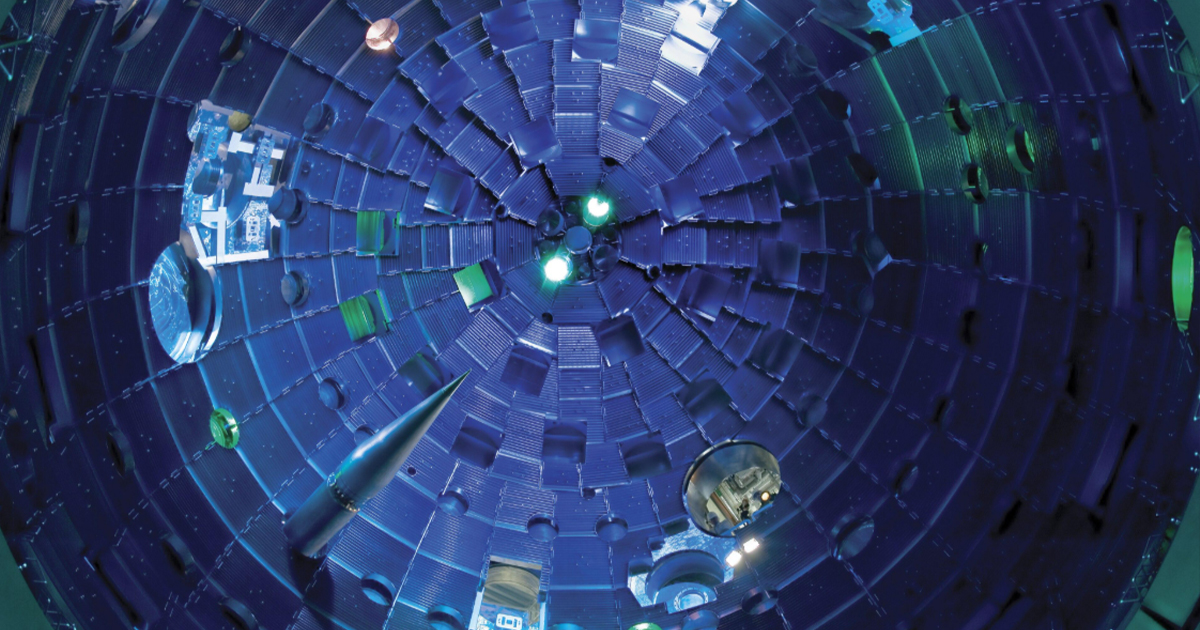
Inside scientific laboratories, researchers are trying to reproduce the reaction that gives the sun its energy, in hopes of turning it into a reliable source of electricity in the future. Between the extreme temperatures and complex engineering challenges, it remains… Nuclear fusion One of the most prominent areas that research seeks to develop to meet the world's growing energy needs.
In a new step to support these efforts, the US Department of Energy announced the allocation 8.5 One million dollars to fund 28 research projectsIt aims to address the scientific and technological obstacles that prevent achieving electricity production through nuclear fusion on a commercial scale.
Financing comes through Innovation Network for Fusion Energy (INFUSE) programme, Which brings together companies from national laboratories and American universities, in an attempt to accelerate the development of technologies needed for future power plants.
But the question that makes this investment important goes beyond the value of the funding: If the sun has been producing its energy from nuclear fusion for billions of years, what makes it so difficult to benefit from the same process on Earth?
How does nuclear fusion work?
The process of nuclear fusion depends on the union of two light atomic nuclei to form a heavier nucleus, with the release of some energy as a result of this reaction. It is the basic process that provides the sun and stars with energy.
Fusion differs from nuclear fission used in traditional nuclear plants, which relies on the splitting of heavy atomic nuclei to release energy.
To cause fusion on Earth, scientists need to provide extremely high temperatures that allow the formation of fusion PlasmaIt is a state of matter in which charged particles move under conditions different from those of ordinary gases.

Maintaining the reaction requires controlling this plasma and keeping it stable for appropriate periods, in addition to developing systems capable of dealing with the harsh conditions inside experimental reactors.
The attractiveness of this technology lies in its future potential to produce large quantities of low-carbon electricity during operation, if the scientific, engineering and economic obstacles it faces can be overcome.
Why is it difficult to convert the sun's energy into electricity?
Researchers can create fusion reactions in experimental facilities, but operating a plant that produces electricity reliably and commercially requires an integrated system of technologies.
And come Control of high-temperature plasma At the forefront of the challenges: Reaction conditions must be maintained and particle behavior controlled, allowing the process to continue without harming the reactor components.
The problem of the materials used in building these facilities also arises, which need to withstand high temperatures and complex operating conditions, while maintaining their efficiency during periods of use.

Measurement and diagnostic tools help researchers understand plasma behavior, while computer modeling and simulation allow designs to be tested and their performance predicted before moving on to more expensive experiments.
These aspects overlap with an important economic challenge; The success of the reaction in the laboratory represents a scientific step, while the commercial production of electricity requires stable performance and appropriate operating costs.
The importance of this research goes beyond laboratories, as it opens horizons for developing a new source of low-emission electricity. In this context, I discussed The Earth Guards Foundation In a previous report The potential of nuclear fusion energy in confronting the climate crisisAnd the challenges associated with transforming this scientific ambition into practical applications.
28 projects to overcome scientific obstacles
Chosen by the US Department of Energy 28 A research project Within the INFUSE programme, 22 private companies working in developing nuclear fusion technologies participated.
The projects are distributed among 17 Projects led by US national laboratories, and 11 projects led by universitiesEach project will receive funding ranging between $100,000 and $500,000 to support research that will last one or two years.
Areas of work include materials science, plasma diagnostics, and modeling and simulation, which aim to address issues that may delay the development of future fusion plants.
The selection process was supervised by a team that included: Oak Ridge National Laboratory, and the Princeton Plasma Physics Laboratory, and Lawrence Livermore National Laboratory, through competitive review of research proposals.
These partnerships give private companies the opportunity to benefit from specialized research facilities and scientific expertise available within national and university institutions, which helps develop and test solutions.
These efforts are consistent with the US Department of Energy's Scientific and Technological Fusion Roadmap, which sets priorities for addressing scientific and engineering obstacles to developing the technology.
Do partnerships bring the clean energy dream closer?
Developing nuclear fusion may seem like a challenge related to reactors, materials, and plasma, but its success also depends on how scientific efforts are organized and the resources necessary to transform research results into workable technologies are provided.
Can a startup company with a promising idea overcome challenges alone that require advanced laboratories, specialized expertise, and high-cost experiments?
Research partnerships provide part of the answer; It allows companies to benefit from the capabilities of scientific institutions, and gives researchers opportunities to direct their expertise towards problems facing industrial applications.

From this standpoint, you gain Target 9.5 of SDG 9, on industry, innovation and infrastructure, of particular importance; It calls for strengthening scientific research and technological capabilities and encouraging innovation.
American projects reflect this trend by combining government funding, academic expertise, and private sector capabilities, with the aim of accelerating the development of technology that could contribute to the diversification of electricity sources in the future.
Dario Gil, Undersecretary of the US Department of Energy for Science, emphasized that access to commercial fusion energy requires close cooperation between national laboratories, universities, and private capital, considering that overcoming scientific challenges brings the sector closer to new economic and industrial opportunities.
Financing 2027 opens a new phase
In conjunction with the announcement of the selected projects, the INFUSE program opened the door to apply for support during Fiscal year 2027, expanding eligibility for research alliances and adding a new category to evaluate preliminary concepts for experimental fusion plants.
These amendments aim to provide broader opportunities for cooperation between research bodies and companies, and to support the early stages of designing facilities that may pave the way for the development of commercial stations in the future.
The US Department of Energy clarified that selecting projects for support does not represent a final guarantee that funding will be disbursed; Grant negotiations must be completed, with the Ministry retaining the right to withdraw selections or terminate procedures.
These steps reveal that the path to electricity produced by nuclear fusion depends on accumulated progress in multiple scientific fields, and on the ability of institutions to transform the results of experiments into implementable engineering and economic solutions.
From this angle, the value of the innovation it calls for becomes clear The Earth Guards Foundation To direct its fruits to serve humanity and the environment; Scientific research gains its greatest impact when it contributes to developing practical solutions that meet the needs of societies and support a more sustainable future.
Between the energy that has illuminated the sun for billions of years, and the reactors that scientists seek to develop on Earth, the biggest challenge remains converting scientific knowledge into reliable and economically feasible electricity. Nuclear fusion energy may one day become part of the global energy future.


