


Fungi threaten the world... and artificial intelligence is investigating the matter
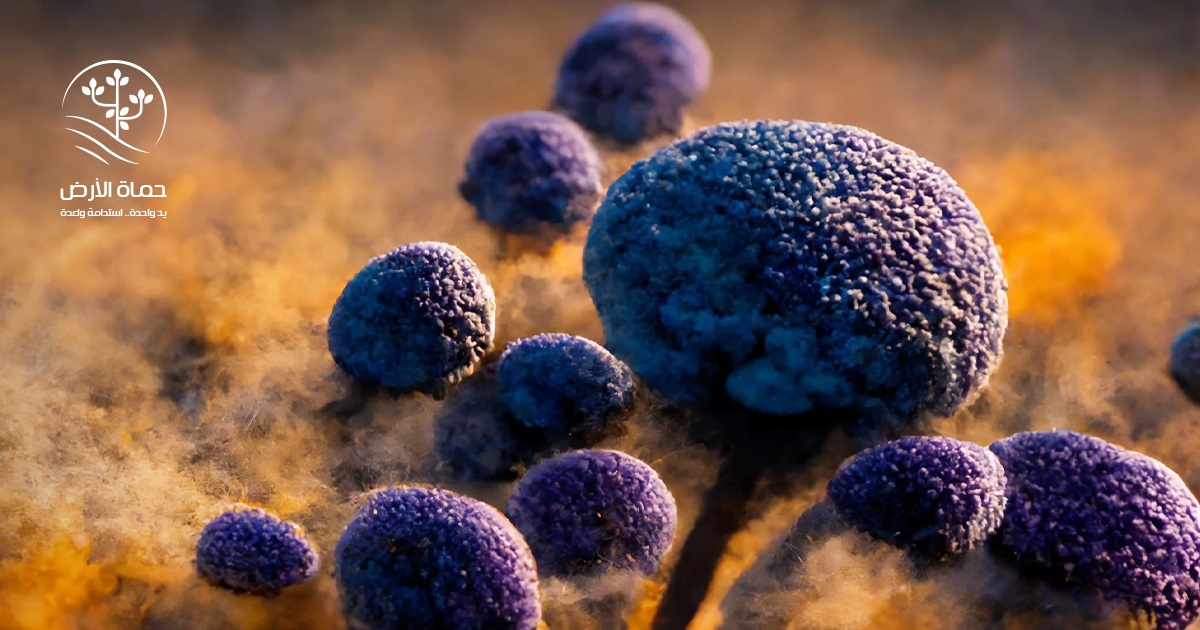

Fungals threaten the world... and artificial intelligence is investigating the matter
With the escalation in the pace of climate change that the planet Earth is witnessing, the negative effects on the environment and public health have worsened, and these effects have extended to include profound disturbances in biological systems, including fungi that directly affect the diversity of living organisms and their behavior. Which leads to an environmental imbalance.
Among these prominent effects caused by fungi is what a recent study revealed: It has been shown that three types of Aspergillus fungi have expanded geographically in an unprecedented way due to rising global temperatures. Which portends serious consequences that threaten human health and agricultural crops in large areas of the world.
In light of these disturbing results,Defenders of the Earthin this article sheds light on the details of this recent study, and reviews how artificial intelligence has contributed to revealing patterns of fungal spread, in addition to its potential role in building effective plans to protect humans and crops from environmental threats that were not taken into account. So keep reading.
Familiar fungi threaten global health and food
Fungals are microorganisms that surround us in our daily lives. They are found in the soil and air, and even inside our homes. Although most of these fungi are harmless, there are certain species that carry with them serious health and agricultural threats that cannot be ignored. These risks are exacerbated in light of climate changes that may reshape the environments for the spread of these fungi, as they expand geographically. Which increases the challenges of confronting its negative effects.

Among the most prominent of these harmful fungi are:Aspergillus fumigatus (Aspergillus fumigatus), which can kill those with weak immunity and cause fatal lung diseases. There are other types, such asAspergillus flavus (Aspergillus flavus), andAspergillus niger(Aspergillus niger); It is a fungus that attacks crops and produces carcinogenic mycotoxins. This causes global losses worth billions of dollars annually.
Hence a recent study published on the “Research Square” platform shows how climate change could redistribute these fungi on a broader geographical scale, as they are expected to spread in Europe, Asia, and North America. This places millions of people and agricultural crops in various regions under a direct threat, as estimates indicate that about two billion people currently live in areas that are an ideal environment for the proliferation of the fungus (Aspergillus flavus), and this requires urgent planning to confront this coming threat.

Reading the future with the help of algorithms
In an attempt to anticipate the future, scientists used detailed climate data and models based on artificial intelligence. To map the spread of the fungus in the coming decades, the result was shocking, as the study showed that if global warming continues at the same pace, many places in Europe, Russia, and North America will become a fertile environment for these deadly fungi.
One of the most pessimistic scenarios shows the demise of Aspergillus fumigatus from Africa and South America, and its sudden appearance in northern China, Russia, parts of Canada and the United States, meaning that the threat is moving from south to north, and with it new diseases and toxins in food.
Artificial intelligence predictions were not limited to drawing a map of fungi only, but also integrated maps of population density and global agricultural activities. These analyzes revealed a serious overlap between the areas expected to witness the flourishing of fungi, and the areas inhabited by humans or where major crops such as corn, rice, and wheat are grown. Which doubles the seriousness of this threat.
Food chains at risk
One of the most disturbing findings in the study is to reveal how these fungi will affect the future of global agriculture. For example, the fungus Aspergillus fumigatus is expected to disappear from Africa, with the possibility that it will appear in new areas that are not accustomed to dealing with it; Which threatens staple crops, such as corn in the United States and Eastern Europe.
Expectations also indicate a decrease in agricultural areas exposed to the fungus in some regions of the south, compared to its expansion in regions of the north, which may lead to disruptions in global food supply chains, and increase the risk of food contamination with mycotoxins, threatening global food security and raising prices
It is worth noting that the decline of fungi in certain areas does not necessarily mean the disappearance of the danger, but rather it redraws the map of risks in a way that is less expected and more difficult to deal with. Their emergence in new environments may confuse food control and safety systems, and open the doors to unprecedented health and nutritional challenges.
Call for urgent action
The scientists who conducted this study, led by Dr. Norman van Rijn of the University of Manchester, recommend urgent action; Fungi are not affected by antibiotics, their treatment is difficult, they cost health systems billions of dollars annually, and what is worse is that many species have become resistant to treatment.
In light of these renewed challenges,Earth Guardsemphasizes the importance of strengthening scientific and environmental efforts to deal with this threat, and calls for the construction of effective early warning systems, supported by specialized research and modern technologies; To ensure the protection of both human health and agricultural crops; Underestimating or ignoring these risks constitutes a direct threat to public health and hinders the achievement of sustainable development.


