South Korea records the highest temperatures in its history, with the heat wave reaching 42.5 degrees
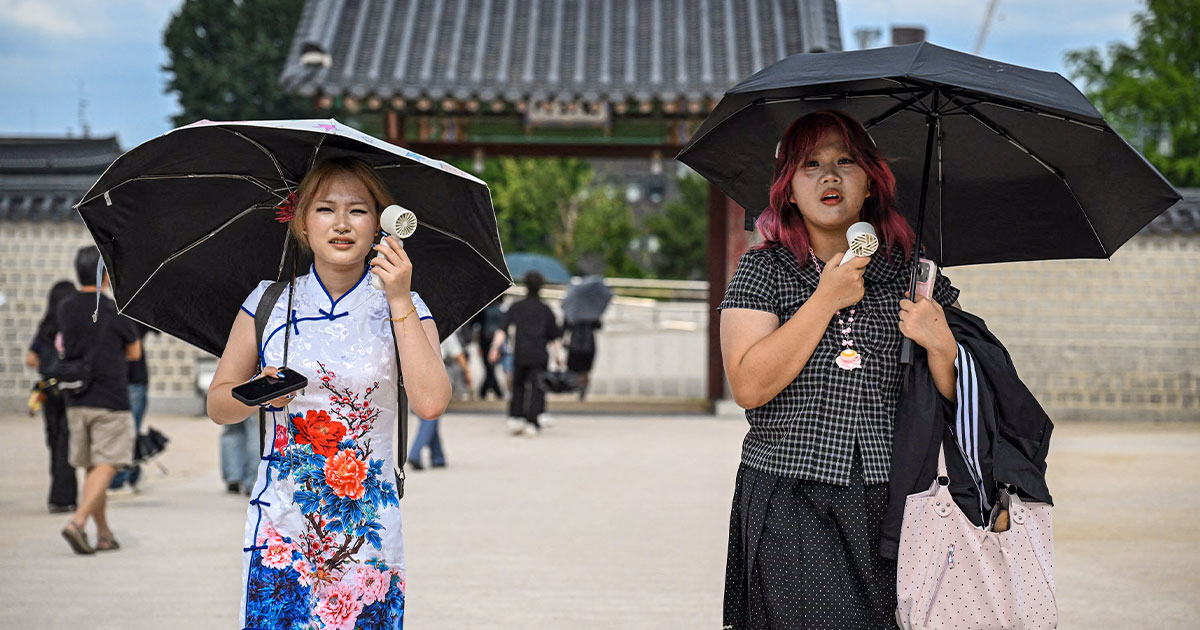
The heat wave in South Korea recorded a historic level after the temperature in the city of Yangsan in the southeast of the country reached 42.5 degrees Celsius, the highest reading since modern monitoring began in 1904. The authorities called on residents of the affected areas to stop outdoor activities immediately. Go to cooling centers or shaded places, amid warnings that the temperature will reach life-threatening levels.
The record came as temperatures remained above 40 degrees in Yangsan for the fifth day in a row, while other cities, including Daegu and Busan, approached the same levels. These developments reflect the transfer of intense heat from an atmospheric phenomenonSeasonality leads to a crisis that affects health, work, public services, and the ability of cities to protect their residents.
The heat wave records the highest degree in the country’s history
The Korea Meteorological Agency announced that the temperature in Yangsan reached 42.5 degrees on Sunday afternoon, exceeding all readings recorded in more than 120 years. The temperature in the city of Gyeongju also reached 40.3 degrees, the highest level the city has witnessed in eight years, while large areas recorded temperatures approaching forty.
The heat wave extended to large areas of the Korean Peninsula, with the temperature in the capital, Seoul, expected to reach 37 degrees, and to exceed 39 degrees in areas of South Jeolla and South Gyeongsang. The Meteorological Authority described these levels as extreme heat that poses direct dangers to the lives of residents.
Warnings to stop all outdoor activities
The authorities have placed more than 20 areas under heat-related emergency warnings, as part of a new warning category introduced by South Korea this year to combat rising temperatures. The warning is issued when the perceived temperature is expected to reach 38 degrees, or an actual temperature of 39 degrees is recorded during the day.
The Meteorological Authority called on residents to immediately stop outdoor activities, move to cool places, keep drinking water and get sufficient periods of rest. These instructions reflect the level of danger that the heat wave poses to workers, athletes, the elderly, children, and people with chronic diseases.
It is linked to the development of early warning systemsTarget d.3 of Sustainable Development Goal 3 on good health and well-being, which calls for strengthening countries’ capacities to manage health risks and respond to emergencies.
Non-air-conditioned buildings turn into dangerous areas
The Meteorological Authority expanded the scope of its warnings to include closed places not equipped with air conditioning, stressing that staying inside during these conditions represents a health risk. This message highlights the importance of cooling as an essential part of the general protection system during record heat.
The heat wave prompted residents to search for places that provide safe temperatures. Many gathered inside air-conditioned malls and cafes, while others took refuge in water-spraying areas set up by the authorities in Seoul. A resident said he was found in the houseMalls and cafes are the safest way to spend the daylight hours.
These scenes reveal the importance of providing public cooling centers that are easily accessible, especially in cities with high population density and areas that contain old buildings or poor thermal insulation.
Electricity and water face extreme heat test
As a result of energy consumption usually increasing with the widespread use of air conditioners and fans, which puts pressure on electricity networks during peak hours, Prime Minister Han Duk-soo instructed local officials to tighten follow-up measures for residents most at risk, while ensuring the stability of electricity and water supplies throughout the crisis.
It also requires confronting the heat wave providing drinking water on a continuous basis and operating cooling centers and areasSpraying water and sanitation. This makes the readiness of electricity and water networks a key element in protecting residents and continuing basic services.
This aspect is related to goal 11d. of Sustainable Development Goal 11 on Sustainable Cities and Communities, which calls for the development of integrated urban plans to enhance resilience and adaptation to climate change and disaster risks.
Sports activities stop to protect the public
The impact of the heat reached the sports field, after the Korean Baseball Association canceled a match in the city of Changwon when the temperature rose to 39.5 degrees. The decision represented the second consecutive cancellation of a match in the city, with severe weather warnings in place.
The association explained that the safety of the players and the public was the primary priority when taking…decision. This example shows the expansion of the effects of the heat wave to include sports, mass events, outdoor activities, and work fields that require direct exposure to the sun.
Cities and institutions need clear plans that specify the temperatures that require adjusting working hours, postponing events, or providing additional rest periods, in a way that protects health and reduces the risk of heat stress.
Heat wave extends to North Korea
North Korea, in turn, faced temperatures that reached 40 degrees in some areas, while the capital, Pyongyang, witnessed an entire week of nights in which the temperature remained above 25 degrees.
The continued heat during the night increases the severity of the heat wave, as the ability of the body and buildings to get rid of accumulated heat within hours declines.The day. The need to operate cooling devices for longer periods also increases, and pressure on power networks continues without clear periods of decline in demand.
Tropical nights highlight the importance of thermal insulation, ventilation, and providing green spaces and heat-reflecting materials within city design and building development plans.
Heat wave days double in five years
Data from the Korea Meteorological Agency show that the average number of annual extreme heat days has more than doubled, to 19 days over the past five years. The Authority defines a heat wave day as a day in which the maximum temperature reaches at least 33 degrees Celsius.
These data move the event from a single record to a recurring climate trend. The increasing days of the heat wave means that measures are being takenSeasonal emergencies need to shift toward permanent policies that include health, urban planning, energy, water, and worker protection.
This trend is also linked to Target 13.1 of the Thirteenth Sustainable Development Goal, which focuses on enhancing resilience and adaptation to climate-related hazards.
Hurricane Dolphin may determine the duration of the crisis
In a related context, the Korean authorities are monitoring the path of “Typhoon Dolphin” heading towards the coastal areas of southeastern China, as the hurricane’s direction towards eastern China may lead to increased humidity and worsening the heat wave and tropical nights in Korea. As for its approach to the south of the peninsula, it may bring stronger winds, clouds, and rain that will help reduce the temperature temporarily.
These possibilities illustrate the complexity of the atmospheric interactions that…It determines the severity of extreme events, and highlights the importance of monitoring forecasts and constantly updating warnings.
Climate change increases the frequency of extreme weather
Scientists warn that heat waves will increase in frequency and intensity as the planet’s temperatures rise due to human activities. Higher global temperatures increase the chances of record extreme temperatures and extend the periods during which extreme weather persists.
The crisis also coincides with the return of the “El Niño” phenomenon, which is linked to an increase in the surface temperature of Pacific Ocean waters and affects global weather patterns. This natural phenomenon may contribute to increased heat intensity during some seasons, while climate change pushes the long-term trend toward more extremes.
In conclusion, facing standard heat requires…A system that combines early warning, cooling centers, electricity and water stability, and plans to protect workers and groups most at risk. Cities also require more trees, shade, heat-resistant buildings, and public spaces that allow residents to safely cool down.
In this regard, The Earth Guards Foundation warns that dealing with the heat wave requires long-term plans that extend to the design of cities, health and work systems, and basic service networks. South Korea’s experience reveals that the doubling of extreme heat days turns climate adaptation into a necessity to protect life and build societies more prepared for extreme weather.