

Supporting agricultural development…an expanded ministerial meeting to discuss the development of Egyptian flax agriculture and industry
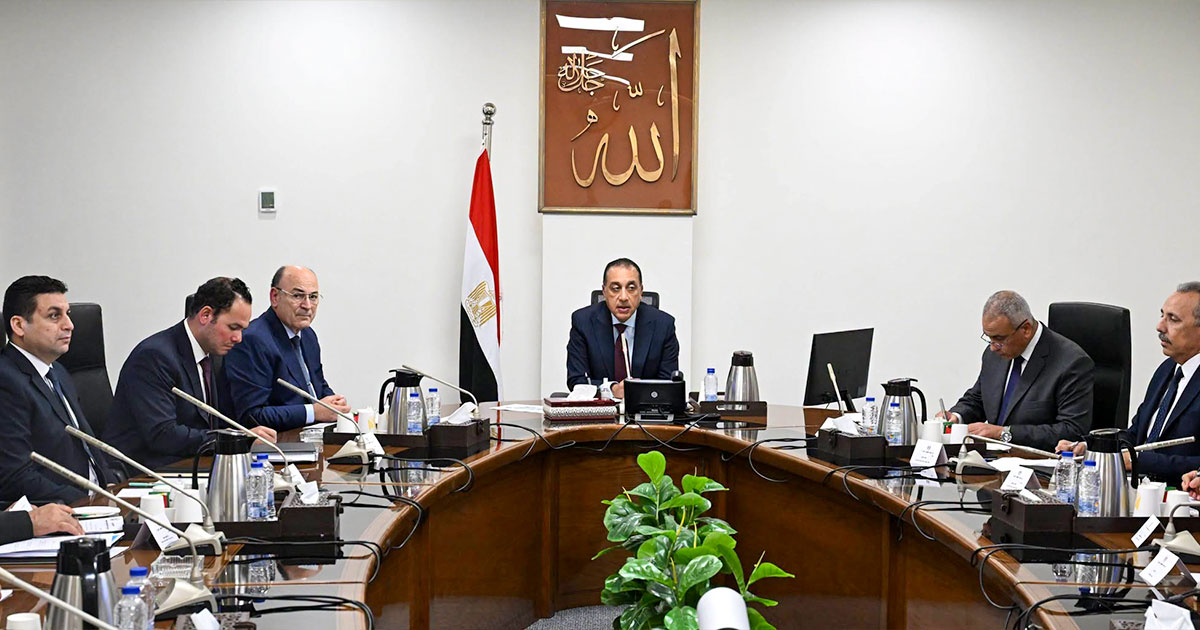

Supporting agricultural development…an expanded ministerial meeting to discuss the development of Egyptian flax agriculture and industry
Developing the cultivation of crops of strategic importance, such as Egyptian flax, represents one of the important axes for supporting agricultural and economic development in Egypt, as these crops provide opportunities to enhance agricultural industrialization, raise added value, and increase the competitiveness of Egyptian products in foreign markets, which is reflected in growth rates and job creation.
Investment in developing the cultivation of these crops and their related industries also contributes to achieving a number of Sustainable Development Goals (SDGs), by enhancing agricultural production, supporting industry and innovation, and improving the efficiency of resource use, in addition to encouraging investment in productive sectors with returns.Economic and export.
Reviving the flax industry and maximizing its economic value
In this context, today, Dr. Mostafa Madbouly, Prime Minister, reviewed the proposed vision for developing the cultivation and industry of Egyptian flax, in a meeting in which Mr. Alaa Farouk, Minister of Agriculture and Land Reclamation, Dr. Mohamed Farid, Minister of Investment and Foreign Trade, and Engineer Khaled Hashem, Minister of Industry, participated.
The Prime Minister confirmed that this meeting comes with the aim of discussing one of the important studies that includes proposed axes for developing the cultivation and industry of Egyptian flax, to enhance the value of this crop, which represents an important input into many industries, as well as to benefit from what Egypt already possesses of stimulating elements and an existing industrial base, in reviving this industry and developing it optimally.
Counselor/Mohamed Al-Homsani, the official spokesman for the Presidency of the Council of Ministers, stated that the meeting began by reviewing the strategic importance of flax cultivation in Egypt, pointing out the competitive advantages it possesses, the potential potential to enhance Egypt’s position in global value chains for the flax industry, rapid access to surrounding markets, and the opportunities to transform Egypt into a regional center for the flax industry by 2030, by working on several axes to develop the value chain of the flax industry nationally in an integrated manner with the combined efforts of various ministries and agencies.
Axes of development of Egyptian flax agriculture and industry
During the meeting, the proposed axes for developing flax cultivation and industry in Egypt were reviewed, which included five axes, which are:
- Agricultural axis
- Industrial axis
- Marketing and Export Axis
- Research and Development Hub
- The institutional and legislative axis
In addition to indicating the challenges facing the industry and the necessary executive plan to overcome those challenges, as well as defining the roles of the relevant authorities, and the indicators necessary to measure performance.

Agricultural and industrial axis
The agricultural axis includes a gradual increase in the areas cultivated with flax until it reaches 100,000 acres by 2030, with the possibility of implementing Egyptian flax cultivation experiments in new areas, providing high-quality seeds, mechanizing agricultural operations with the application of contract farming systems, and using modern irrigation systems to meet water challenges.
While the industrial axis includes developing existing factories by modernizing production lines with the transfer and localization of technology through international partnerships, improving energy efficiency by introducing solar energy and natural gas into factories, and stimulating the private sector to invest in the linen industry.
The development of flax cultivation and industry is consistent with a number of Sustainable Development Goals (SDGs), most notably the second goal related to enhancing food security and developing sustainable agricultural systems, by improving agricultural productivity, using modern technologies, and raising the efficiency of resource management. It is also linked to the ninth goal of industry, innovation, and infrastructure, through modernizing production lines, localizing technology, and enhancing the ability of Egyptian industry to compete through innovation-based manufacturing and achieving added value to national products.
MarketingResearch, development and legislative framework
Advisor/Mohamed Al-Homsani also indicated that the marketing and export axis includes launching a national brand to promote globally, opening new markets, in addition to participating in international exhibitions and strengthening e-commerce platforms for marketing Egyptian linen products.
The research and development axis includes conducting research to develop the flax cultivation and industry, improving varieties and productivity, and introducing the latest technologies, while the institutional and legislative axis included the establishment of a higher council for the flax industry that includes the relevant ministries and the private sector, and the enactment of a supportive legislative framework by issuing laws and incentives to encourage investment and export, in addition to focusing on the training and capacity building component through training programs for agricultural and industrial workers.
Investment opportunities to enhance the competitiveness of the linen industry
Efforts to develop flax cultivation and industry in Egypt are directed at maximizing the economic value of this crop by investing in available opportunities to enhance the sector’s competitiveness, by attracting global investments to establish factories specialized in flax spinning, and establishing a national center for designing and developing its products, in addition to expanding obtaining international quality and sustainability certificates, and linking the industry with the furniture and tourism sectors to create sustainable local demand.
The development impact of the flax industry extends to supporting the eighth goal of the Sustainable Development Goals (SDGs), by enhancing investment in productive sectors, providing job opportunities, and building local value chains that achieve more comprehensive and sustainable economic growth.
Efforts to develop flax cultivation and industry in Egypt are concluded with the development of an executive plan aimed at increasing the cultivated areas and providing high-quality raw materials for the industry, while evaluating the capabilities of companies.Flax and oils industry and modernizing its capabilities, to support the revival of this sector and maximize its role in the national economy.

In conclusion, the development of flax cultivation and industry in Egypt reflects a trend towards building an integrated production system that maximizes the economic value of this crop, by moving it to broader horizons based on manufacturing, innovation and export. Egypt’s possession of promising agricultural and industrial potential, in addition to developing value chains and linking them to investment and global markets, creates opportunities to enhance the position of Egyptian flax within competitive productive sectors.
The Earth Guards Foundation appreciates the efforts made to achieve integration between the development of agriculture, modernization of industry, and the promotion of research and development, as it is an important path to achieving more development.Sustainability, by transforming local resources into value-added products and renewable economic opportunities. It also believes that with the completion of the proposed development axes, the flax industry can become a model for maximizing the benefit of national capabilities and supporting growth and export paths.


