

A study in Ghana examines the role of the family in educating children.. Home follow-up makes a difference
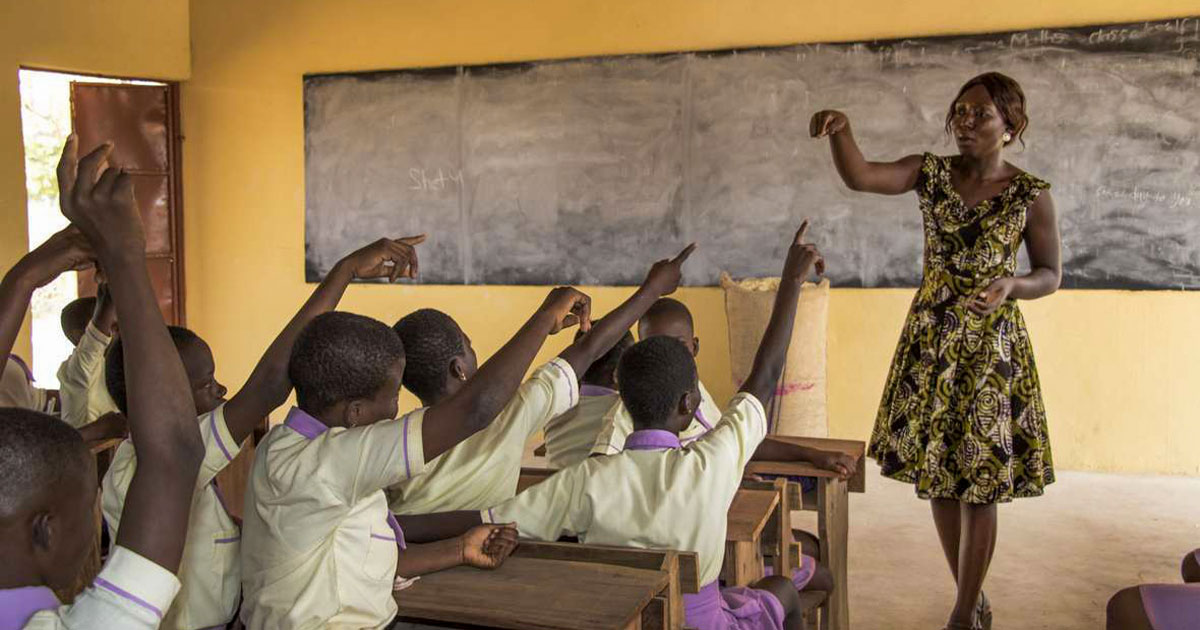

A study in Ghana examines the role of the family in children’s education.. Home follow-up makes a difference
Children’s education does not begin at the classroom door, nor does it end with the end of the school day; Many of their early skills are formed at home, through what they read and the encouragement and follow-up they receive. While attention often focuses on the quality of schools, curricula, and numbers of teachers, a study conducted in Ghana reveals that having a family member read with a child or helping them keep track of their homework may be associated with a significant improvement in their performance, even in homes with limited educational resources.
These results are increasingly important in light of the challenges facing basic education in Ghana, where 6 out of every 10 students in the fourth grade of primary school perform belowThe basic level in mathematics is, while half of the students in the same grade do not achieve the required level in the English language.
Although these indicators relate to students whose average age is about 10 years, the roots of academic failure may extend to much earlier stages. In kindergarten and the first years of primary education, a child begins to acquire reading, arithmetic and reasoning skills, which determine his ability to continue learning and progress through the following stages.
Children’s education begins at home
Education policies in low-income countries often focus on what happens inside the school, such as curriculum development, provision of books, teacher training, and improving infrastructure. Despite the importance of these elements, learning does not begin at the classroom door and does not end when the child leaves school.
The home is the first space where a child is exposed to words, numbers, and questions, and family members are the first source of guidance and encouragement. Simple practices, such as reading a story, asking what a child has learned, or helping a child understand assignments, can give them additional opportunities to practice and consolidate skills.
But some parents and caregivers may not realize how much impact they can have, especially if their educational opportunities are limited or they believe that continuing education is the school’s sole responsibility. This is why family involvement in early education remains relatively limited in Ghana, despite the role they can play in supporting children.

Study including 3,742 children
Researchers Joanna Keye, from the Ghana Institute of Management and Public Administration, and Pearl Keye, conductedFrom the University of Ghana, a field study to understand the influence of the home environment and caregiver involvement in children’s education during the early school years. They collected data from 3,742 children between the ages of 4 and 8, studying in kindergarten, first and second, and first grade of primary school.
The sample included students from 62 public and private schools in the Greater and Central Accra regions of Ghana. The researchers focused on three main household factors: the resources available within the home, the extent of caregivers’ involvement in learning, and the type of family in which the child lives.
Home resources included books, games, IT devices and other tools that can provide the child with additional opportunities for discovery and learning. As for the caregivers’ participation, it included reading with the children and helping them do schoolwork.
The researchers assessed the children’s performance using activity booklets aligned with the Ghana Education Service curriculum and designed to suit each grade level. The tests included activities in matching and recognizing letters, shapes, and animals, in addition to counting, discovering patterns, performing simple mathematical operations, forming words, and arranging pictures.

Family interest is associated with higher grades
The results showed that, as expected, children living in homes with greater educational resources performed better academically. Books, games, and digital devices provide broader opportunities for practice and skill development.
But resources were not the only factor influencing children’s education; There has been a clear link between what caregivers do in the home and children’s outcomesTests.
Children who had a family member read with them or helped them do assignments scored about 9% higher than children who did not receive this type of participation, after accounting for factors such as age, grade level, and level of resources available at home.
This result indicates that direct interaction with the child may help him review what he learned in school, and give him a space to ask questions and practice skills that he was not able to master in the classroom.
The researchers also found that reading with children was particularly beneficial in the kindergarten stage, when the child is just beginning to learn about letters, words, and sounds. In the first grade of primary school, the combination of reading and following up on assignments was associated with the strongest positive results.
And the students investigatedFirst graders generally had higher scores than kindergarten students, but grade-related differences were greater among children whose family members were actively involved in their learning.
Attention makes up for part of the lack of resources
The study results do not mean that family participation can fully compensate for the absence of books or poor educational capabilities, but they do reveal that interest may mitigate part of the gap between resource-rich homes and less capable homes.
Caregiver involvement explained part of the reason why children from better-equipped families excelled, and it also helped reduce the difference in performance between children with different resources.
This result gives family participation a dimension beyond improving grades, as it can contribute to expanding learning opportunities for children who do not have it inTheir homes have sufficient educational resources to support access to more equitable and inclusive education. This is in line with Goal 4 on quality education and Goal 10 on reducing inequalities.
This finding is of great importance in low-income settings, because improving children’s education does not always require expensive interventions or providing sophisticated devices to every home. Setting aside time to read, discuss the school day, or ensure that assignments are completed are simple tools that can provide tangible benefits.
It is related to the caregiver’s complete mastery of the curriculum, as well as showing interest, encouraging the child to continue, and providing regular space for review and practice.

Support is more important than the shape of the family
I took itThe study also discredits the common belief that children who live with only one parent may be more likely to decline academically. However, the results did not reveal a direct association between family form and academic achievement after accounting for household resources and caregiver involvement.
Children who live with both parents, or in other family arrangements, achieved similar outcomes when they were provided with similar levels of support and attention.
This result shows that the most important factor is the presence of someone who cares about the child’s learning and follows up on his progress, regardless of the shape of the family. This person may be the father or mother, but it may also be a grandfather, grandmother, relative or older sibling.
In many sub-Saharan African countries, grandparents, relatives and older siblings share in the care of the child.This role can be used to expand the circle of people who are able to follow up on children’s education and support them at home.
Educational policies beyond the school
The study suggests that early learning improvement programs should provide families with practical guidance on how to support children’s learning after school. Schools can demonstrate age-appropriate activities, suggest simple ways to read together, and encourage families to ask children about what they have learned and monitor assignments without doing them for them.
Educational programs can also take into account the different levels of education of caregivers and provide clear instructions that do not require advanced skills or large financial resources. If a parent is unable to read with the child, another capable family member can be encouraged to take on this task.
This approach transforms the family from a recipient of the educational service into an active partner in it, and enhances communication between home and school instead of treating them as two separate spaces.
More sustainable and equitable education
The results of the study are related to the fourth goal of the Sustainable Development Goals (SDGs), which is concerned with ensuring quality, equitable and inclusive education for all. Placing a child in school is not enough if he cannot acquire the reading and arithmetic skills necessary to continue his education.
Supporting children’s learning at home also relates to Goal 10 on reducing inequalities, because family involvement may give children in resource-limited homes additional opportunities to review lessons and strengthen skills.
The importance of investing in the early years is highlighted. Difficulties that cannot be treated in a riad canChildren’s primary grades accumulate, making it more difficult to catch up to the required level in later grades. Therefore, supporting a child early represents an investment in their educational future and in the human capital of society.
For its part, The Earth Guards Foundation highlights the importance of integrating families into early childhood education policies, as they are an essential partner in building a more comprehensive and sustainable education, with the need to provide them with the tools and guidance that help them carry out this role.
The family does not replace the school or the teacher, but it can complement their work. A bedtime story, or a few minutes spent reviewing an assignment, may reveal the power of simple interventions that can give a child a more solid foundation and provide him with a better opportunity to learn and advance.


