

The coast of Djibouti is witnessing a human tragedy… 139 drowned in the search for a decent life

The coast of Djibouti is witnessing a human tragedy… 139 drowned in the search for a decent life
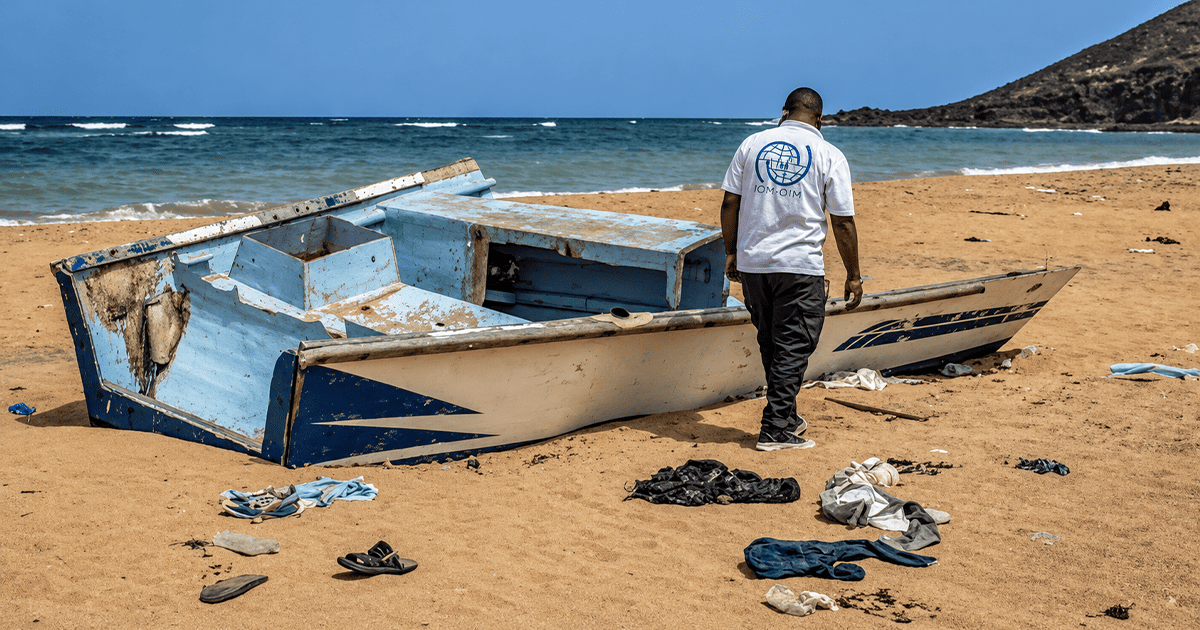
On a night between the eighth and ninth of October, a migrant boat crossed the waters separating the coasts of Djibouti and Yemen, carrying 305 migrants, on a long-distance journey to the Gulf states, where its passengers hoped to find work, safety and stability.
However, the trip stopped near the coast of Obock, when the boat capsized, and the search for a better life turned into a tragedy that claimed the lives of at least 139 people, including 15 children, while about 84 others remained missing.
As search and rescue operations continue, the incident reveals part of the suffering of thousands of migrants who are forced by economic and security conditions to embark on dangerous sea journeys in the hope of a more stable future.
Behind the numbers of victims, a deeper crisis is unfolding, in which the challenges of poverty, scarcity of job opportunities, climate pressures, and lack of safety intersect, placing the tragedy of Djibouti in the context of one of the most dangerous migration paths in the world.
The night of the drowning
The disaster occurred near the Johiri area, north of the city of Obock on the coast of Djibouti, after the boat capsized while heading to Yemen, according to survivor accounts reported by the International Organization for Migration.
According to statements by Alexander Kowasak, head of the International Organization for Migration's mission in Djibouti, the boat was overcrowded with passengers, and began sinking shortly after it set off.
As search operations continued and the bodies were recovered, the death toll rose from 109 to 139 people, after 30 additional bodies were found, while about 84 remained missing, and about 82 people survived, all of them of Ethiopian nationality.
These details reveal the extent of the danger that accompanies crossing through Bab al-Mandab. On a trip whose owners were heading to the other side in the hope of continuing their way to work and stability, the overcrowding of the boat was enough to turn the beginning of the crossing into a humanitarian disaster.
Survivors in Obock
Off the coast of Djibouti, the search for missing persons continued, as relief teams were busy helping those who managed to survive, and the International Organization for Migration cooperated with local authorities to provide medical and psychological care, food and temporary shelter, in addition to helping survivors regain contact with their families.
In its first statement, the organization announced the provision of assistance to 64 survivors inside the Migrant Response Center in Obock, and the Djiboutian authorities took care of the injured and arranged the burial of the victims in a manner that preserved their dignity.
Alexander Koassak, head of the International Organization for Migration’s mission in Djibouti, described the incident as a devastating humanitarian loss, stressing that the organization’s teams stand alongside the authorities to help survivors and families who lost their loved ones.

This response carries within it one of the basic meanings of social sustainability. Human protection begins with providing health care, psychological support, and shelter in moments of crisis, and extends to preserving human dignity and enhancing the ability of those affected to overcome the effects of the experience.
For survivors, urgent care represents the beginning of a new phase, requiring protection, support and the restoration of family ties after a journey that ended tragically.
Why would they risk their lives?
Behind the drowning incident there is a longer story that begins in the countries of the Horn of Africa, countries plagued by conditions of poverty, insecurity, and lack of job opportunities that push their people to search for alternatives outside their homelands.
These journeys follow what is known as the Eastern Migration Route. Migrants cross the coast of Djibouti towards Yemen, hoping to continue their path towards the Gulf states, in search of economic opportunities and a more stable future.
Despite the conflicts, divisions, and dangers surrounding Yemen's crossing, thousands of migrants continue to take this route. The International Organization for Migration has recorded more than 20,000 entry movements from Ethiopia to Djibouti since September 10, 2026, reflecting continued migrant flows through the region.
This movement reveals a complex relationship between migration and development. Weak economic opportunities and declining stability place some communities facing extremely difficult choices, while the effects of climate change increase pressure on resources and livelihoods in various regions of the Horn of Africa.

Hence, Goal 8 of the Sustainable Development Goals, on decent work and economic growth, emerges as one of the necessary paths to address the reasons that push people on dangerous journeys.
This is because providing job opportunities, improving living conditions, and enhancing the ability of societies to adapt to economic and environmental challenges; It gives individuals broader options to build their future, and helps reduce the motives for forced and dangerous migration.
Dangers beyond the sea
The risks facing migrants extend beyond crossing the coast of Djibouti; Arriving in Yemen exposes many to other security and humanitarian challenges, including violence, arbitrary detention, exploitation, and human trafficking.
Data from the International Organization for Migration reveal the expanding scale of the crisis. In 2025, more than 900 migrants died or went missing on this route, with the number of crossings rising by 18% compared to the previous year. In March 2026, another drowning accident left nine dead and 45 missing.
These facts highlight the importance of Goal 10 of the Sustainable Development Goals, concerned with reducing inequalities, especially with regard to facilitating safe, orderly and responsible migration. Because having clear pathways that protect migrants' rights helps reduce their vulnerability to exploitation and gives them safer opportunities to reach their destinations.
These risks are similar to other humanitarian tragedies witnessed by maritime migration routes. Read also: Death boats pursue the Rohingya…more than 500 people face an unknown fate.
Towards safer roads
In the face of recurring disasters, the International Organization for Migration called on countries and institutions supporting humanitarian work to provide additional funding and assistance, especially to support search and rescue operations off the coast of Djibouti, and meet the basic needs of migrants.
It also called for expanding safe migration pathways, which contributes to reducing the dangers faced by people seeking work and stability, and enhances the ability of institutions to provide protection and respond to growing humanitarian needs.
These calls open a broader scope for cooperation between countries of origin, transit and destination. Protecting migrants requires coordination that extends from addressing the drivers of departure to securing transportation routes and confronting networks of exploitation.
This tragedy also gives these efforts additional importance, after the heavy toll revealed the need for measures that protect lives and provide safe alternatives for groups who continue to undertake dangerous journeys.
Beyond the sunken boat
The tragedy on the coast of Djibouti leaves behind victims, missing persons and survivors facing the effects of a journey that did not reach its destination. While research and care efforts continue, the reasons that prompted the migrants to board the boat remain an essential part of understanding the disaster. The need for work and security can push a person to paths that he already knows are risky.
In a developmental reading of this tragedy, it is highlighted The Earth Guards Foundation Highlighting the interconnection between protecting migrants and providing the necessities of a decent life in their communities of origin; Promoting job opportunities, supporting the ability of societies to confront economic and environmental crises, and providing safe migration paths, all represent integrated paths for preserving human rights and reducing the risks that push many to risk their lives.


