

The Minister of Labor meets with the Director of the International Labor Organization in Geneva to strengthen the decent work system in Egypt
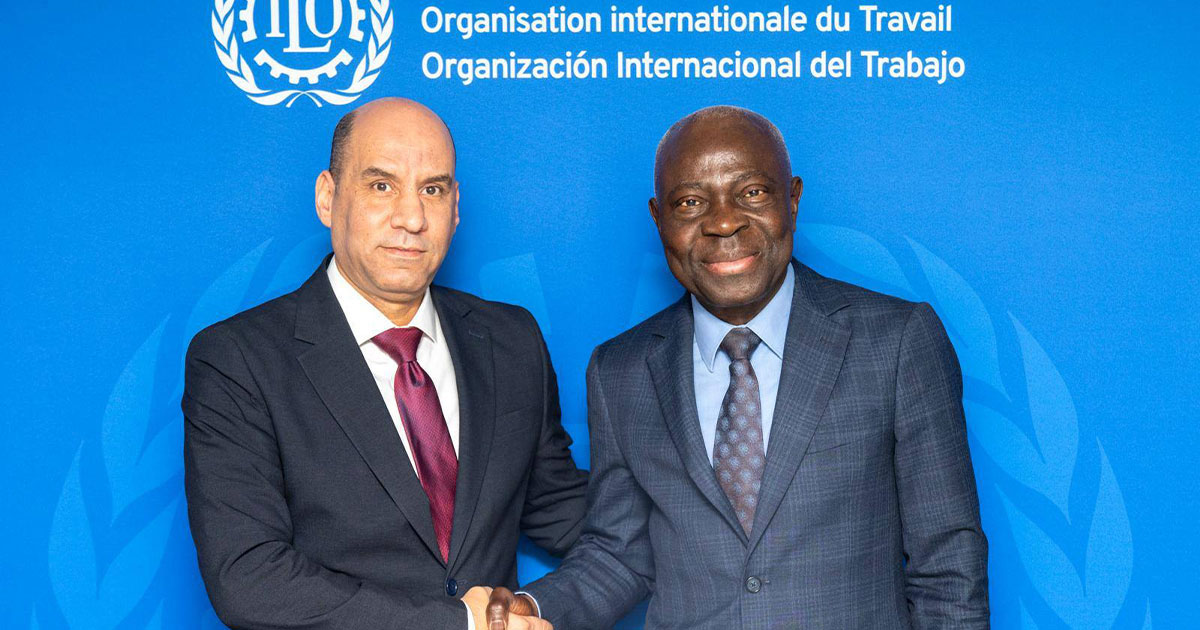

The Minister of Labor meets with the Director of the International Labor Organization in Geneva to strengthen the decent work system in Egypt
With the escalation of international interest in issues ofdecent work, workers’ rights, and social dialogue, countries are moving towards adopting more comprehensive policies that balance economic growth with the protection of rights, in a way that ensures sustainable development and the achievement of social justice.
From this standpoint, the importance of international partnerships and coordination with international organizations emerges, as they are a fundamental pillar for transferring expertise, developing legislation, and enhancing the efficiency of the labor market. This trend also reflects Egypt’s commitment to aligning its policies with the goals of sustainable development, especially with regard to providing decent job opportunities, building strong institutions, and enhancing international cooperation to achieve sustainable development.
A tribute to Egypt’s pioneering role in Africa and the Arab world
In this context, the Minister of Labor, Mr. Hassan Raddad, met with Mr. Gilbert Houngbo, Director-General of the International Labor Organization, in the presence of Ambassador Alaa Hegazy, Egypt’s Permanent Representative to the United Nations, the World Trade Organization and other organizations, and a delegation from the Ministry of Labor and the Permanent Mission of Egypt in Geneva, on the sidelines of the activities of the “356” session of the Board of Directors of the International Labor Organization in Geneva, in the presence of representatives of governments, employers and workers from various countries. Members.

At the beginning of the meeting, the Minister thanked Mr. Gilbert Hongbo, Director-General of the Organization, for his efforts in the labor file around the world, especially the achievements made in the field of social justice and the establishment of a global alliance for it. He also expressed his appreciation for the fruitful cooperation with the organization during the last period, especially through the ILO office in Cairo, in a number of important files, including the technical support that the organization provided during the discussions of the Labor Law and the executive decisions issued in implementation thereof.
This is in addition to cooperation in combating the worst forms of child labor, promoting freedom of association, supporting compliance with international labor standards, as well as promoting social dialogue, in a way that supports the achievement of comprehensive Sustainable Development Goals (SDGs), especially Goal 8: Decent Work, and Goal 16: Peace, Justice and Strong Institutions.
Promoting decent work and social dialogue
The Minister also reviewed the progress made by Egypt in files related to the labor market, stressing the freedom of trade union organizations to carry out their activities without interference from the administration, and their right to join a higher union organization than not, with the Ministry standing at the same distance from all unions regardless of their geographical and qualitative differences.
The Minister explained the role of the Supreme Council for Social Consultation as a successful institutional tool for dialogue between the three working parties, ensuring balance and democracy in its formation, and having a legal personality and an independent budget to enhance its role in supporting social dialogue.
He also stressed the importance of accelerating the formulation of the country program for decent work in Egypt to be a comprehensive umbrella for cooperation with the International Labor Organization, unifying development goals according to the country’s needs, and translated into sustainable projects and activities.
In the same context, the Ministry of Labor is close to completing the preparation of the national employment strategy in coordination with international and national experts, with technical support from the organization, in preparation for its launch soon, which will contribute to promoting decent work and providing fair and sustainable employment opportunities, with an emphasis on continuing international cooperation to provide the necessary funds to implement these development programs.
Enhancing international cooperation to face labor market challenges
The meeting also touched on the financial challenges that the International Labor Organization is going through due to some countries’ delay in paying their contributions, and the reform measures that the organization is taking to control expenditures and address the deficit in its budget. In this context, the Minister of Labor affirmed the Egyptian government’s support for policies that achieve a balance between the interests of the various parties to ensure that the organization continues to perform its tasks, while preserving the rights of workers and encouraging constructive dialogue between all parties.
For his part, the Director-General of the International Labor Organization expressed his optimism about the minister’s technical capabilities, noting that his experience will contribute to accelerating dealing with various work files. He also stressed the prominent role of Egypt at the African and Arab levels within the organization, stressing the importance of continuing cooperation in addressing the challenges of the current world of work, including child labor and forced labor, and translating plans into actual development programs.

In conclusion, the meeting of the Minister of Labor with the Director-General of the International Labor Organization confirms Egypt’s progress in building a fair and sustainable labor market, through promoting decent work and institutional social dialogue.
For its part,The Earth Guards Foundation appreciates Egypt’s pioneering role in enhancing international cooperation to confront the challenges of forced labor and child labor, and transforming national strategies into practical programs, in a way that supports the Sustainable Development Goals (SDGs), especially Goal 8: Decent Work, Goal 16: Strong Institutions, and Goal 17: Partnerships International.


