

The Egyptian League and the principles of sustainability: How can football transform towards a more balanced future?
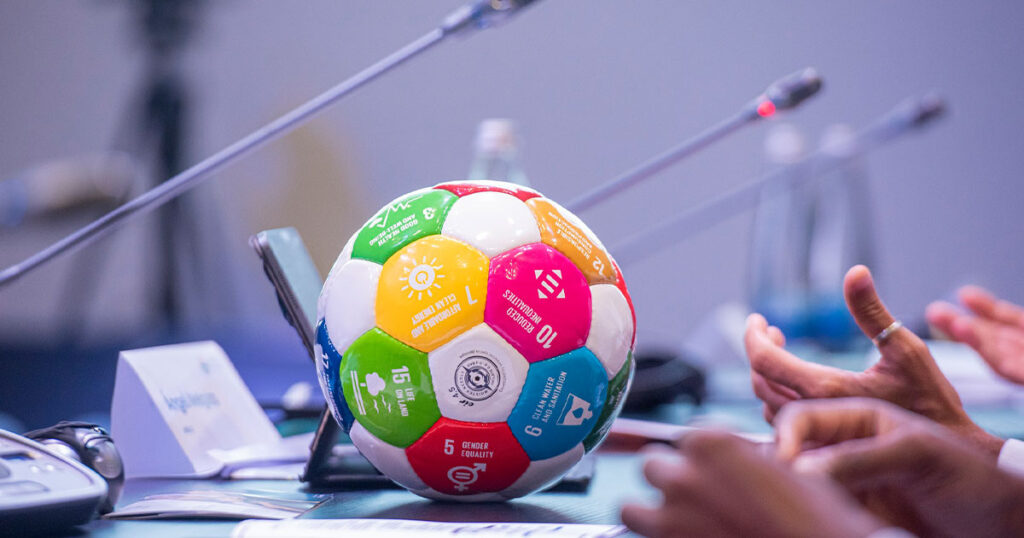

The Egyptian League and the principles of sustainability: How is football transformed towards a more balanced future?
The Egyptian League, through which millions of Egyptians follow the game of football, with burning enthusiasm and unending passion; It is witnessing more overlap with dimensions that some observers thought were far from the field of football in particular and sports in general, which are those dimensions related to the growth of the national economy and the positive social impacts that it entails.
This is because the Egyptian League “Egyptian Premier League” is a popular sports competition, and this competition has gradually approached the economic system, especially after the flag of Egyptian football was raised in recent years in Africa, and in the whole world when the results of the Egyptian national team in the Cup were achieved.World 2026 advanced level by reaching the round of 16.
| Round | The competitor | Result |
| Group stage (Group G) | Belgium | is equivalent to |
| Group stage (Group G) | New Zealand | Win |
| Group stage (Group G) | Iran | is equivalent to |
| Round of 32 | Australia | Win on penalties |
| Round of 16 | Argentina | Moderator Exit |
Based on this, the authorities supervising the Egyptian Premier League seek to consolidate the concepts of sustainable development and its seventeen goals, with their social, economic, and environmental dimensions. This is what The Earth Guards Foundation says.The light in the following lines: Explaining the opportunities that the Football League can reveal in the field of comprehensive sustainability; So keep reading.

First – Social Sustainability
After the Egyptian national team participated in the 2026 World Cup and received a financial return estimated at about 17.5 million dollars, a wide discussion emerged about how to use these revenues in a way that serves the sustainability of the Egyptian League and the entire football system, via:
- Developing the infrastructure for stadiums and training centers.
- Discovering young talents and qualifying coaches.
- Supporting the least funded clubs within the Egyptian Premier League.
As the side attestsRefereeing and technical training: Intensive training camps for Premier League referees, in addition to specialized courses to develop goalkeeper coaches, within a vision based on the idea that sustainability includes – in one way or another – all elements of the football system.
Professional Clubs Association
The Egyptian Professional Clubs Association also manages the Egyptian Premier League and the League Cup (the Egyptian Professional Clubs League Cup: a football tournament held between Premier League clubs to compete in a group system), through:
- Management of marketing and commercial rights and television broadcasting rights.
- Distribution of financial returns to participating clubs according to a specific mechanism.
- Supervising the competition management committee to ensure the continuity of its organizationSeason after season.
Such steps achieve – through responsible governance and management – the social dimension of the Sustainable Development Goals (SDGs). Social sustainability in football extends to building a more equitable system in distributing opportunities and resources, and allowing talents from different governorates and social groups to access training, competition, and professional development.
This aspect is also linked to the fourth goal of the Sustainable Development Goals (SDGs): quality education, through investment in training and skills building, and to the eighth goal: decent work and economic growth, by creating sustainable career paths for players, coaches, referees and workers in various sectors related to the football industry.

Second – SustainabilityEconomic
From an economic perspective, financial sustainability is the basis for the survival of Egyptian League clubs. The financial aspect represents the most urgent axis of sustainability within the Egyptian Football League, and therefore official sports bodies and institutions have worked to achieve financial stability, through multiple financial and incentive steps, which we summarize in the following.
The Football Association’s steps towards financial discipline
First of all, we find that the Egyptian Football Association has taken several measures to enhance the financial sustainability of the clubs participating in the Egyptian Premier League, the most prominent of which are:
- Obliging clubs – such as Al-Ahly Club and Zamalek Club – to open an independent bank account for football activity, separating revenues and expenses.The first team and other club activities.
- Tightening the standards of Committee Club Licensing in accordance with FIFA and CAF regulations; To ensure neutrality and transparency in granting professional licenses.
- The requirement for clubs to provide proof that they are free of financial dues owed to the state (taxes, insurance, utilities) before the license is approved, which is what Al-Ahly Club explicitly demanded as one of the most prominent clubs in the Egyptian League club.
- Evaluating the clubs’ seriousness in paying their obligations towards players, other clubs and rights holders, and not just formally verifying the presence of late dues.
Supporting clubs Egyptian League
Then in a stepIn favor of this trend, the Board of Directors of the Egyptian Federation approved a program worth 70 million pounds to support the popular and popular clubs in the second and third sections of the Egyptian round, which included:
- Direct financial support to 120 fan clubs in various governorates.
- Promotion awards for clubs that qualify for higher competitions.
- Allocating 10 million pounds in prizes for junior and youth competitions for the first time at the level of each age group.
These steps reflect a trend towards building a sustainable base for Egyptian football, instead of focusing resources only on the top clubs in the Egyptian League, paying attention to watching matches without considering any environmental impact, and not paying attention to the culture of sustainability.
Third: Environmental Sustainability
Although environmental sustainability is still in its early stages within the Egyptian sports sector compared to leagues such as the English Premier League, there are signs of a gradual shift, including:
- A government trend pushes clubs and their administrations in Egypt towards lighting stadiums with solar energy; In order to reduce operating costs.
- Interest in similar Arab experiences that can be benefited from, such as the Al-Madina International Stadium in Baghdad, which relies entirely on solar energy.
Sports facilities spare no effort to set environmental sustainability standards within them, such as water conservation standards, indoor environmental efficiency standards (ventilation – lighting – waste – transportation), as well as management standards.Responsible resource management.

Fourth: The most prominent sustainability axes
In summary of the above, the following table can show us how the concepts of sustainability are formed within the Egyptian League.
| Axis | Current procedures | Its impact on the sustainability of the league |
| Social | Supporting fan clubs, youth competitions | Building a spherical baseSpacious and balanced |
| Economic | Independent bank accounts, licensing committee, payment of dues | Reducing the risk of bankruptcy, with the need to control spending |
| Environmental | Solar energy for lighting stadiums | Reducing environmental impact |
All of these indicators indicate that the Egyptian League is on a gradual path towards adopting the principles of sustainability, starting with supporting individual athletes, then financial discipline for clubs, until paying attention to the environmental aspect by switching to renewable energy such as solar energy.
In conclusion, the Egyptian League experience reveals that comprehensive sustainability in the sports sector represents important steps towards building a more sustainable tournament, but its true value will be determined by the extent of its continuity and its connection to a clear institutional framework, not by separate decisions that change with changing administrations and seasons.
From the perspective of The Earth Guards Foundation, the evaluation of the sustainability of the Egyptian League should extend to a deeper and more important question, which is: Is Egyptian football managed in a way that preserves its human, financial and environmental resources for future generations?


