

The Root2Res project launches a new platform to discover root traits and enhance food security
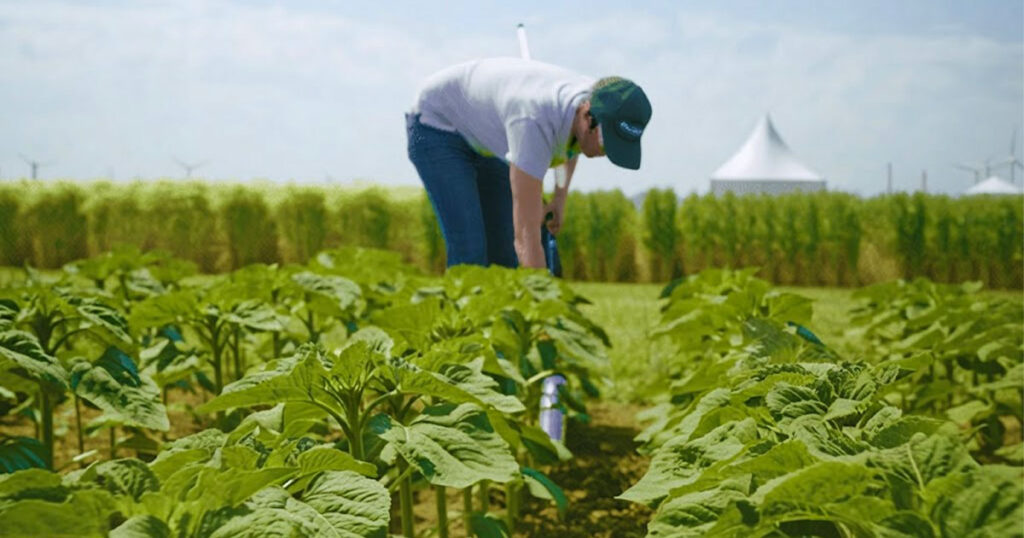

The Root2Res project launches a new platform to discover root traits and enhance food security
Agriculture is facing increasing pressure as droughts intensify, water availability declines, soil properties change, and plants have difficulty obtaining the nutrients needed for growth. In light of these challenges, supporting food security has become linked to the ability of crops to maintain their productivity even when surrounding conditions change.
Although plant roots are responsible for absorbing water and nutrients and anchoring the plant in the soil, crop breeding programs for long periods have focused on traits visible above the ground, such as plant height, leaves, grains, and production size. As for the roots, they remained less present due to the difficulty of seeing and measuring them in the fields.
and is trying to projectRoot2Res, funded by the Horizon Europe Research and Innovation Programme, addresses this gap with tools that help researchers, plant breeders and farmers discover root traits associated with resource efficiency and resilience to climate change.
Roots redraw the path to food security
The Root2Res project works to understand the role roots can play in increasing the resilience of agricultural systems to climate stresses. It focuses mainly on abiotic stresses, such as lack of water or nutrients, and their impact on plant growth and productivity.
The idea is that a crop that is able to use water and nutrients more efficiently can maintain more stable production when available resources decline. Then studying the roots contributes to determiningPlant patterns that can be relied upon to develop new generations of crops.
The project does not search for a single root system suitable for all environments. The most suitable root depends on the type of plant, soil characteristics, amount of water, and surrounding climatic conditions. Therefore, researchers focus on understanding the relationship between root traits and their functions within each agricultural environment.
This understanding could lead to the development of varieties that are more tolerant to water stress and maintain more stable productivity, which supports food security and reduces agriculture’s vulnerability to climate fluctuations.

A toolbox that reveals what is happening under the soil
As the project approaches its final year, the Root2Res team has made its applied results available through the Root2Res platform.An easy-to-use digital platform called “Toolboxes” The platform targets researchers, practitioners, plant breeders and agronomists, to help them benefit from new knowledge related to roots.
The platform includes three main sections: The first of these is Phenotyping, which is concerned with measuring the visual and functional traits of roots in the field or in controlled environments. This includes studying the shape of the root, its spread, the way it branches, and its relationship to the absorption of water and nutrients.
The second section is Genotyping, which aims to identify genetic markers associated with stress tolerance and the ability to adapt. This information helps plant breeders select the most promising genotypesMore accurate.
The third section relies on computer modeling, which is used to simulate the effect of the characteristics of the roots and the surrounding area within the soil on the absorption of water and nutrients in different scenarios.
The platform provides these tools through application summaries, information graphics, educational clips, audio materials, and scientific publications, allowing the user to move between stages and choose the appropriate methods for each crop and environment.
Measurements for more resilient crops
The data collected by the project helps identify root patterns that can utilize resources efficiently. This may allow the selection of high-yielding varieties with a better ability to cope with drought and nutrient deficiencies.
This process depends on understanding how the entire root system works. Deep spread may be more beneficial in environments where water is contained within low layers of soil, while other environments require roots that spread near the surface to take advantage of rain or available nutrients.
The project also studies what is known as trait plasticity, that is, the ability of a plant to modify the growth of its roots in response to surrounding conditions. This ability may help crops survive when water amounts change or nutrients decline.
By combining field measurements, genetic analysis and computer models, the discovery of traits that serve food security can be accelerated, while reducing the risks associated with adopting new varieties before their performance in different environments is understood.

Multiple crops and experiments in Europe and Africa
Root2Res research includes a number of major crops, including wheat, barley and potatoes, along with legumes such as beans, peas and lentils, as well as sweet potatoes.
The project is preparing to complete its final campaign of field experiments, then narrow the scope of the study to complete genetic analyzes and tests of trait flexibility and trade-offs between the selected types.
The platform is expected to include genetic resources related to markers associated with adaptation to stress, in addition to varieties that have shown promising characteristics during the research stages.
The experiments are also based on a network that extends across Europe and Africa, allowing the study of plants in different climatic and soil conditions. This diversity helps avoid dependence onThe results of a single environment support the development of tools that can be applied more widely.
However, we do not conclude that the project has provided final commercial varieties ready for mainstreaming, but it does provide tools, resources and information that will help accelerate selection and breeding processes in the future.
Cooperation brings together soil sciences, genetics and agriculture
The project includes 22 partners providing expertise in soil science, agronomy, plant breeding, genetics, and crop physiology. This collaboration combines field experiments, controlled environments, genetic analysis, and numerical simulations.
This diversity reflects the nature of the complex relationship between roots, soil, and climate. Plant performance cannot be understood by studying one factor in isolation from the rest.
The project also cooperates with organizationsScientific and professional, it presents its results to researchers, plant breeders, and entities working in the seed sector, with the aim of transforming scientific knowledge into usable tools.
The outputs extend to proposals directed to decision-makers, dealing with biodiversity, modern breeding techniques, fertilizers, protein crops, and legislation related to materials used in plant propagation.
More efficient roots for a sustainable agricultural future
The importance of studying roots is not limited to increasing agricultural production; They may also help improve soil health, increase water and fertilizer use efficiency, enhance biodiversity, and support the ability of farmland to store carbon.
This is linked to the second goal of the Sustainable Development Goals (SDGs) on the total eradication of hunger, specifically target 2.4 related to implementingSustainable food production systems capable of adapting to climate change, drought and floods.
It is also related to the thirteenth goal related to climate action, especially target 13.1 on strengthening resilience and adaptation to climate risks, along with the fifteenth goal related to life on land, specifically target 15.3 related to protecting lands and soils from degradation.
For its part, The Earth Guards Foundation points out that the Root2Res project reveals the importance of looking at roots as an essential element in the future of agriculture, and not just a hidden part of the plant. Combining the study of root traits with genetic analysis and computer modeling may accelerate the selection of crops that are more efficient in water and nutrient use, and better able to maintain their productivity under climate stresses.
Although the results still need to be completed and verified in different environments, they open a promising path to enhancing food security, improving soil health, and building agricultural systems more resilient to climate change.


