

Egypt.. a new step towards the localization of the automobile industry and the production of the first Egyptian electric car

Egypt.. a new step towards the localization of the automobile industry and the production of the first Egyptian electric car
Industrial and economic policies around the world are moving towards reducing dependence on fossil fuels, and searching for more sustainable alternatives in the energy and transportation sectors, in light of mounting international demands to reduce carbon emissions and accelerate the transition to clean energy sources. This trend coincides with the holding of the United Nations Climate Change Conference COP31 in Turkey, and the discussions it raises regarding accelerating climate action and reducing dependence on traditional energy sources, which places the electric car industry among the important sectors in the path of global economic and environmental transformation.
In Egypt, the localization of the automobile industry is gaining increasing importance with the move towards building a capable industrial base To keep pace with these changes, benefit from the transfer of technology and international expertise, and increase the local component in production processes. This transformation opens economic horizons for countries seeking to enhance their industrial capabilities, and gives the localization of the automobile industry special importance as an area for expanding investments, transferring technology, increasing added value, and developing feeder industries, in a way that enhances the competitiveness of national economies.
Production of the first electric car locally
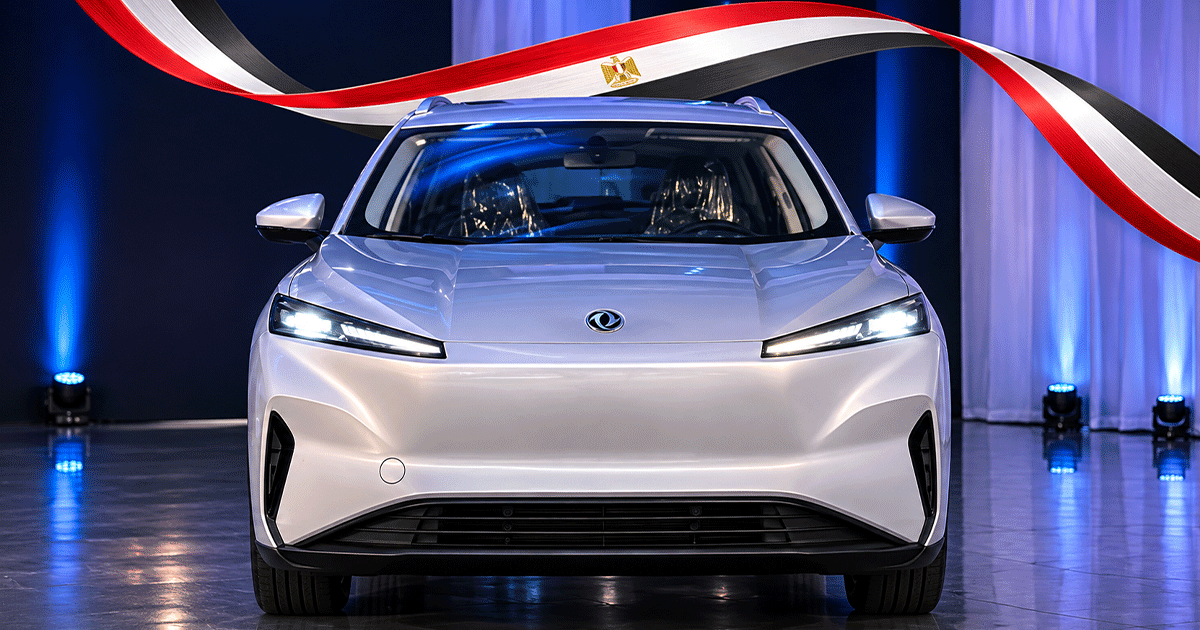
From this standpoint, The Earth Guards Foundation highlights the production of the first local electric car, MAGE EV, belonging to a Chinese brand, within the factories of Al-Nasr Automotive Manufacturing Company, in a step that reflects the state’s efforts to localize the automobile industry, deepen local manufacturing, and transfer modern technology, in a way that supports the construction of an industrial base capable of meeting the needs of the local market and expanding in Export.

This trend is related to the ninth goal of the Sustainable Development Goals, which is concerned with industry, innovation and infrastructure, by supporting the construction of an advanced industrial base, enhancing local production capabilities, and expanding the scope of benefiting from modern technology in developing national industries.
Attracting investments and providing job opportunities
In this context, the localization of the automobile industry comes as one of the important axes for deepening local manufacturing, in light of the importance this sector represents to the national economy, whether in terms of attracting investments, providing job opportunities, supporting feeder industries and increasing added value, as well as enhancing the ability to meet the needs of the local market and opening new horizons for export.
Thus, the state pays special attention to the localization of the automobile industry Electric vehicles and their components, and keeping pace with global transformations towards clean means of transportation, by attracting investments, transferring technology and expanding the local supplier base.
The expansion of the production of electric cars is gaining environmental importance in light of its connection to the shift towards means of transportation that are less dependent on fossil fuels, and supporting efforts aimed at reducing carbon emissions, in line with the thirteenth goal of the Sustainable Development Goals, related to climate action, and the seventh goal regarding clean and affordable energy, especially with the expansion of reliance on renewable energy sources.
In a related context, The Earth Guards Foundation previously addressed the file of localization of the automobile industry in Egypt, by highlighting efforts to deepen local manufacturing and develop feeder industries, and the role of electric car production in supporting capabilities. National Industrial, in the following article: Localization of the automobile industry in Egypt.. Steps towards possessing electric car technology
3 thousand cars annually
The “MAGE EV” electric car is the first fully electric car to be assembled locally in Egypt, and is scheduled to be launched in the Egyptian market at a competitive price during the first quarter of next year.
The planned production capacity of the car is 3,000 cars annually in a first step, with a goal of reaching 20,000 cars annually, pointing out that production will initially target the local market, with exports to foreign markets to be expanded later.
The expansion of local production contributes to supporting economic growth and developing the labor market, by stimulating… Industrial investments, opening new areas of operation, and enhancing the participation of local suppliers in the production stages; These are dimensions related to the eighth goal of the Sustainable Development Goals, on decent work and economic growth.
Supporting local capacity building in the automotive industry
Efforts to transfer technology and technical expertise include following up on battery assembly and testing processes locally, verifying the accuracy of manufacturing car bodies, in addition to providing technical support for the painting and final assembly stages.
These efforts also extend to following up on road driving tests to ensure that cars comply with quality and safety standards, and transferring expertise related to battery technologies to Egyptian cadres, which contributes to building local capabilities and developing manufacturing expertise.
Automotive industry localization strategy
The strategy of localizing the automobile industry is of interest to the Egyptian state, within the framework of the trend towards deepening local manufacturing and increasing the proportions of the Egyptian component. The Ministry of Industry is working to develop the strategy and expand the base of local suppliers, in a way that supports the industries that feed cars and enhances the participation of Egyptian companies in the various stages of production.
Technical specifications and integrated quality standards
The new car features a set of technical specifications, as it runs entirely on electricity, relies on a battery with a capacity of 51 kilowatt-hours, and has a power of 163 horsepower, with a torque of up to 240 Newton metres, allowing it to accelerate from 0 to 100 km/h in 8.7 seconds.
The driving distance on a single charge reaches 445 kilometers according to the CLTC standard, with support for fast charging that allows charging Battery goes from 0 to 80% in 28 minutes. The car also includes a set of safety and security equipment, including airbags, an anti-lock braking system (ABS), an electronic brake force distribution system (EBD), and a brake assist system.

The manufacturing and assembly stages are subject to quality standards aimed at ensuring the efficiency and safety of the product, with comprehensive driving tests for each car before putting it on the market, and providing a warranty extending to 7 years or 300,000 kilometers for the car, and 10 years for the battery.
Job opportunities and building industrial competencies
The impact of the localization of the automobile industry extends to the labor market, by creating new professional opportunities in the fields of manufacturing, electrical and electronic engineering, battery assembly, technical testing, and quality control. Expansion in this sector also provides opportunities To qualify Egyptian cadres and acquire specialized technological skills, thus enhancing their ability to keep pace with industrial developments, supporting the growth of feeder industries and expanding the skilled labor base.
In conclusion, the production of the first electric car within Egyptian factories is a practical test of the national industry’s ability to move from absorbing imported technology to employing it and developing the necessary expertise to sustain production.
The real value of this step exceeds the number of cars targeted to be produced annually, and is related to the extent of the impact it can have on the structure of the industry itself. From qualifying technical workers, expanding the local supplier base, and gaining experience in battery technologies and electrical systems, all the way to increasing manufacturing efficiency and quality control.

addresses The Earth Guards Foundation This step, from a broader perspective, is related to Egypt’s ability to transform local assembly into a value-added industry that has the potential to continue, compete, and expand in foreign markets. The success of this trend depends on the expansion of the local component, the link between production plans and a real transfer of knowledge, in addition to the adoption of clear standards for energy efficiency, battery safety, and their waste management and recycling. In order to integrate the economic, industrial and environmental dimensions of the project. The most important criterion is establishing Egyptian industrial expertise capable of producing new generations of vehicles, developing their components, and creating quality job opportunities, making the transition to electric transportation an opportunity to deepen industrialization and build long-term national capacity.


