

The United States is pumping $73 million to develop mining technologies and secure critical minerals
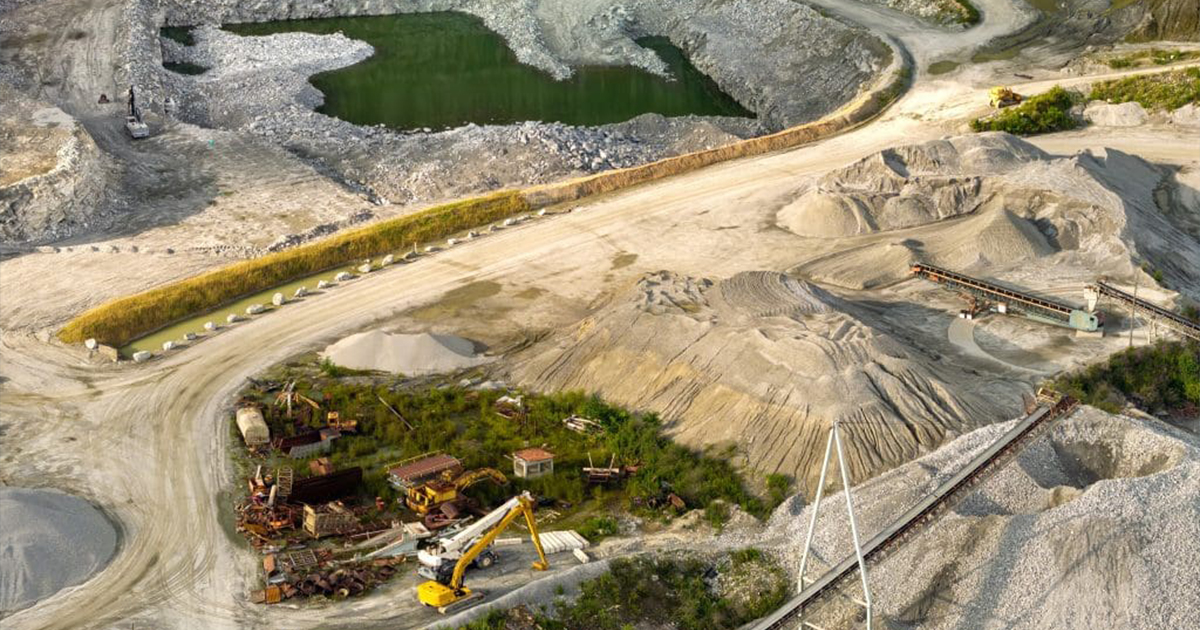

The United States pumps $73 million to develop mining technologies and secure critical minerals
The United States is pumping $73 million into four new projects to develop mining technologies, as part of a move aimed at accelerating the use of modern innovations within mines and enhancing the country’s ability to secure critical minerals locally.
The US Department of Energy announced the selection of projects within the Mine of the Future initiative, which aims to create local test sites that allow advanced mining technologies to be tried out in real conditions before moving to large-scale commercial use.
Washington links these investments to a broader goal of strengthening critical mineral supply chains and reducing… Reliance on external sources, especially with the increasing importance of these materials for the energy, manufacturing and national security sectors.
$73 million for mining development
The U.S. Department of Energy’s Office of Critical Minerals and Energy Innovation has selected four projects to enter negotiations for a total of $73 million in funding.
The projects focus on establishing national testing grounds that combine underground and surface mining environments, allowing new equipment and systems to be tested in conditions close to actual use.

These sites aim to accelerate the transition of mining technologies from the research and development stage to commercial applications, while reducing the technical and operational risks that companies may face when trying new technologies for the first time within sites. Production.
The government also seeks to raise local mining capabilities to support the production of critical minerals and strengthen their supply chains within the United States.
Technology moves to mines
Mining companies and researchers need locations where they can test innovations outside laboratories, especially since the success of a technology in a research environment does not necessarily mean it can work as efficiently inside mines.
The new projects aim to fill this gap by providing field testing environments that allow testing of equipment, software and operating systems under more realistic conditions.

Projects include sites in Virginia, West Virginia, Colorado, Arizona, Missouri and Texas, with the nature of testing varying between underground mines and sites. Surface, drilling and sensing facilities.
Through this environment, the performance of technologies can be evaluated before investing in deploying them on a commercial scale, which may reduce the cost of risks and accelerate the adoption of new innovations within the mining sector.
Automation and electricity drive modernization
The projects cover a wide range of technologies, including digital systems, mine communications and automation, as well as electricity and energy management technologies.
One project aims to develop a nationally accessible test site for mining, electricity and energy management technologies, with a focus on improving productivity and energy efficiency and accelerating commercial use.

Other projects also focus on testing connectivity and automation solutions in surface and subsurface environments Earth, with the aim of increasing safety, improving performance, and enhancing the ability of supply chains to cope with disruptions.
This expansion of modern mining technologies intersects with the ninth goal of the Sustainable Development Goals on industry, innovation and infrastructure, especially with reliance on research and development and the construction of advanced testing facilities to modernize a major industrial sector.
First artificial mine for tests
The program includes a project led by Southern Methodist University “ Southern Methodist University “ to create what the source described as the world’s first artificial mine inside an advanced drilling and sensing technology testing facility in Texas.
The project depends on reusing a drilling site equipped with measuring devices Sophisticated, allowing mining tools, workflows and automation systems to be tested accurately, safely and reproducibly.
This model helps researchers and companies experiment with technologies in a controlled environment before using them inside real mines, which may accelerate the transition of innovations from the concept stage to field operation.
The projects also include other sites to test ore fragmentation processes and underground mining techniques, expanding the scope of applications that can be developed during the program.
Critical minerals drive investment
The new funding is linked to a broader US attempt to strengthen supply chains for critical minerals and reduce dependence on outside suppliers for materials that Washington considers essential for energy, manufacturing and security.
The Ministry of Energy is betting that developing local mining capabilities depends on owning resources, as well as improving the technology used to extract them, operating mines, and raising production efficiency.

The projects also include practical training opportunities to prepare a new generation of miners and engineers capable of operating more advanced mining systems, which links technical development to labor market needs.
This aspect intersects with the eighth goal of the Sustainable Development Goals, concerned with decent work and economic growth, especially with investment in skills, productivity, and developing the capabilities of workers within the mining sector.
For a broader understanding of the importance of critical minerals in modern energy chains and alternatives that can relieve pressure on traditional mining, read also: How is the circular economy reshaping clean energy supply chains? .
In light of these developments, The Earth Guards Foundation highlights the necessity of investing in modern mining technologies, as they represent a shift towards linking the security of chains of critical minerals to innovation and local capabilities, with the increasing importance of field testing and training in accelerating the transition of technologies from research to use. Commercial.


