

Purchasing sunlight on demand…a space project that tests the sustainable development goals
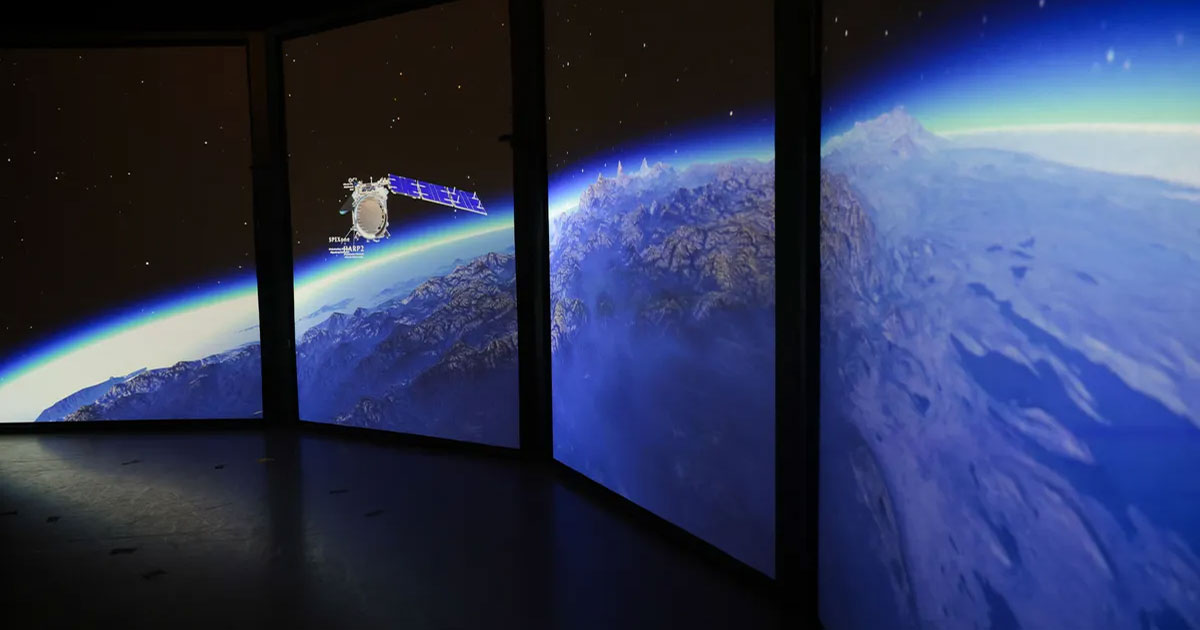

Buying sunlight upon request…a space project that tests the sustainable development goals
An American company plans to launch satellites that will reflect the sun’s rays back to the Earth even after sunset. In order to make your solar farm panels run longer! Does this idea serve the goal of clean energy, or does it threaten natural darkness and astronomical observatories, and face major technical obstacles?
In this article, The Earth Guards Foundation attempts to answer these questions, in light of the seventeen sustainable development goals, including their social, economic, and environmental dimensions; So keep reading.
What is sunlight?
Sunlight is the electromagnetic radiation emitted by the sun’s disk, and it reaches the Earth in about eight minutes. It includes infrared rays, which we feel in the form of heat, and a small part of ultraviolet rays.
Here a question of great importance arises: Is sunlight coherent? The answer: No; Because sunlight is incoherent light; Its waves are issued randomly and with different wavelengths. This is why it is difficult to focus reflected sunlight into a small spot with absolute precision, which is part of the challenge of the Night Satellite Project.
What is the importance of sunlight to humans and the planet?
Before going into clarifying the details of this space project and its dimensions, we must know that the importance of sunlight lies in that it is the basis of most forms of life. They are:
- تُحرك البناء الضوئي الذي ينتج الأكسجين.
- تمكِّن الجسم من تصنيع “فيتامين د”.
- تنظم الساعة البيولوجية ودورة النوم.

ما هو مشروع “ضوء الشمس عند الطلب”؟
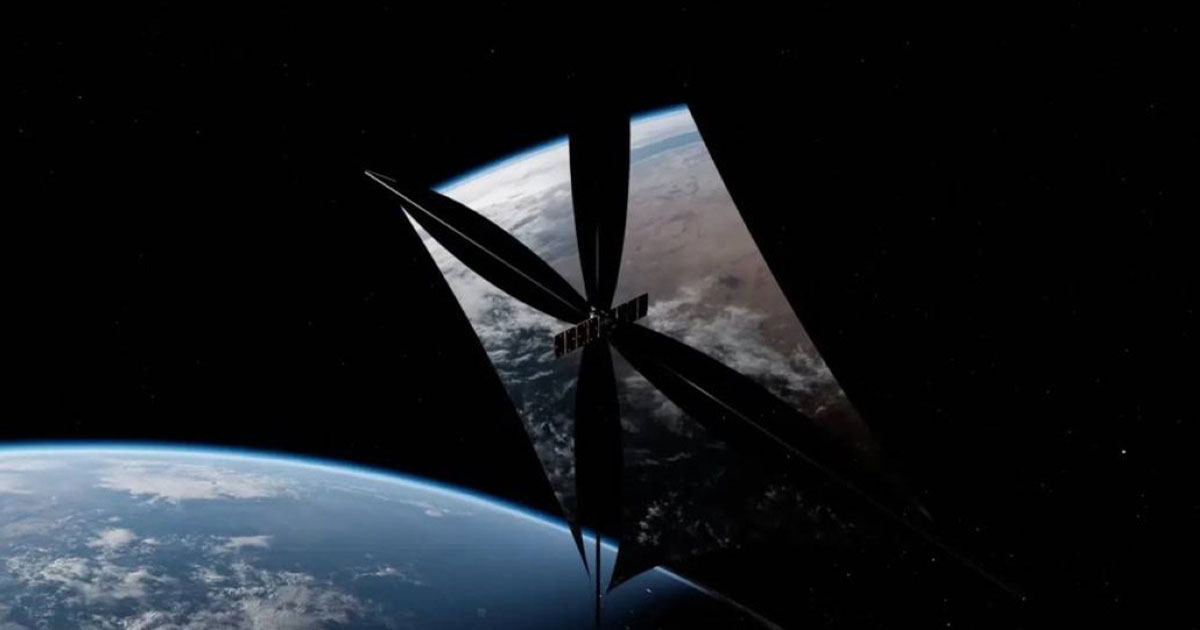
In more detail, the “Reflect Orbital” company in California announced a plan to launch a constellation of artificial satellites that reflects the sun’s rays towards the Earth even after sunset, and the company calls this service “sunlight on demand.”
Regarding this, the company said that the mirrors of these satellites will direct sunlight towards solar farms, thus becoming an additional source of clean energy at night. Hence its founder, “Ben Nowak” in a video on the “X” platform: “ We work to provide sunlight after sunset through simple and effective technology ”.
Schedule and specifications
In order to operate solar farm panels even after sunset, the experimental start of the project is based on a number of successive steps, and in the following table we detail them for you.
| Item | Announced details |
| Experimental Moon | During the last two months of 2026, the moon called Earendil-1, with a width of 18 meters, will be launched. |
| Target by 2030 | About 4,000 satellites |
| View of satellite mirrors | 54 meters |
| Orbit height | 625 kilometres above the Earth’s surface |
| Target Production | Equivalent to 20% of midday sunlight (about 200 watts/m²) |
How does the project relate to the Sustainable Development Goals?
The project touches on several direct goals, some of which support it and some of which conflict with it.
Goal 7: Affordable and Clean Energy
One of the biggest disadvantages of solar energy is that it stops at night; If light reversal is successful, it may extend operating hours and produce more clean energy. This is the strongest argument for supporters of the idea.
Goals 9 and 13: Innovation and Climate Action
On the other hand, the project represents a bold innovation in energy infrastructure, but climate action requires truly feasible solutions. Therefore, the strength of the argument declines, as we will see in the next section of the article.
Goals 12 and 15: Responsible consumption
The natural night is part of the balance of ecosystems, as nocturnal organisms depend on darkness, which is what made scientists warn – in a statement from the DarkSky International group – of massive artificial light pollution that disrupts observatories and distorts the view of the sky! That is, such uncontrolled space activities may conflict – according to the opinions of astronomers – with the concept of responsible consumption and production. This controversy raises important questions about the limits of innovation and the extent of its overlap with the potential environmental threat.
Is the idea technically successful?
Therefore, the data indicate serious obstacles, including:
- Weakness of light: The light of a single moon is about 15,000 times weaker than the noon sun.
- Brightness of light: The reflected light remains brighter than the full moon itself.
- Reflecting mirror size: Repeating this from orbit would require a 42 square kilometer mirror, which is technically unrealistic.
- Short duration: One moon passes over any point for only about 3.5 minutes, so to obtain an hour of continuous illumination, thousands of additional satellites must be launched.
All of these challenges prompted “The Conversation” website to describe the project as an impractical and dangerous idea for the astronomical environment of our planet, and hinders efforts to achieve sustainable development goals in the sky and on earth.
Therefore, the idea of purchasing sunlight on demand reveals a profound paradox in the path Scientific progress; The more man’s ability to subjugate nature expands, the greater his need to understand the limits that should govern his intervention in it.
This calls The Earth Guards Foundation to stress that the future of clean energy should be based on diversifying its sources, developing means of storing it, raising the efficiency of its use, and modernizing electricity networks. These paths deserve serious comparison with the proposed space solutions in terms of cost, ability to apply, and environmental impact.


