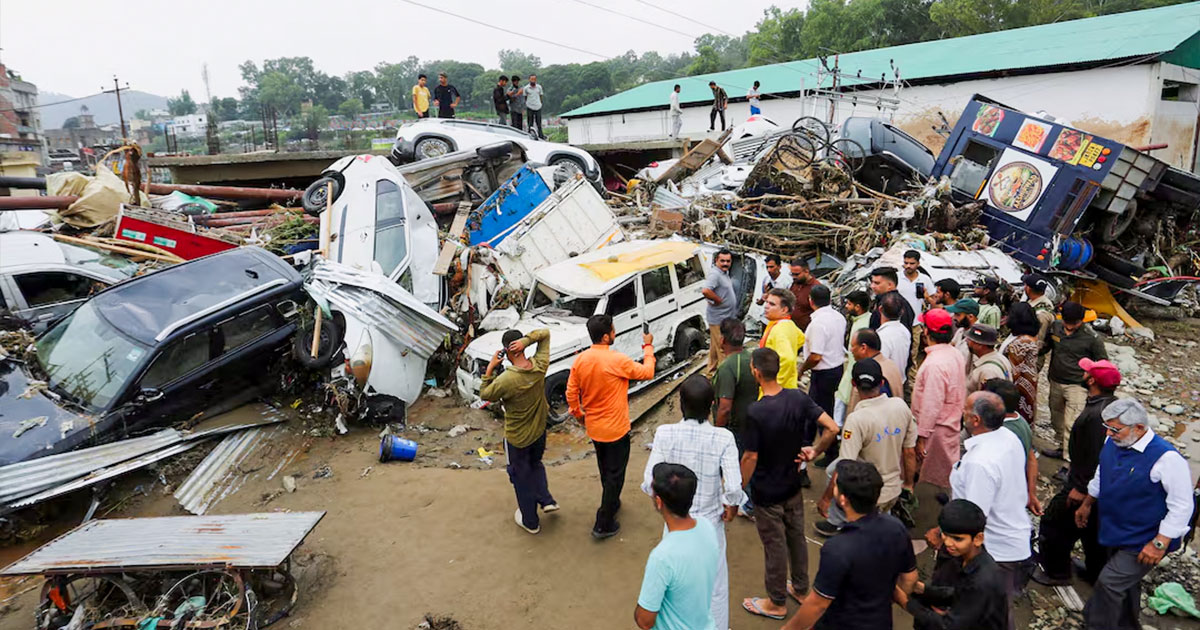
25 dead and 57 thousand affected.. Indian floods besiege the northern states
Heavy monsoon rains turned the weekend into a new wave of losses in northern and northeastern India, after floods swept a number of areas, and landslides caused dozens of deaths, in addition to thousands of people being affected, while rescue teams continue to search for missing persons amid expectations that the turbulent weather will continue in the coming days.
The disaster reveals that the danger is linked to the abundance of rain, as well as the ability of cities and villages to absorb it and confront its effects. The weakness of drainage networks, the fragility of roads in mountainous areas, and the difficulty of reaching some residential communities make resilient infrastructure and early warning systems essential elements for protecting lives and supporting the path of sustainable development.
Indian-administered Kashmir recorded the largest number of casualties, after at least 15 people died in separate rain-related incidents within Poonch, Rajouri and Doda districts, according to a senior police official.
The authorities are still searching for a number of missing people, in light of the difficulty of reaching some of the affected sites and the continued rainfall, which caused water to flow across roads and residential areas and increased the risk of soil collapse in mountainous areas.
In the northeastern state of Nagaland, continuous rains led to several landslides, killing nine people. Rescue teams announced the recovery of four bodies, while continuing their operations in areas flooded with dust and rocks.
As for the neighboring state of Assam,The Indian floods caused the death of one person, according to the state Disaster Management Authority, which indicated that the heavy rains affected more than 57,000 people distributed over seven provinces.
57 thousand people in the midst of damage
The death toll alone does not reflect the scale of the disaster, as heavy rains caused disruption to the lives of tens of thousands of residents, whether due to the flooding of homes and roads or the difficulty of movement and access to basic services.
In Assam, floods in India are one of the most prominent recurring dangers during the monsoon season, as river levels rise and water expands in low-lying areas, threatening residential communities and agricultural lands.
With more than 57 thousand people affected during the recent rain wave,Authorities face challenges related to providing shelter and urgent aid, as well as protecting residents in areas vulnerable to further flooding if current weather conditions persist.
The difficulty of responding increases in areas where roads are subject to flooding or collapse, as some villages can turn within hours into isolated areas that are difficult for rescue teams and supplies to reach.
Monsoon winds portend more losses
The Indian Meteorological Department has warned that active monsoon conditions will continue in northwest, east and northeast India during a period of six to seven days.
These expectations mean that the danger has not ended with the decline of water in some areas, as new rains may lead to a rise in river levels and saturation.The soil is filled with water, which increases the possibility of new landslides. These developments highlight the importance of strengthening adaptation measures to extreme weather events, in line with the thirteenth goal of the Sustainable Development Goals (SDGs) related to climate action.
Mountainous areas pose a particular challenge during heavy rains, because saturation of slopes with water can lead to the collapse of masses of soil and rocks over roads and homes, while the rugged terrain hampers rescue operations and reaching the injured.
Collapses may also block main roads and disrupt the movement of supplies and transportation, doubling the economic and humanitarian impacts of disasters, even in areas not exposed to direct inundation.
Nepal faces extension of crisis
The effects of the monsoon extended to neighboring Nepal, where it was announcedNational Disaster Risk Reduction and Management Authority 27 people have been killed since the start of the season in mid-June.
One person is still missing, while 69 others were injured as a result of floods, landslides, heavy rains, and lightning.
The collapses led to the closure of several highways due to the accumulation of rocks and dust, including the road linking the capital, Kathmandu, to the southern plains, which affected the movement of citizens and the transport of goods between the regions.
The Nepalese Meteorological Authority expected rain of light to moderate intensity in most parts of the country, with the possibility of heavy rain falling in separate locations within the districts of Kochi, Bagmati, Gandaki and Lumbini.
The extension of the damage floods in India to neighboring Nepal reveals the scale of the challenges facingAreas around the Himalayas experience it during the monsoon season, when incessant rains can threaten cities, villages and roads simultaneously.
Infrastructure capable of confronting disasters
Recurring losses show that dealing with floods and landslides requires sending in rescue teams after a disaster strikes, along with long-term investments in prevention and preparedness.
The Indian floods reveal the need to develop water drainage networks, monitor mountain slopes, and prepare accurate maps of areas vulnerable to collapse, in addition to improving early warning systems and population evacuation plans.
Roads and bridges in mountainous areas also need designs and maintenance that take into account the risks of heavy rain and soil erosion.Especially since the collapse of a main road could isolate entire communities and disrupt the arrival of aid.
This is directly linked to the ninth goal of the Sustainable Development Goals (SDGs), which is concerned with building resilient infrastructure, and the eleventh goal, which is to make cities and human settlements safer and more sustainable, in addition to the thirteenth goal, which calls for enhancing the ability to adapt to risks and disasters associated with climate change, and reducing their effects on societies.
With continued rain forecasts, the death toll is likely to rise, while rescue teams and local authorities continue to monitor the areas most at risk.
In conclusion, these events reveal that the real challenge lies in the ability of societies to adapt to a climate reality that becomes more volatile year after year. Natural disasters retest the efficiency of the structureInfrastructure, speed of response, and level of advance planning – these are elements that have become the first line of defense to protect lives, reduce losses, and support a development path that is more capable of confronting future risks.
In this context, The Earth Guards Foundation points out that reducing disaster losses begins before the rain falls, through proper planning, developing warning systems, and protecting the communities most at risk, ensuring that every wave of severe weather does not turn into a new tragedy.