Bank of England excludes coal bonds, tightens restrictions on fossil fuels in the banking system
Pressures on fossil fuels are beginning to take a clearer financial path, after the Bank of England decided to exclude bonds linked to thermal coal from the assets that commercial banks can use as collateral for loans. The decision exposes one of the most polluting types of energy to a new challenge, going beyond environmental criticism to its value and use within the banking system.
The new policy is scheduled to take effect during October 2026, in a move seen by climate activists as a victory that could prompt commercial banks to rethink holding coal-related assets. This comes at a time when there are increasing concerns about fossil fuel investments turning into assets that are vulnerable to losing value, with a trendEconomies are gradually moving towards clean energy and carbon neutrality.
The Bank of England regularly makes loans to commercial banks, such as Barclays, Lloyds, NatWest and HSBC, to help them settle transactions and keep their financial operations running smoothly.
These banks are obligated to provide guarantees against the loans they obtain from the central bank, and these guarantees are often in the form of financial bonds. If a bank is unable to repay the loan, the central bank has the right to retain the assets provided to it.
Under the new policy, banks will not be able to offer bonds linked to thermal coal companies as part of these guarantees. This does not mean prohibiting banks from owning these bonds or financing companiesCoal directly, but it takes away from it an important advantage that would have allowed it to be used to obtain liquidity from the Bank of England.
This change may reduce the attractiveness of these bonds for financial institutions, especially since the ability of the asset to be used as collateral represents one of the factors that determine its value and interest within banking portfolios.
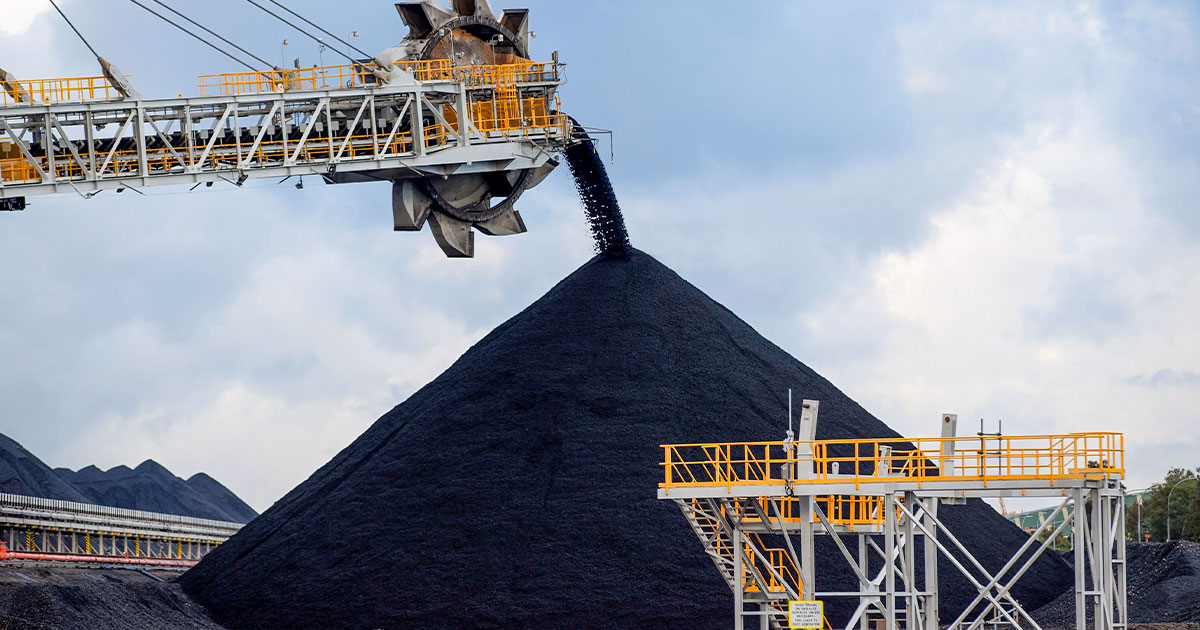
Thermal coal is a type of fossil fuel, and is mainly used in power plants. It is also one of the most carbon-emitting sources of energy, which has made it a major target for climate policies and campaigns calling for accelerating the energy transition.
Why has coal become a financial risk?
The Bank of England believes that thermal coal companies may face financial risks resulting from the transitionEconomy towards achieving carbon neutrality. As the use of renewable energy expands and environmental restrictions tighten, demand for coal may decline and the profits of companies operating in it may decline.
This shift could lead to a decline in the value of bonds issued by these companies, exposing the institutions that hold them to potential losses. The risks associated with fossil fuels have thus become part of financial stability calculations, rather than an environmental issue separate from the work of central banks.
This trend is consistent with the seventh goal of the Sustainable Development Goals (SDGs), on expanding reliance on clean energy, and the thirteenth goal on climate action, which encourage accelerating the transition towards a low-emission economy and reducing the risks associated with climate change.
The Bank of England also announced that it would reduce the value at which some bonds issuedOther sectors at risk of transitioning towards a low-emission economy. This measure aims to protect its budget from losses that may result from the rapid decline in the value of those assets.
Ellie McLaughlin, director of policy and advocacy at Positive Money Group, said that the decision sends a strong signal from a central bank to financial markets, because the exclusion of coal bonds reflects a change in the assessment of the risks associated with them.
How does the decision affect banks?
Climate activists hope the new policy will prompt commercial banks to review their dealings with coal companies, especially as holding unacceptable bonds as collateral with the central bank may become less useful.
The potential effects of the decision may appear in several directions:
The attractiveness of thermal coal bonds to banks and investment institutions has declined.
Re-evaluating fossil fuel-related assets within banking portfolios.
Increased financing costs for some companies operating in the coal sector.
Urging banks to direct a larger portion of their investments towards sectors less exposed to the risks of the energy transition.
Enhance recognition that emissions-intensive assets may carry long-term financial risks.
About 150 major financial institutions around the world are already imposing restrictions to varying degrees on their dealings with the thermal coal sector, according to data published by the Paris-based non-profit Reclaim Finance.
The Bank of England’s policy is more stringent than…The rules applied by a number of its Western counterparts, including the European Central Bank. The move may therefore put additional pressure on other central banks to review the coal-related assets they accept for their financing operations.
A limited step towards financing fossil fuels
Activists believe that the effectiveness of the decision will depend on the details of its implementation, especially the method that the Bank of England will use to estimate climate risks and determine the amount of reduction it will impose on the value of bonds in other sectors.
They also call for the exclusions to be expanded to include all activities described as highly harmful, including new fossil fuel expansion projects and activities linked to deforestation.
The current decision focuses directly on coalThermal, and does not extend to all oil and gas investments. Therefore, its impact remains limited in the face of the large amount of financing that fossil fuel industries receive from global financial institutions.
It is becoming increasingly difficult to tighten these policies in light of the escalation of opposition to environmental plans in the United States, and a number of companies and financial institutions withdrew from some of their climate pledges after Donald Trump’s return to the White House.
However, the Bank of England’s decision carries symbolic and financial significance, because it shows that the transition away from fossil fuels is beginning to change the rules that determine the value of assets accepted within banking systems.
Eliminating coal bonds may not stop funding the sector immediately, but it reduces the financial benefits of those assets and makes banks more cautious when assessing the risks of holding them.
In conclusion, although the decision is limited to bonds linked to thermal coal, it reveals a deeper shift in the way financial institutions deal with risks, as the value of assets is now measured by their ability to withstand an economy that is gradually moving towards reducing emissions. As this approach expands, finance may become one of the most prominent tools that reshape the future of the energy sector, by repricing fossil fuel risks within financial markets.
In this context, The Earth Guards Foundation stresses the importance of directing financing towards activities that support the energy transition, while integrating environmental risks into the decisions of banks and investment institutions, which contributes to reducing emissions and enhancing the stability of the economy in the long term.