

Preparations for the 2026 United Nations Water Conference… implementation and financing top the agenda

Preparations for the 2026 United Nations Water Conference… implementation and financing top the agenda
With about five months to go until the Water Conference in Abu Dhabi, governments and international institutions are moving to identify initiatives that can give the event an impact beyond its days. Water stands at the heart of Goal 6 of the Sustainable Development Goals (SDGs), and is also linked to health, food security, climate action, and economic growth, making the conference a test of the international community’s ability to deal with these issues within a single system.
The UAE, in partnership with Senegal, is scheduled to host the United Nations Water Conference 2026 from December 8 to 10. The ongoing preparations reveal a clear focus on moving from planning to implementation, through six tracksFor dialogue, key initiatives, financing mechanisms, and partnerships, the impact of which is expected to extend to the Sustainable Development Goals (SDGs) Summit in 2027 and the United Nations Water Conference in 2028.
Five months separate the world from the Water Conference
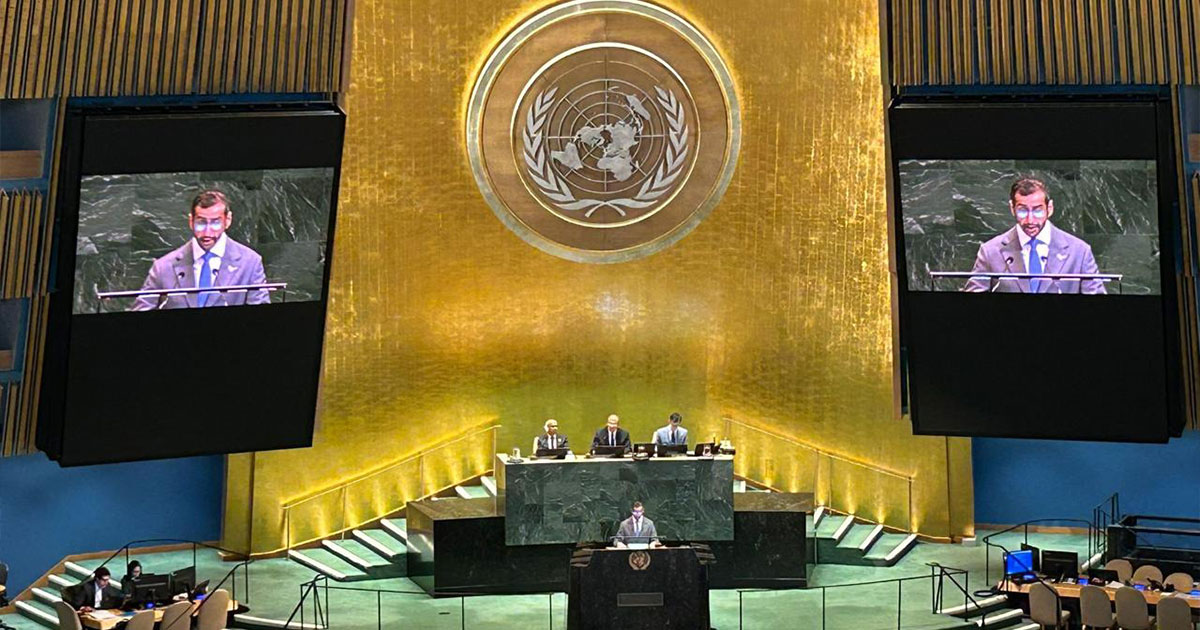
Updates on the preparations for the conference were presented during a side event held within the 2026 session of the High-Level Political Forum on Sustainable Development, where representatives of governments, the United Nations and international institutions discussed what has been achieved since the start of the preparatory process, and the remaining steps before the convening.
The UAE and Senegal, as host countries, seek to maintain political momentum over the coming months, while pushing participants towards identifying implementable initiatives, and linking different tracks to a single agenda rather than turning them into separate discussions.
The water conference comes at a moment when international institutions confirm that progress in access to water and sanitation services is still slower than desired, despite the improvement that has benefited billions of people over the past years. Hence, the pressure increases until the conference produces results that can be monitored and measured.

Implementation becomes the criterion for success
Key messages in the preparatory session emphasized that the success of the conference will be measured by the volume of commitments, partnerships and results it can produce.
The Deputy Secretary-General of the United Nations, Ms. Amina Mohammed, stressed that water is directly linked to health, the economy, digital development, peace and resilience, calling for implementation to remain present from the first session until the end of the conference.
Mr. Abdullah Al-Alaa, UAE Assistant Minister of Foreign Affairs for Energy and Sustainability Affairs, also stressed that access to water is a basic right, and that the success of the Water Conference depends on raising ambition and transforming discussions into concrete commitments that will continue after 2026.
On the Senegalese side, Mr. Mohamed Diatta, responsible for coordinating preparations, identified three priorities for the coming months: maintaining high-level political leadership, ensuring harmony between the six dialogue tracks, and translating pledges into executive actions. This reflects a trend towards formulating a common roadmap rather than a set of separate initiatives.
Six tracks that define the conference agenda
The preparations are based on six interactive dialogues including: Water for Planet, Water for People, Water in Multilateral Processes, and Investments fromFor water, water for cooperation, water for prosperity.
Despite the different issues addressed by each track, the conference organizers seek to build a clear link between them, so that the issues of climate, finance, sanitation, international cooperation, and economic management of water resources are integrated.
It is expected that these dialogues during the Water Conference will produce a set of major initiatives that form the executive framework of the event, with the adoption of criteria for selecting projects capable of achieving practical results and continuing after the end of the conference. Below, we explain the features of each track, and the most prominent issues and initiatives that are at the forefront of its preparations before the conference.

Egypt and Japan lead the way on water for the planet
Egypt participatesJapan co-chairs the “Water for Planet” track, which links water management to climate change, biodiversity, desertification, resilience and disaster risk reduction.
Japan indicated during the presentation of the preparations that emerging priorities include improving access to financing, in addition to strengthening early warning systems to confront floods, droughts and climate-related phenomena.
For its part, Egypt focused on capacity-building initiatives, stressing that the main projects that will be announced by the track must contribute to forming the executive structure of the conference. The two countries are also working on preparing criteria for selecting these initiatives, to ensure their connection with the general objectives and their applicability.
Cairo Water Week, scheduled to be held in October, holds special importance within this path, as it is expected to provide an opportunity to continue consultations and developInitiatives before the Water Conference in December.
Water for people
This track, led by Ghana and Switzerland, focuses on accelerating access to drinking water, sanitation and hygiene, according to a human rights-based approach. It also pays special attention to groups most vulnerable to marginalization or exclusion from basic services.
Among the proposed proposals is the establishment of a global platform to support national water plans and follow up on progress in their implementation, in a way that helps countries move from general goals to specific, measurable programs.
Investing for water
Financing is one of the most prominent issues in preparations, because improving water services and building infrastructure require ready projects and financial tools capable of attracting investment. And discussThe path led by South Africa and France expands financing, reduces risks for investors, and links national plans to water resources management.
The World Bank also presented the “Water Forward” initiative,, which brings together a number of multilateral development banks with the aim of supporting project preparation and developing financial instruments, including bonds, to contribute to reducing the investment gap and building more sustainable water security systems.
Water for Cooperation
Finland and Zambia are leading this path, which focuses on managing shared rivers and water basins, enhancing scientific cooperation, and improving governance and coordination between countries and institutions.
The track works on initiatives aimed at empowering river basin organizations and supporting their ability to manage transboundary resources. And it increasesThe importance of this file in areas where several countries depend on the same water source, where cooperation can reduce tensions and support stability.
Water for Prosperity
China and Spain are leading the way at the Water Conference, which views water as a foundation for economic and social growth. Issues addressed include water valuation within economic decisions, improving use efficiency, wastewater management, and smart resource management.
The track also focuses on the relationship between water, energy and food, and linking water planning to investment and development. The “Water for Prosperity” initiative is expected to contribute to providing tools that help decision-makers integrate the value of water into economic policies.
Water in international operations
This path is led by Germany and Mexico, and aims to stabilize the presence of water more regularly within the international system. Proposals include holding UN water conferences every three or four years, improving stakeholder engagement, and linking water conferences to climate, biodiversity and desertification agreements.
The track also calls for developing more consistent arrangements for financing and follow-up, and engaging youth through water education and capacity building, ensuring continued attention to the issue after official events have ended.
Will the Water Conference move from pledges to implementation?
Current preparations seek to place the Water Conference on a continuous path that begins with the results of the 2023 conference, passes through the Sustainable Development Goals (SDGs) summit in 2027, and reaches the United Nations Water Conference in 2028.This means that the initiatives expected to be announced in Abu Dhabi will be measured by their ability to continue and expand after the event ends.
The main challenge remains to transform the six tracks into a coherent program of work, with clear funding, timetables, and follow-up mechanisms. Water is an issue that affects the lives of individuals, economies, and the stability of countries, and any real progress requires partnerships that transcend the boundaries of institutions and countries.
From this standpoint, Earth Defenders Foundation confirms that the importance of the Water Conference lies in its ability to move the water file from the circle of promises to the circle of implementation, and to link the right to water to financing, climate, and international cooperation. The true value of the conference will appear in the projects that begin after the delegations leave the meeting rooms, not in the number of words said inside them.


