

$5 billion for Nepal’s reconstruction amid controversy over climate justice
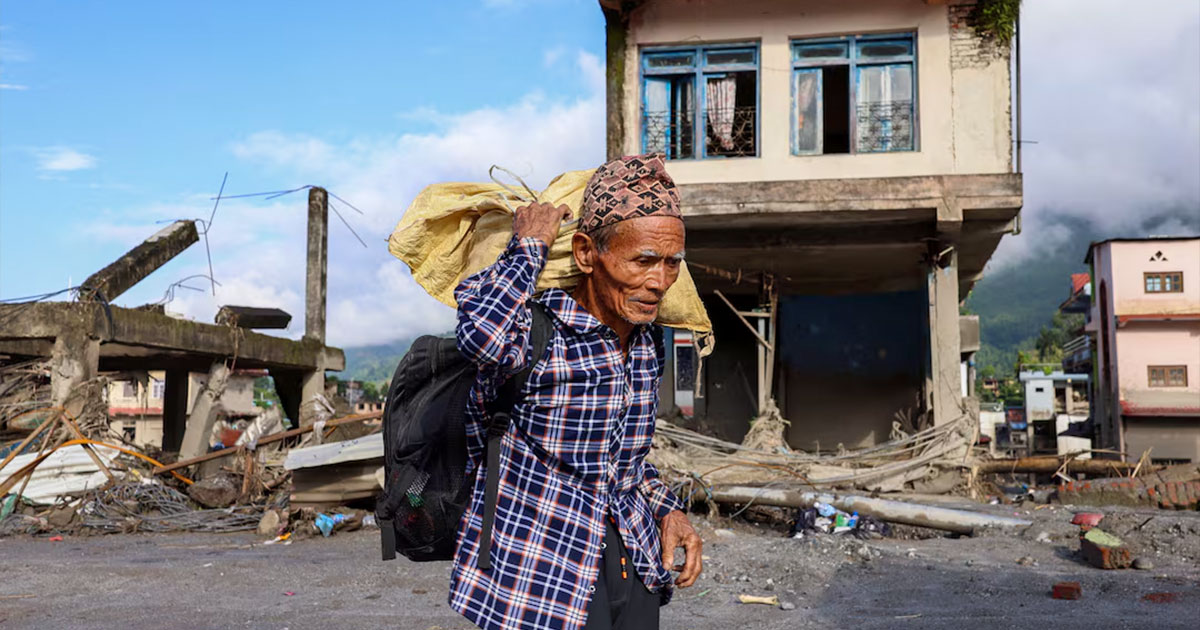

$5 billion for Nepal’s reconstruction amid controversy over climate justice issue
Nepal is putting climate justice at the forefront of its move to obtain international support after the devastating floods that struck the country in late August, as the government is preparing to request financial aid from the richest countries and international institutions to contribute to about $5 billion needed during the first phase of reconstruction.
This move comes after a large-scale disaster that followed the collapse of a glacier in the Himalayas, killing at least 1,300 people, while more than 5,300 are still missing in Nepal and the Chinese Tibet region.
The funding request represents a new development in the Nepal floods file, as the government movesFrom dealing with direct losses to raising a broader question about the international community’s responsibility to help countries that are exposed to significant climate damage despite their limited contribution to global emissions.
Extensive losses after floods
The floods caused significant damage to infrastructure within Nepal, washing away more than a dozen hydroelectric power plants, along with roads, bridges, homes and trails used in cross-border trade.
Nepal bore the brunt of the impact of the disaster, which increased its urgent needs to rehabilitate basic services, provide temporary housing for those affected, and reopen roads and vital facilities.
The Earth Guards Foundation had discussed the developments of the disaster in previous coverage when the number of victims and missing persons increased, and details can be foundVia: Nepal’s floods are turning into a major disaster… 750 dead and more than 3,000 missing, while current development focuses on financing recovery and international responsibility for climate losses.

Nepal requests $5 billion
The government estimates the needs of the first phase of recovery at about $5 billion, an amount that covers the first five months of post-disaster reconstruction.
These estimates are scheduled to be shared with the World Bank and the Asian Development Bank, in addition to embassies, countries and blocs including the United States, Britain, India, China, Japan and the European Union.
The government is also working on preparing a final report clarifying the extent of the damage, losses, and financing needs related to the shelters.temporary, schools and basic infrastructure, in an attempt to transform loss estimates into a clear financing plan for international bodies.
Climate justice drives demand
Nepal is making its request from the perspective of climate justice, arguing that the disaster reflects the imbalance between the countries that contribute most to climate change and the countries that bear a significant portion of its impacts.
Nepali officials say that their country’s contribution to historical and current emissions of Greenhouse Gases (GHGs) is very limited, while in contrast it faces widespread disasters related to climate change that affect lives, infrastructure and the economy.
Officials present the issue as a shared responsibility of the international community, especially since China represents about a third of global emissions, while the United States is theIndia is also among the largest emitters.
This proposal intersects with the thirteenth goal of the Sustainable Development Goals (SDGs) on climate action, especially with regard to supporting countries most vulnerable to the effects of climate change and enhancing their ability to adapt and recover from disasters.
Funding may arrive slowly
Although Nepal has moved for support, past experience reveals that international financial pledges may not quickly turn into funds available for reconstruction.
Pakistan’s experience after the 2022 floods is a clear example, as it obtained international pledges estimated at about $11 billion from partners including the Islamic Development Bank and the Kingdom of Saudi Arabia, but a large portion of these pledges did not go directly to rebuilding the affected areas.
And according to thatIn the figures mentioned in the source, about $4.6 billion of pledges were allocated for oil imports, while the Pakistani government estimated by early 2024 that what had actually been disbursed amounted to only about $3.4 billion, including $1.45 billion for oil financing.
This experience increases Nepal’s fears that there is a gap between the volume of international pledges and the speed of funding reaching sectors that urgently need to rebuild.

Nepal transfers the file internationally
The government’s move to seek funding coincides with Prime Minister Balindra Shah preparing to address the United Nations on September 24, where he is expected to demand greater international support for developing countries most vulnerable to climate risks.
This movement gives dimension to the issue of climate justiceDiplomatically, it goes beyond the reconstruction of Nepal alone, as it is linked to broader demands about how to finance poor countries affected by disasters that are becoming more severe with climate change.
This path also relates to the seventeenth goal of the Sustainable Development Goals (SDGs), which is concerned with establishing partnerships, especially since recovery from major disasters depends to a large extent on cooperation between governments, international financial institutions, and donors.
In light of these developments, Earth Defenders Foundation points out that the Nepal case puts climate justice before a practical test related to the rapid arrival of financing and its ability to support reconstruction, at a time when developing countries are increasingly demanding that the international community bear greater responsibility for climate losses that exceed their local capabilities to cope.


