

6 tips to protect you from thunderstorms for good health

6 tips to protect you from thunderstorms for good health
Thunderstorms In Egypt, they are few in number, large in impact, and are mostly concentrated between October and April on the northern coast, Sinai, and the Red Sea. Within hours, they may transform from a blessing that waters the earth into a danger that disrupts roads and electricity.
Therefore, following the weather tomorrow in Egypt is not enough to know whether to carry an umbrella or not; Because rain directly touches on the Sustainable Development Goals: health (Goal 3), clean water (Goal 6), energy (Goal 7), infrastructure (Goal 9), safe cities (Goal 11), and climate action (Goal 13).
From this standpoint, I present to you The Earth Guards Foundation Practical and sustainable advice on ways to prevent thunderstorms in Egypt, in order to achieve good and safe health for all citizens in conjunction with the approaching winter season; So keep reading.
What is the phenomenon of rainfall?
The phenomenon of rainfall is the return of water from the atmosphere to the ground in the form of droplets. The cycle begins when sea and river water evaporates and condenses in the atmosphere in the form of clouds. If the drops become heavy, they fall as rain.
This cycle is the basis of life forms on planet Earth, yet today it is affected by climate change. Hence, we find a close link between it and Goal 13 of the Sustainable Development Goals: climate action. As global temperatures rise, the rate of water evaporation from the seas increases And the oceans and soil. The warmer atmosphere carries greater amounts of water vapor, so precipitation patterns change and become less regular, and then some areas experience heavy rain or torrential rain.

What are the causes of rain?
Rain falls when sufficient moisture combines with a factor that raises the air upward; As the air rises, its temperature and pressure decrease, and it is unable to retain the water vapor it contains. This vapor condenses around fine particles suspended in the atmosphere, such as dust and sea salt, forming cloud droplets. Then these droplets gather and grow until the air is unable to carry them, and they fall in the form of rain.
In Egypt – specifically – three main reasons are repeated:
Depressions Mediterranean Sea
Mediterranean depressions bring humid air masses that reach the northern coasts, causing rain to fall on Alexandria, Matrouh, and Port Said. This is why many people search for the weather in Alexandria whenever the low tide approaches.
Extension of the Red Sea
The extension of the Red Sea activates cumulonimbus clouds in the fall, especially over Sinai and the Red Sea. It is a common cause of heavy rains and flash floods there.
Atmospheric instability
When warm, moist air rises quickly, huge cumulonimbus clouds form, and this is the origin of thunderstorms, which are rains that are accompanied by lightning, thunder, and active winds.
Why did it rain thunderstorms? Most surprising?
Climate scientists say: Global warming makes the atmosphere more capable of carrying water vapor; The result is often more concentrated rain in a shorter time. This is what we notice in the waves of bad weather that pass through Egypt: strong winds in some governorates, light to moderate rains on the coast in Alexandria, Port Said, and Suez, and relatively more severe rains in South Sinai, accompanied by lightning and thunder.
When does rain fall in Egypt?
Rainfall in Egypt usually falls from late fall until early spring, and reaches its peak in winter, and the picture varies from one region to another, as the following table shows.
| Region | Period Most vulnerable to rain | Typical nature of rain |
| North Coast (Alexandria, Matrouh, Port Said) | From October to March, and the worst in winter | Mild to moderate, and may intensify with depressions |
| Cairo and the Delta | November to March | Intermittent and often short |
| Sinai and the Red Sea | Autumn and spring specifically | Thunderstorms, and may cause sudden flash floods |
| Upper Egypt | Rare and irregular | It may come suddenly and abundantly |
Four threats that hinder sustainability
The most dangerous thing about rain is that it reveals our daily weaknesses; Bad weather may cause road accidents and power outages, especially for those who did not prepare in advance. Below are the most prominent risks and their corresponding sustainable development goals.
Electricity is a deadly danger
The first thing that threatens people in heavy rain is exposed or fallen wires, and the same applies to poles. Lighting and electricity kiosks spread throughout the streets. A wire may hang precariously from a house after getting wet from the rain.
Inside the house, rain causes the electrical voltage to fluctuate, increasing or decreasing in a way that may damage the devices. Therefore, it is recommended to unplug electronic devices during heavy rain. All of this explicitly calls on us to strengthen efforts to achieve Goal 7 (reliable and safe energy). Which means networks secured against rain, and regular maintenance of poles and wires.
Roads and expected accidents
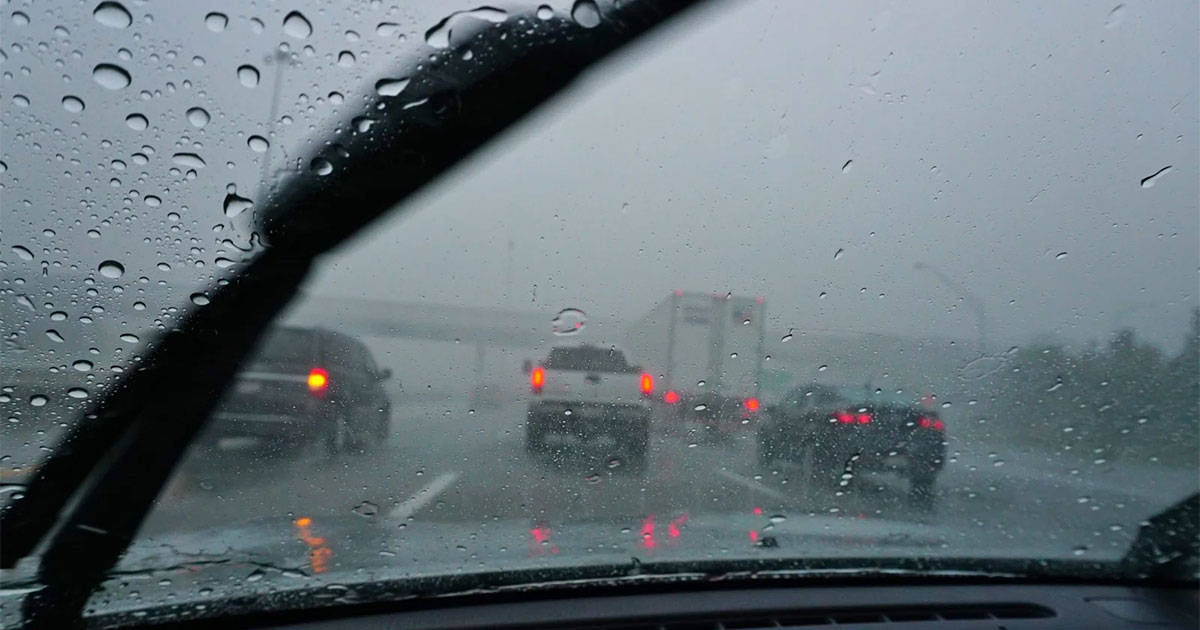
During rain thunderstorms Roads become slippery as soon as they get wet, especially highways and times of water fog. Motorcycles are more dangerous because they easily slip and fall on wet asphalt. If you are driving a car, slow down and increase your distance Safety, and pay attention to bikers around you.
Therefore, securing roads against rain accidents requires working to activate Goal 9 and Goal 11, which are concerned with activating a sustainable infrastructure, through rain drains and roads designed to drain water quickly.
Health at the forefront
Water puddles on the road appear clean, but they may carry bacteria that cause skin and fungal infections, and may transmit other infections if they come into contact with an open wound or reach the mouth. Direct exposure to rain also raises the risk of bronchitis, colds, and influenza, especially among children, the elderly, and allergy and asthma patients.
Hence simple advice emerges, which is to avoid walking in the rain and in stagnant water, wear closed waterproof shoes when necessary, and dry Wet feet and clothes immediately upon return. These are all simple measures that serve Goal 3 (good health and well-being) at the lowest possible cost.
Houses and buildings: dampness and leakage
Loose windows bring rain into the house, spoiling the paint and floors. The most dangerous thing is for the water to reach the wires, causing undesirable consequences. On the street, billboards, old balconies, and weak trees are prone to falling with the wind. This makes safe buildings part of building climate resilient cities.
How do we protect ourselves when it rains?
The best advice is not to go out during the rain unless necessary. If you have to go to work or something else, adhere to the following:
What are you wearing?
Choose heavy clothing with a high collar, with thick socks, gloves and earmuffs; The goal is for your body to stay warm. Wear slip-resistant shoes, such as boots or safety shoes, carry a sturdy umbrella, and store your phone, wallet, and cards in small plastic bags.

Where do you stand and how do you go?
Stay away from billboards, lighting poles, electricity kiosks, old balconies, and trees in danger of falling, and avoid basement garages. Because it fills with water quickly. If you see a fallen wire, do not approach it, inform the competent authorities of its location, and then alert children to play away from old walls and columns.
What about driving?
Drive slowly, keep a safe distance between you and other cars, hold the steering wheel when it is raining or sleet, follow the forecasts before moving, and then take your precautions accordingly.
Quick checklist before you leave:
- Check the weather forecast and decide whether going out is necessary.
- Wear warm layers and non-slip shoes, and take an umbrella and a raincoat.
- Unplug sensitive appliances and close windows and doors.
- Stay away from wires, poles, trees and billboards.
- Report any fallen wire and never touch it.
From all of the above, it appears to us that thunderstorms in Egypt reveal that human safety is linked to the extent of cities’ preparedness to accommodate climate fluctuations, the efficiency of water and electricity drainage networks, and the speed with which warnings reach citizens.
Therefore, The Earth Guards Foundation confirms that effective prevention begins with individual awareness, and is completed by resilient infrastructure, prepared health services, and urban policies that put population safety at the heart of planning, and this is the essence of the sustainable development goals.


