

COP31 fails to reach an agreement.. Will new alliances save climate action?
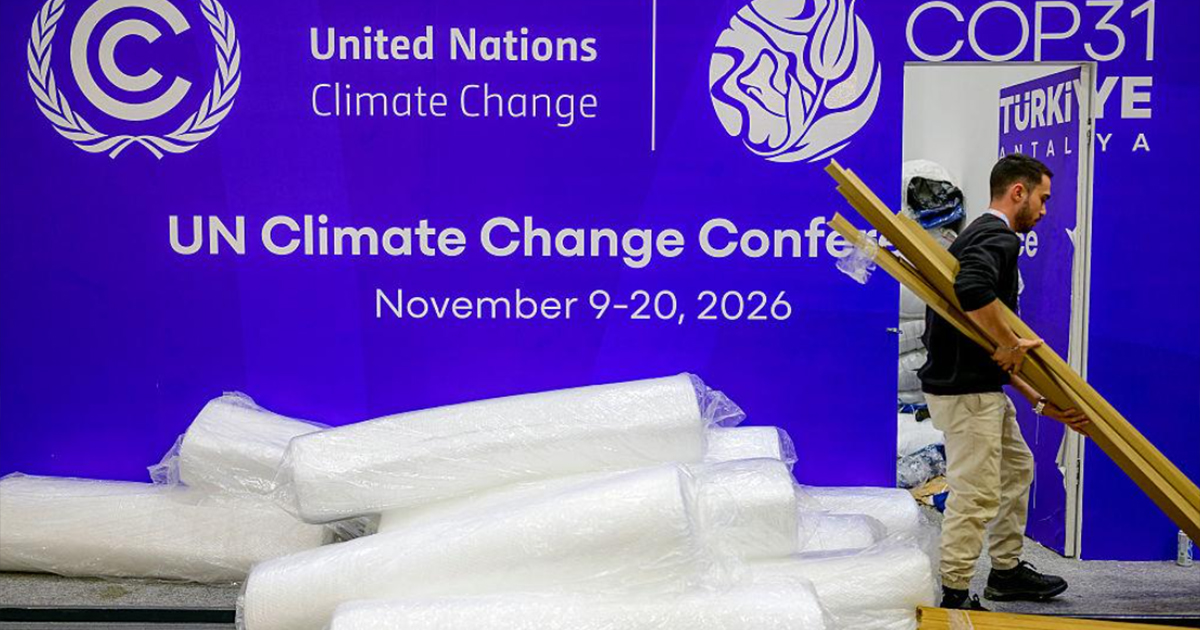

COP31 fails to reach an agreement.. Will new alliances save climate action?
Effects of the conclusion of the United Nations climate conference COP31 In the Turkish city of Antalya, on November 22, 2026, without reaching a final political agreement, there are widespread questions about the future of climate diplomacy and its ability to unify international efforts to confront rising temperatures and its accelerating repercussions.
The faltering negotiations came after disagreements between countries over climate commitments, especially with regard to fossil fuels, putting the consensus-based negotiation mechanism in the face of increasing demands for reform, amid fears of countries most vulnerable to climate disasters about a decline in international support.
While UN talks face a crisis of confidence, clean energy technologies continue to attract investment, and groups of countries are forming smaller coalitions to accelerate emissions reductions. This disparity raises a fundamental question about the world's ability to combine economic progress with fair climate cooperation.
COP31 puts the credibility of negotiations at stake
The failure of the Antalya conference to reach a comprehensive political agreement has raised new questions about the effectiveness of annual climate conferences, which for the past three decades have constituted a key international framework for negotiating emissions cuts and providing financing for adaptation to climate change.
Andres Martín Garrido Sanchez, Director of Environmental Affairs at the Peruvian Ministry of Foreign Affairs, considered that the credibility of the negotiating process had become at risk, calling for deep reforms that would allow overcoming the obstacles that prevent tangible progress.

Simon Steele, Executive Secretary of the United Nations Framework Convention on Climate Change, acknowledged the need to develop negotiation mechanisms, stressing that the consensus-based system is still able to work, and that he has begun seeking external expertise to study possible reforms.
These positions reveal a crisis related to the ability of countries to transform their consensus on the seriousness of climate change into joint decisions, especially when economic interests related to energy and finance diverge.
Disagreements over the future of fossil fuels were among the most prominent obstacles facing the negotiations, with oil-producing countries resisting the inclusion of clearer language on transitioning away from high-emitting energy sources.
This end was preceded by faltering discussions about the draft final agreement, which I discussed The Earth Guards Foundation In her report on First draft of COP31 and fossil fuel controversiesBefore the crisis expands to include the future of the entire negotiating process.
Three decades of climate diplomacy
Over the past decades, international climate negotiations have achieved important milestones, most notably: Kyoto Protocol 1997, which established legally binding targets to reduce greenhouse gas emissions for the countries covered by its obligations.
The Paris Agreement came in 2015 to establish a global framework aimed at keeping global warming below two degrees Celsius compared to pre-industrial revolution levels, while continuing efforts to limit it to 1.5 °C.

These agreements have given developing and island countries an international framework to demand financing, technology transfer, and enhanced adaptation measures, as well as allowing the review of climate commitments and monitoring of their implementation.
However, he stumbled COP31 It highlights the difficulty of updating these commitments as quickly as necessary, especially after international warnings that the world is heading towards exceeding the extreme level of warming. 1.5 °C.
The consensus system faces a complex challenge. It gives small states a voice in international decisions, but makes reaching ambitious agreements more difficult when the priorities of participating states conflict.
The absence of international leadership deepens the climate crisis
The decline in the role of the major powers contributed to increasing the complications of the Antalya Conference, which was held in light of the United States’ withdrawal from the UN climate process during the administration of President Donald Trump.
The American absence represented a clear difference compared to the Paris negotiations in 2015, in which Washington participated in an influential diplomatic role in supporting reaching the agreement.

As for China, which is the largest source of carbon emissions in the world and one of the most prominent producers of clean energy technologies, it maintained a relatively low presence during the negotiations, despite its economic and technological weight.
James Fletcher, who led the Caribbean Group delegation during the conference, believed that the absence of an international force capable of bringing together the disparate parties was one of the factors that weakened the chances of consensus.
This gap is particularly reflected in… low altitude island states, Facing increasing threats from rising sea levels and severe storms, it relies on international cooperation to secure the necessary funding to protect residents and infrastructure.

For these countries, the crisis becomes linked to their ability to implement protection and adaptation projects, in light of growing financial needs and limited national resources.
Clean energy is progressing despite faltering agreements
Despite the diplomatic crisis, investments in renewable energy and low-emissions technology continue to expand, driven by improved economic viability and lower costs for a number of clean technologies.
Chris Dodwell, co-responsible for… Impax Sustainability Center For Asset Management, the decisions issued by climate conferences have become less influential in directing some investments compared to the past, after the energy transition gained independent economic motives.
This trend is evident in China's exports of clean energy technologies, which are expected to help importing countries in the Global South avoid… 257 Million metric tons of carbon dioxide emissions annually After operating the exported equipment during the past year.

This estimate is based on an analysis conducted by Lori Mylvirta, one of the founders Energy and Clean Air Research Center in Helsinki, The amount of emissions expected to be avoided is roughly equivalent to France's annual emissions.
This shift suggests that governments can continue climate action across investment, energy and industry plans, even when international negotiations falter.
And it is granted Target 13.2 of SDG 13 on climate action This path has a practical dimension, as it calls for the integration of measures to confront climate change into national policies, strategies and planning. The continued expansion of clean energy requires local decisions that support infrastructure, financing, and technical capabilities, and ensure that its benefits reach different communities.
New alliances that transcend the impasse of consensus
The difficulty of reaching comprehensive agreements has prompted groups of governments to strengthen cooperation through smaller coalitions, sharing specific goals in reducing emissions, developing electricity grids, protecting forests and increasing energy efficiency.
These initiatives include: “Global Methane Pledge”, and"Green Networks Initiative", and"Beyond Oil and Gas Alliance" In addition to a conference dedicated to the transition away from fossil fuels.

The Pacific nation of Tuvalu is preparing to host a transition away from fossil fuels conference in 2027, in an attempt to bring together governments that want to take faster steps on high-emission energy sources.
Maina Thalia, Tuvalu's Minister of Climate, said that there is increasing interest in working through coalitions that include countries that are ready to move together, instead of waiting for all parties to agree.
It is expected that representatives of about 90 nation, including Britain, Mexico and Nigeria, at the upcoming conference. These initiatives allow countries with similar priorities to exchange experiences, mobilize resources, and implement joint programs, with the possibility of gradually expanding the scope of participation.
These efforts are consistent with Target 17.16 of Goal 17 of the Sustainable Development Goals on partnerships to achieve the goals, which encourages multilateral partnerships to mobilize knowledge, expertise, technology and financial resources to support sustainable development.
However, the ability of these coalitions to achieve broad progress remains tied to engaging countries with limited resources and ensuring that projects and funding reach the communities most in need.
The future of climate diplomacy after COP31
Delegations left Antalya while political differences remained, but clean energy projects and new alliances continue to move along multiple paths. This scene reveals a world in which tools to confront climate change are advancing at a pace different from the speed of agreement between governments.

The coming years will determine the ability of climate diplomacy to capitalize on this transformation, and build more effective mechanisms to implement commitments, mobilize financing, and protect threatened communities.
And you see The Earth Guards Foundation The future of climate cooperation depends on the ability of countries to transform shared ambitions into concrete protection for humans and the environment, while ensuring a fair place for the countries most exposed to risks in formulating decisions.
Then he stumbled COP31The real test before the international community is to find a formula that combines speed of action with fairness of participation, so that island states and fragile communities can see the results of climate action in their daily reality, before environmental changes exceed their ability to adapt.


