

A crisis in American aviation…a technical failure disrupts 20,000 flights and reveals loopholes in old systems

A crisis in American aviation…a technical failure disrupts 20,000 flights and reveals loopholes in old systems
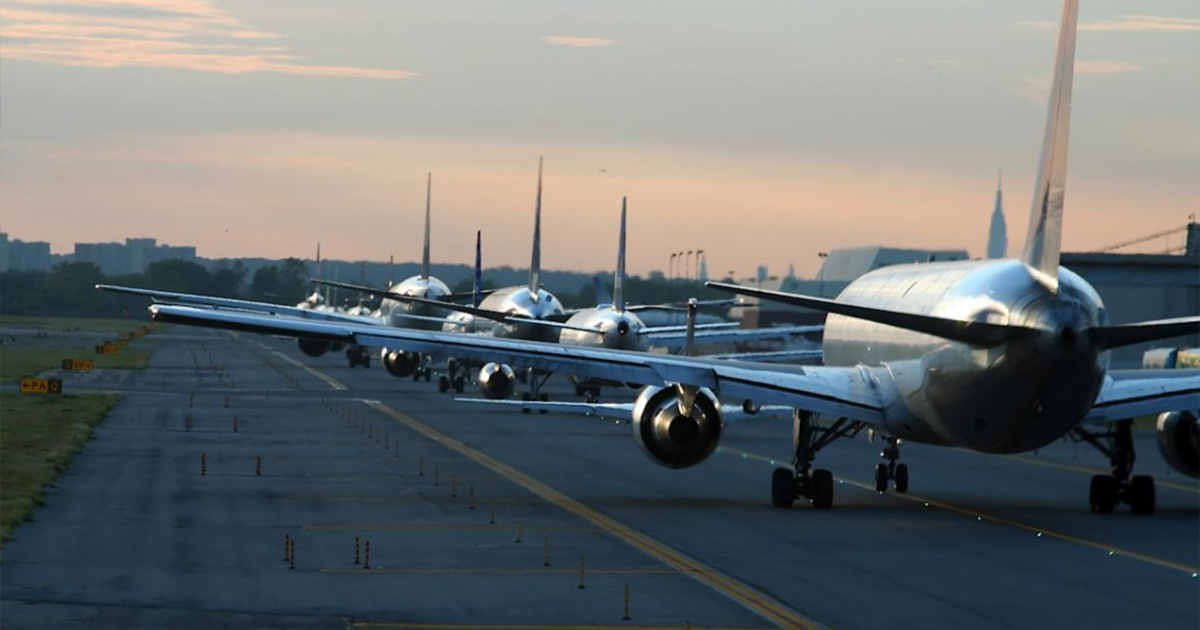
A widespread technical malfunction caused traffic disruption American aviationAfter she had to Federal Aviation Administration To halt the takeoff of flights nationwide for about five hours, in an incident that affected more than 20,000 flights, and re-highlighted the challenges facing modernization of communications systems used in air traffic control.
On Saturday, November 14, 2026, American officials revealed that a network router was suspected of being linked to the malfunction, during work carried out by L3Harris to move from old copper communications lines to optical fiber.
Although investigations have not determined the final cause of the malfunction, the accident raises a question that goes beyond flight disruption:How can a vital communications network that serves thousands of aircraft daily be modernized, while maintaining its stability and continued operation?
How were American aviation communications disrupted?
The crisis began on Friday, November 13, during the implementation of regular maintenance work aimed at converting some air traffic control communication lines from copper wires to fiber optics.
According to US Secretary of Transportation Sean Duffy, new routers began sending more than a thousand connection attempts every four or five seconds to other devices within the network, which led to disruptions in the exchange of data related to aircraft and radars.
The impact of the defect extended to communications systems in 17 1 center out of 22 centers Used by the Federal Aviation Administration (FAA) to manage air traffic during flights.

As the root cause of the problem could not be quickly determined, the administration decided to suspend flights nationwide as a precautionary measure to ensure operational safety.
The administration explained that communications were not completely interrupted, and that the air traffic control centers did not stop working completely, but the instability of the data made the continuation of normal operation a matter that required intervention.
The unrest affected the movement American aviationWhere I was affected More than 20 thousand trips Since the beginning of the crisis, this number includes flights delayed or affected by operational procedures, and does not mean the cancellation of all these flights.
A router is under investigation
Initial investigations focus on a crisis American aviation On network routers installed during communications modernization work carried out by L3 Harris, a US government contractor.
Officials indicated that there may be problems with devices installed in the states of Arkansas and Texas, and the Minister of Transportation explained that the concerned authorities are trying to determine whether the malfunction resulted from an error during installation or use of the device, or from a technical defect in the router itself.

For its part, L3 Harris confirmed that it dealt seriously with the incident and cooperated with the Federal Aviation Administration to understand the circumstances that led to the suspension of flights on November 13.
The company also announced that it has completed more than 70% Of the planned conversion works From ancient copper communications to fiber optic systems.
These details make it clear that suspicion of a device does not represent the final outcome of the investigation, especially since determining responsibility requires knowing the exact technical cause and how network components interact during the update.
Old systems facing modernization challenges
The crisis reveals the extent of the challenges facing the communications infrastructure used in… American aviation; The Minister of Transport indicated that some of the routers being replaced are about 25 years old and should have been replaced since 2006.
The Federal Aviation Administration spends approx Billion dollars annually Maintaining the old communications network that relies on copper wires, while seeking to replace more advanced systems that rely on fiber optics.

This process faces an engineering and operational challenge. Air traffic control networks need to operate constantly, which requires that updates be implemented gradually without disrupting the stability of data and services.
The incident also reveals that the introduction of newer devices does not alone guarantee improved performance; Transitions require testing compatibility between new and old components, monitoring the impact of changes on the network, and preparing to deal with unexpected failures.
These procedures are increasingly important in a sector that depends on the speed and accuracy of exchanging information to regulate aircraft movement and maintain flight safety.
Previous failures reveal network challenges
US air traffic control systems witnessed in American aviation Repeated malfunctions occurred over the past years, preceding the disturbances of this November, and their causes varied between damage to fiber-optic cables and errors in dealing with electronic files.
In January 2023, accidentally deleting files caused flights to stop taking off nationwide for 90 minutes, and about 11,000 flights were affected.

September 2026 also witnessed disruptions in air traffic in the northeastern United States, after a communications circuit malfunctioned at an air traffic control facility in the city of Philadelphia, coinciding with the cutting of a fiber-optic cable in New Jersey during construction work.
The systems also witnessed the continued use of some old technologies within the flight control system, including floppy disks to exchange weather information and other operational data in more than 400 facilities.
The Federal Aviation Administration announced a plan to replace these disks by the end of 2028, as part of a broader path to modernize equipment and software.
These cases highlight the importance of developing backup systems and response plans that allow for isolating faults and reducing their impact on the air transport network.
Billions of dollars to modernize infrastructure
The US Congress allocated 12.5 Billion dollars To modernize air traffic control and associated communications systems, as part of efforts to develop the sector’s infrastructure American aviationWhile the Minister of Transport requested additional funding worth 50 billion Dollars to support the development of air surveillance systems and airports.
Modernization efforts include replacing old equipment, developing data transmission methods, and moving to more efficient digital operating systems. The Federal Aviation Administration is also working to eliminate the use of paper tapes, which some air traffic controllers rely on to follow up on flight information, by introducing electronic systems at 49 major airports, a process that began in 2022 and is expected to continue until at least 2028.

The importance of these investments relates to the speed of updating equipment, as well as the ability of operators to implement changes without affecting the reliability of services.
In a related context, I discussed: The Earth Guards Foundation In a previous report The role of civil aviation in achieving sustainable development goals, and the associated infrastructure development, digital transformation, and improving operating efficiency, which are aspects that integrate with the importance of modernizing surveillance and communications systems.
Is modern technology enough to ensure reliability?
Fiber optics may provide greater data transfer capacity than older copper systems, but what happens when the introduction of new technology disrupts a system on which thousands of flights depend?
Here the concept of development expands to include the ability of infrastructure to withstand failures and continue providing safe and reliable services during the stages of modernization.

From this angle, you gain Target 9.1 of SDG 9, on industry, innovation and infrastructure, of particular importance; It calls for the development of quality, reliable, sustainable and resilient infrastructure that supports economic development and human well-being.
It explains the crisis American aviation Achieving this goal is related to developing equipment, managing technical risks, improving testing and maintenance procedures, and providing the ability to quickly deal with disturbances.
Aviation reliability starts from systems efficiency
The November incident puts the modernization of air traffic control infrastructure to a practical test, especially with the continued reliance on outdated equipment in parallel with the introduction of modern communication technologies.
From this standpoint, it connects The Earth Guards Foundation Between developing transportation services and enhancing the infrastructure’s ability to provide safe and stable services, which supports economic movement and maintains the quality of life of communities.
The crisis reveals that the efficiency of modern transportation systems is determined by their ability to continue operating when malfunctions occur, and by the existence of procedures that allow detecting problems and containing their effects before they spread to large parts of the network.
Between a router whose cause of malfunction is still under investigation, and a communications network undergoing a comprehensive upgrade, the main challenge facing American aviation remains the transition to modern technology while maintaining operational reliability and flight safety at every stage..


