

Will artificial intelligence become a partner in scientific discovery? A Swedish experience opens the door

Will artificial intelligence become a partner in scientific discovery? A Swedish experience opens the door
It's no longer a turn Artificial intelligence in scientific research Limited to analyzing data or helping researchers review studies; ففي مختبر سويدي، استطاع نظام ذكي اقتراح فرضيات علمية، وتصميم تجارب لاختبارها، ثم قراءة النتائج واستخدامها لتطوير فهمه واقتراح خطوات بحثية جديدة.
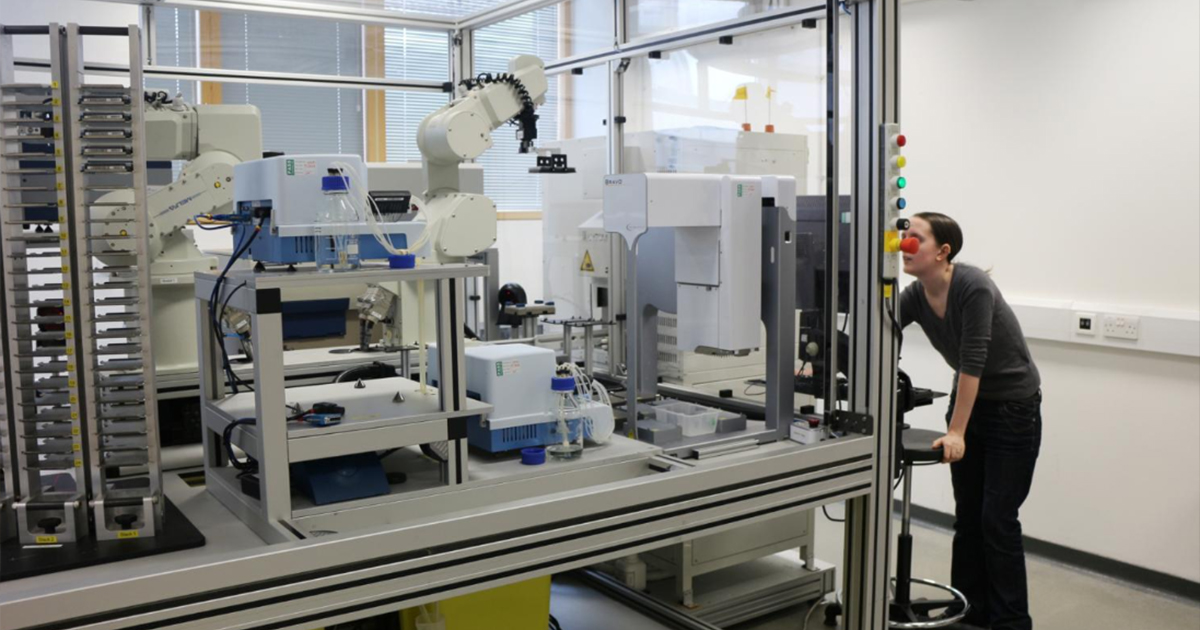
Developed by researchers in Chalmers University of Technology, Sweden An artificial intelligence laboratory that operates according to what is called a “closed research cycle,” and they used it to study brewer’s yeast. A robot named… "Eve", was originally designed for drug discovery before researchers added large language models and machine reasoning capabilities to it.
The experiment opens the door to a new paradigm of research, in which artificial intelligence performs an increasing portion of the repetitive work within the laboratory, while scientists retain their role in setting priorities, interpreting the broader significance of results and monitoring ethical aspects.
How does Eve work?
The researchers began by providing the system with a broad base of scientific knowledge about yeast, including its genome, its metabolic processes, and the results of previous studies.
From this base, the system can search for biological questions worth testing, then suggest an appropriate experiment, track its results, and evaluate what the new data means.
Instead of the task ending when the result appears, it is used artificial intelligence What he learned from it to modify his understanding and suggest the next experiment or question.

The researchers describe this model as an artificial intelligence laboratory that operates according to… "Closed research course"; That is, the research moves in a continuous cycle: previous knowledge, then a question and hypothesis, then an experiment and a result, followed by an analysis that helps formulate the next step.
Researcher Evgenia Tyukova says that the volume of scientific information has become larger than the human ability to analyze it completely, while the system was able to identify promising biological questions, suggest ways to test them, then evaluate the results and update its understanding based on new evidence.
Artificial intelligence is involved in discovery
The importance of the experiment is that artificial intelligence moves to a more active stage within the research process itself.
Traditional tools can help the researcher analyze a data set or predict a result, while the new system participates in an interconnected series of steps that begin with the scientific question and reach the interpretation of the results of the experiment.

The researchers believe that combining the capabilities of linguistic models, automated reasoning, and laboratory automation gives the system the ability to repeat this cycle more quickly, which may allow a greater number of hypotheses to be explored during the same period.
However, the current experiment remains related to a specific system and study conducted on brewer's yeast, and therefore does not imply that Artificial intelligence in scientific research Be able to work independently in different specialties or laboratories.
Why yeast?
The team used brewer's yeast as a biological system to conduct experiments and test the laboratory's ability to carry out an integrated research cycle.

This model provides researchers with an environment in which the system can read previous knowledge, formulate biological questions, and then obtain new data from actual experiments instead of being limited to published information.
The source does not provide a detailed explanation of the specific choice of yeast, so the significance of the experiment here remains related to the way the research was conducted, rather than the type of organism alone.
Does he replace scientists?
The team emphasizes that the current trend is based on cooperation between humans and artificial intelligence.
The researchers expect that autonomous systems will gradually take over more routine cycles of hypothesis generation and testing, while scientists remain responsible for tasks that require broader human judgment.

These tasks include identifying questions worth investigating, understanding the scientific value of the results within the larger context, setting priorities, and ethical oversight of what goes on within the laboratory.
Ross King, a professor of computer science and engineering at Chalmers and Gothenburg Universities and senior author of the study, describes these systems as a potential partner for scientists that can accelerate discoveries in biology, medicine and biotechnology.
What could change?
Researchers believe that autonomous laboratories can reduce the time required to study some complex scientific questions, and may also help use laboratory equipment and resources more efficiently.
The idea is particularly important in areas that require carrying out large numbers of successive experiments, as the system can analyze each result and then determine the next step without waiting for a long cycle of human review between one experiment and another.
Hence it is granted Sustainable Development Goal 9, on industry, innovation and infrastructure, This experience has a broader dimension; Increasing the efficiency of research and accelerating the transformation of knowledge into new applications can enhance the ability of innovation to respond to complex scientific and industrial challenges.

More direct effects on health may emerge if these systems are expanded in future drug and medical research. Eve was originally designed for drug discovery, and researchers hope that future generations of autonomous systems will help scientists address more complex questions in biology and medicine.
To learn how artificial intelligence is already involved in the development of treatments, read: Artificial intelligence is leading a new phase in drug development and accelerating treatment
If these tools help speed up the study of diseases or develop new treatments in the future, there is a potential connection as well Sustainable Development Goal 3, good health and well-being. These applications in the current article remain among the future possibilities proposed by the researchers, and are not results proven by the yeast experiment itself.
A new partnership within the laboratory
The experience reveals a shift in the nature of the relationship between the researcher and the digital tool. Artificial intelligence can carry out increasing parts of the experimental cycle, while humans remain responsible for determining the direction the research should take and the meaning of its results.
And it is granted The Earth Guards Foundation This development is important from the perspective of responsible innovation; Automation technologies can expand scientists' ability to test ideas and use resources efficiently, while human oversight remains necessary to set priorities and ethical standards.
Thus, in the coming years, the question may become less related to whether artificial intelligence can help scientists, and more related to how the roles are distributed between the two parties when the machine can propose and carry out the experiment, analyze its result, and participate in determining the next question.


