

China’s clean energy boom cuts 374 million tons of emissions globally
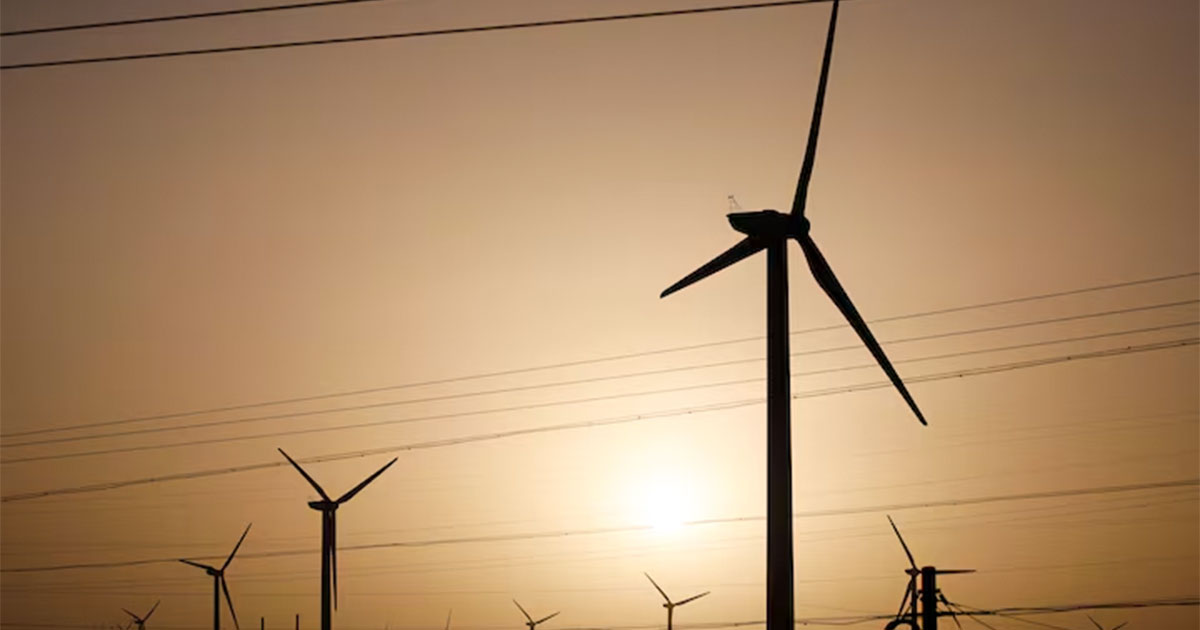

China's clean energy boom cuts 374 million tons of emissions globally
The effects of the mutation are expanding Clean energy In China outside its borders, after a new analysis showed that the country's exports of solar panels, batteries, wind turbines, and electric cars helped avoid about 374 million metric tons of carbon dioxide emissions during 2025.
This amount exceeds the total emissions produced by Britain during the same year, according to an analysis prepared by Lauri Mylvirta, co-founder of the Center for Research on Energy and Clean Air in Helsinki.
The results reveal an increasing influence of Chinese industry on the path of reducing emissions globally, especially with the expansion of the production of clean technologies, their low cost and their spread in emerging economies.
374 Million tons of emissions
The analysis included China's exports of solar panels, wind turbines, batteries and electric vehicles, technologies that support the transition from fossil fuels to lower-emission energy and transportation systems. The researcher estimated that Chinese exports during 2025 helped avoid 374 million tons of carbon dioxide during that year.
The expected impact of these technologies extends for years and years after their installation and use. During its operational life, 2025 exports could contribute to avoiding about 6.9 billion tons of carbon dioxide. This estimate represents an increase of about 31% compared to 2024 exports, and is equivalent to nearly double the emissions that India produced during the past year, according to the analysis.

China combines industry and emissions
The Chinese experience carries a clear paradox; China is the largest emitter of carbon emissions globally, and at the same time leads the production and export of many technologies used to reduce these emissions.
Large-scale production has helped reduce the cost of solar panels, wind turbines, batteries and electric cars, reshaping the economic viability of the electric transition and reducing carbon in many markets.
The impact is particularly felt in developing countries, where lower prices give more governments, companies and households the opportunity to use technologies whose cost was a greater constraint years ago.
The expansion of these industries intersects with the ninth goal of the Sustainable Development Goals, which is concerned with industry, innovation and infrastructure. The growth in clean energy manufacturing demonstrates how increasing industrial capacity and expanding production can spread innovation more widely.

For a broader understanding of China’s role in this sector, read: China invests in clean industry amid declining US momentum.
South Asia benefits from the sun
Solar panel exports to South Asia accounted for a large portion of the climate impact captured in the analysis; Nearly a third of avoided emissions came from them. Pakistan stands out among the markets that have witnessed a rapid expansion in the use of solar energy, such that its share of solar electricity generation is among the highest in the world.
Mylvirta links this expansion to the Chinese manufacturing boom, which has raised supply and reduced prices, along with fossil fuel price shocks over the past five years, which have strengthened the attractiveness of solar and electric alternatives.
The South Asian experience illustrates how influence is transmitted Clean energy From Chinese factories to electricity systems in other countries, through technologies that are becoming more cost competitive.
Billions of dollars in exports
Trade volume reflects the growing economic weight of this sector; The value of China's clean technology exports reached about $194 billion during 2025, according to Chinese customs data, and activity continued during 2026, with the value of shipments reaching $128 billion by June alone.
These figures suggest that technologies linked to the low-carbon transition are becoming a major part of Chinese industrial trade, with their products reaching markets in need of expanding renewable electricity, energy storage and the shift towards electric vehicles.
This links industrial growth to climate impact; The more these products become more widespread in the market, the greater their ability to replace part of the consumption of higher-emitting technologies and fuels.
Climate impact needs to be expanded
However, the emissions reduced from Chinese exports remain limited when compared to the total volume of global emissions; Global carbon emissions reached about 39 billion tons during 2024, according to data collected by the website Our World in Data, compared to 374 million tons of emissions, which the analysis estimated that China’s exports helped avoid during 2025.
This difference puts the scale of the climate challenge into context, and suggests that expanding the reach of clean energy technologies needs to continue alongside emissions reductions within the major economies themselves.
This is related to the thirteenth goal of the Sustainable Development Goals, on climate action, as the spread of low-carbon technologies contributes to supporting emissions reduction, especially when they become available at prices that allow their spread in developing and emerging economies.
Industrial expansion supports climate transition
Chinese export figures reveal that technology development is part of the climate transition, while the scale of production and the cost of access determine the extent to which it can spread and make a real impact.
So the Chinese experience shows that large-scale manufacturing can lower prices and push solar, wind, battery and electric vehicle technologies into new markets, expanding the pool of countries able to accelerate their transition to lower-emission systems.
In light of these data, you can see The Earth Guards Foundation The most important impact of the Chinese clean energy boom lies in its ability to reduce the cost of access to low-carbon technologies, especially in developing countries, which is a path that gives climate transformation a more comprehensive dimension, by linking industrial innovation to the availability of technology, and expanding the ability of different economies to participate in reducing emissions, in a way that supports a faster global transition towards a low-carbon economy.


