

Study Reveals How Air Pollution Increases the Risk of Pneumonia and Bacterial Infections
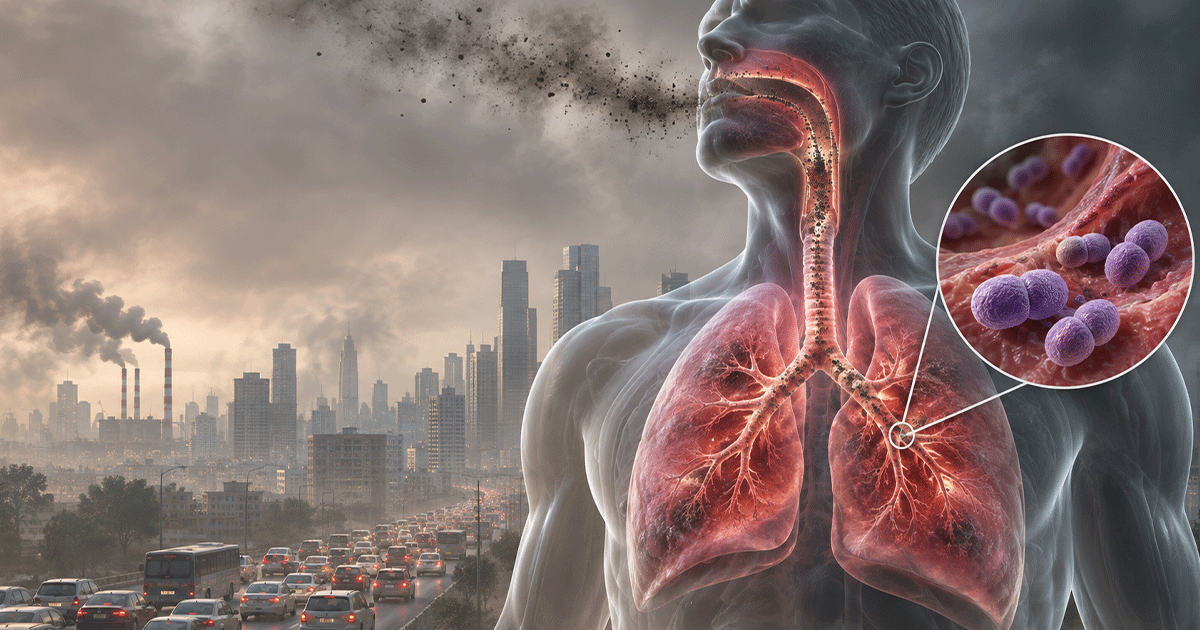

Study reveals how air pollution increases the risk of pneumonia and bacterial infections
A recent study reveals that the effect of Air pollution Health may be more complicated than it seems, after researchers found that the type of bacteria present in the respiratory system can affect the timing and severity of the risk of developing serious infections such as bacterial pneumonia, septicemia, and meningitis.
The study was based on the analysis of about 59 thousand cases of Pneumococcal diseases Invasive in South Africa over the course of 19 years, I found that some bacterial types were associated with a rapid increase in infection risk after exposure to polluted air, while others had an effect weeks later.
The results indicate that the relationship between Air pollution Infectious diseases do not proceed in the same way for everyone, as bacteria already present in the nose and throat play a role in determining the level of risk.
Air pollution opens the door to infection
The study published in the journal focused on:Nature Microbiology On the relationship between Air pollution And the risk of invasive pneumococcal diseases, and was led by a research team that included researchers from institute Welcome Sanger, andNational Institute of Infectious Diseases, Johannesburg, andBarcelona Supercomputing Centre, along with other research institutions.
Sophie Bellman assumed the role of the first researcher in the study, after she conducted the research during her work at the Wellcome Sanger Institute and the Barcelona Supercomputing Center. The team focused on bacteria Streptococcus pneumoniae, known as pneumococcus, is a bacteria that may live inside the respiratory system without causing direct symptoms.
Data indicate that this bacteria is found in about 20% of adults globally, while its presence among children in South Africa ranges between 40% and 60%.

But the danger begins when the bacteria travel to the lower respiratory tract or bloodstream, where they can cause serious diseases known as invasive pneumococcal diseases, including bacterial pneumonia, septicemia and meningitis.
The importance of these diseases increases due to their significant impact on public health, especially among children, the elderly, and people with chronic diseases or health conditions that make them more vulnerable to infection.
To learn more about the impact of air pollution on human health and the risks associated with continuous exposure to pollutants, read also: What is the danger of air pollution to human health and the sustainable development goals?.
59 thousand cases reveal the relationship
The researchers analyzed about 59 A thousand cases Of invasive pneumococcal diseases recorded in South Africa via National Monitoring Program GERMS-SAThe data covered a period of 19 years.
The team combined health information and air pollution data, along with other factors such as temperature, humidity, and population density, with the aim of separating the impact of air quality from other environmental factors that may influence the spread of the disease.

The results showed that the risk of infection increases during the weeks following exposure to high levels of pollution, but it does not appear at the same speed in all bacterial types.
South Africa recorded more than 1,800 cases of invasive pneumococcal disease during 2022, while England records more than 5,000 cases annually, with the risk particularly high in children under five and older people over 65.
Bacteria change the timing of danger
Pneumococcal bacteria vary into more than 100 serotypes, and these types differ in their characteristics and effect on the body. The researchers found that this difference is also reflected in the way it is related to air pollution, both in the timing of infection onset and the level of infection risk.
In general, the researchers found that the risk of invasive pneumococcal disease is highest about two weeks after exposure to polluted air, while the risk for some bacterial types may appear during the same week.

These results show that exposure to pollution alone does not explain the level of risk, as the characteristics of the bacteria already present in the respiratory system play a role in determining how quickly the infection develops.
Here, the importance of studying the respiratory microbiome, that is, the group of microorganisms that live naturally in the nose and throat, is important to understand why the effect of air pollution varies from one person to another.
Children and the elderly are more susceptible
Researchers found that young children and the elderly were more at risk of pneumococcal disease during periods of high pollution levels.
The researchers also found that high temperatures were associated with an immediate increase in the risk of infection, while the effect of cold weather appeared after a longer period of time. They suggest that this delay may be related to a change in bacterial transmission in cold climates, or to the effect of seasonal viral infections that may prepare the respiratory system for a subsequent bacterial infection.

These findings relate directly to Sustainable Development Goal 3 on good health and well-being, as they highlight the importance of improving air quality as part of disease prevention, especially among the most vulnerable groups.
The study also reflects the impact of accelerated environmental transformations associated with urban expansion and climate change, which can reshape patterns of exposure to pollutants and infectious diseases within cities.
Air quality becomes a warning tool
Researchers believe that incorporating monitoring Air pollution Genetic monitoring of pneumococcal bacterial patterns can help predict spikes in infections more accurately.
This approach may allow health authorities and hospitals to prepare early for waves of infection, guide vaccination programs, and identify areas and populations most at risk.
Air quality data can also become part of health planning tools, especially in cities with high population densities and high levels of pollution, which is linked to Goal 11 of the Sustainable Development Goals on making cities more sustainable and able to protect their residents.

The study confirms that improving air quality may achieve benefits beyond the prevention of traditional respiratory diseases, becoming part of strategies to limit the spread of some types of bacterial infections.
In light of these results, highlight The Earth Guards Foundation Highlight the importance of dealing with Air pollution As an interconnected health and environmental issue, with the strengthening of monitoring systems that combine environmental and health data and bacterial characteristics, to support early prevention and protection of groups most at risk.


