

FIFA withdraws from selling shares in the World Cup after a European threat.. What sparked the crisis?

FIFA withdraws from selling shares in the World Cup after a European threat.. What sparked the crisis?
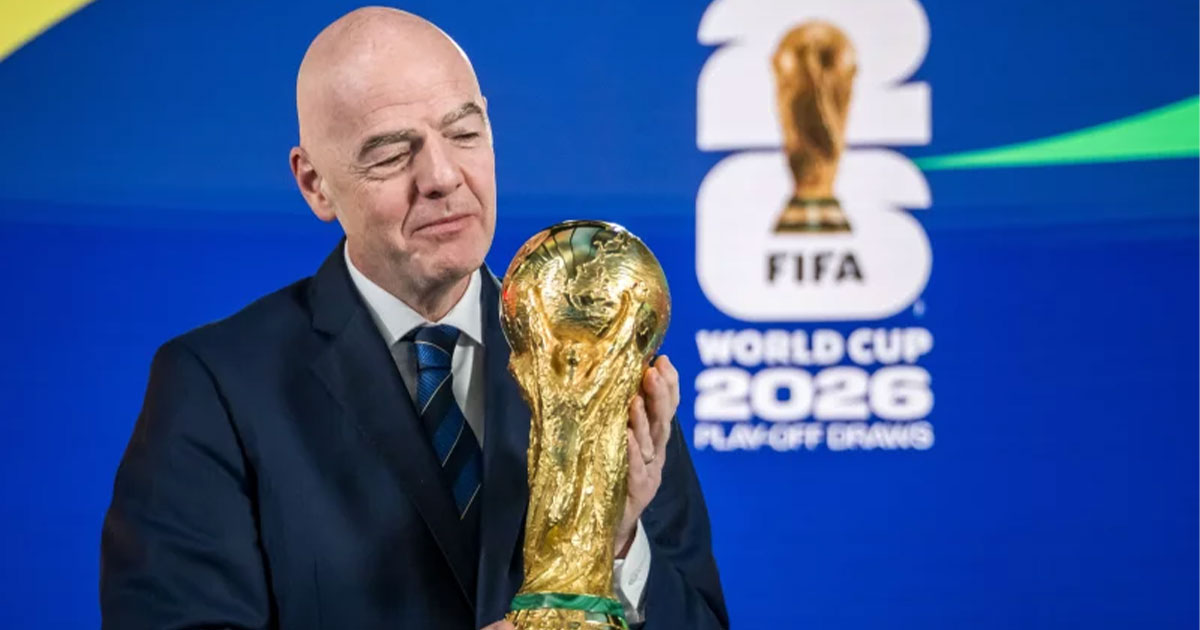
The International Federation of Association Football (FIFA) FIFA has withdrawn from a controversial project that aimed to introduce private sector investors into a commercial project linked to its tournaments, most notably the World Cup, after widespread objections from continental federations, European countries, and officials from within the institution itself.
The decision to cancel the proposal came a few days after it was announced, in a rapid turnaround that represented a setback for FIFA President Gianni Infantino, who presented the project as a way to maximize commercial returns and provide more money for the development of football in member states.
But the objections revealed that increasing revenues alone does not guarantee an impactSustainable development, as the success of financing is linked to the method of decision-making, the clarity of investor conditions, the participation of affected parties, and the fair distribution of returns between unions.
FIFA cancels a project related to the World Cup
Infantino announced the cessation of the project after he acknowledged that the divisions it had raised had become inconsistent with the goal for which it was proposed. He explained that the International Federation had listened to the different opinions, and that the proposal would not continue in light of the rejection that surrounded it.
The project aimed to establish a new commercial entity to benefit more from the Federation’s tournaments, including the Men’s and Women’s World Cup, in addition to the Club World Cup. The vision also included attracting external financing from investors who wish to obtain a minority stake in the project.
Infantino described the main goal as unifying and developing football.Emphasizing his intention to reunite the concerned parties and continue working to support the game, especially in countries that are most in need of resources.

What would have actually been sold?
The description of the project as a plan to sell shares in the World Cup raised widespread concerns, although the proposal did not include transferring ownership of the tournament itself to investors.
The vision was based on establishing a commercial project that would benefit from the financial value of FIFA tournaments, then selling a minority stake in it to private investment companies. The report stated that among the potential investors was a company run by Joshua Kushner, brother of Jared Kushner, son-in-law of US President Donald Trump.
The investors would thus have had a financial interest in an entity linked to the commercial returns of the tournaments, a point that prompted critics to question whetherThe extent of the influence of private capital on the sports institution’s decisions and future priorities.
The plan also opened a broader discussion about the boundaries between developing football’s financial resources and transforming its most important tournaments into investment assets that generate long-term returns for the private sector.
Europe threatens to boycott the World Cup
The project faced strong European opposition from the moment it was announced, and the escalation reached the point where some countries threatened to boycott the World Cup unless FIFA completely backed down from the plan.
The European Football Association (UEFA) considered that the proposal is close to selling football, in an expression that reflects the extent of fears about investors entering into the commercial rights associated with world championships.
As announced by the North and Central American FederationThe Caribbean Concacaf and the Asian Football Confederation rejected the project, although they did not reach the level of threatening a boycott.
This broad rejection reveals that the crisis went beyond a technical dispute over an investment model, as it threatened to cause a division between FIFA and a number of the largest continental federations, with a potential impact on the future of international tournaments and the participation of teams in them.

The opposition reaches FIFA
The project suffered an additional blow with the emergence of objections from officials within FIFA. Carlos Cordero, one of Infantino’s senior advisers, resigned due to his rejection of the plan.
Chief Operating Officer Kevin Lamour also announced his objection, saying that the foundation’s employees were surprised by the project, describing it as a “one-person project” in reference to Infantino. And foreverHis willingness to bear the consequences of his position, even if this leads to losing his position.
These internal objections give the crisis an institutional dimension, because they raise questions about the process of preparing major decisions, and the extent of the participation of the concerned departments and unions in them before announcing them.
When decisions affect the commercial rights of a file the size of the World Cup and FIFA’s relationship with hundreds of federations, consultations and institutional oversight become an essential part of protecting trust, especially when the project is linked to private investments and huge sums.
World Cup revenues and financing football development
Infantino defended his financial policies by pointing to the large revenues achieved by FIFA, which are expected to reach $15 billion within four years, and the largest portion of these revenues came from the 2026 Men’s World Cup,Hosted by the United States, Canada and Mexico.
Some of these resources are distributed to the 211 national football federations that are members of FIFA, to finance stadiums, youth and national team programs, women’s football, and game development projects.
From this angle, World Cup revenues can contribute to reducing the gaps between rich federations and their counterparts that lack resources. This intersects with the tenth goal of the Sustainable Development Goals (SDGs), which is related to reducing inequalities, when funds are directed to building the capabilities of countries that least benefit from the global sports economy.
But the developmental value of financing is also linked to the fairness of distribution, the clarity of standards, and the independence of mathematical decisions from the interests of investors. The institution that collects billions of dollars needs to explain howManaging those resources, who benefits from them, and the conditions for obtaining them.
Governance is a condition for institutional sustainability
The crisis reveals the importance of Goal 16 of the Sustainable Development Goals (SDGs), which calls for building effective, transparent and accountable institutions, and ensuring participatory decision-making that responds to the interests of stakeholders.
The issue is directly related to Target 16.6, which relates to developing effective and transparent institutions, and Target 16.7, which focuses on making comprehensive and participatory decisions.
FIFA presented the project as a tool to increase football funding, while the way it was presented led to widespread rejection, internal division, and threats to boycott the World Cup. This shows that the financial goal may lose its legitimacy when it lacks sufficient institutional participation.
The sustainability of sports institutions requiresCombining the ability to generate revenue and protect public trust, by disclosing terms of deals, assessing risks and involving unions and employees in decisions affecting the future of the game.

Infantino’s future under pressure
The crisis came at a time when Infantino was preparing, according to widespread expectations, to run for a new presidential term after the end of his current term. It was also preceded by criticism related to the rise in ticket prices and a number of decisions that sparked controversy about FIFA’s relationship with politics.
Despite his success in leading a financial cycle that achieved record revenues, the project’s decline showed the limits of relying on revenues as the main criterion for management success.
The cancellation of the plan ended the direct confrontation, but left open questions about the method of actionThe decision within FIFA, the future of private capital entering its tournaments, and Infantino’s ability to regain the confidence of federations and internal officials.
In this regard, The Earth Guards Foundation confirms that the sustainability of sports institutions is linked to their ability to manage their resources transparently, expand participation in their decisions, and ensure that World Cup revenues are directed towards developing the game fairly. The size of revenues gives the organization broad opportunities, while governance and accountability determine the extent of its ability to transform these resources into a development impact that maintains the independence of sports and the confidence of its fans.


