Forest fires sweep Spain and France, amid waves hitting southern Europe

Forest fires sweep Spain and France amid waves hitting southern Europe
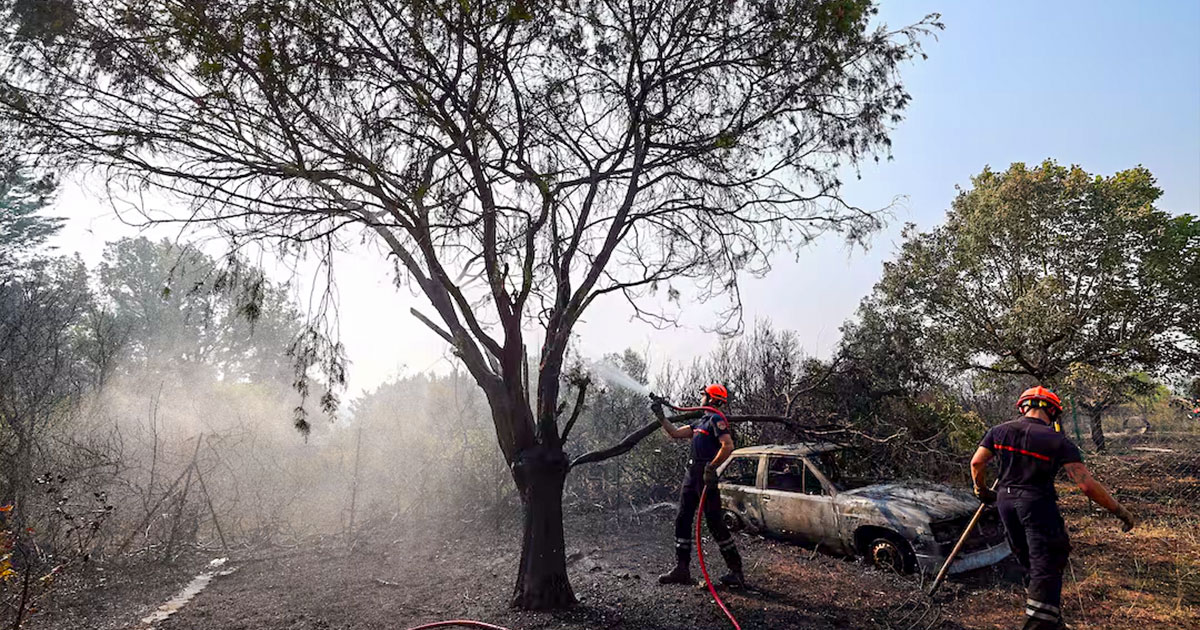
Fire brigades in Spain and France are facing an escalating wave of forest fires, coinciding with the continued intense heat, drought, and winds that raise the risk of new outbreaks in large areas of southern Europe. Although a huge fire in the province of Guadalajara in central Spain has subsided, the authorities have maintained their warnings that dangerous conditions will continue in the coming days.
These developments come after Europe has been exposed to three severe and converging heat waves since the beginning of the year, while the areas consumed by fire on the continent exceeded the annual average recorded during the past two decades. The crisis is gaining broader dimensions in Europe, which is the fastest warming continent in the world, with a transitionThe effects of extreme weather, including fires, droughts, and sudden storms.
Forest fires are directly linked to the Sustainable Development Goals (SDGs) related to climate action, protecting life on land, and building resilient cities and communities. The spread of fires into forests, homes and roads puts increasing pressure on ecosystems, emergency services and public health, and highlights the importance of moving from a seasonal response to continuous prevention and adaptation to increasing heat.
Forest fires exceed normal levels in Europe
Climate monitoring data showed that forest fires in Europe this year have devoured areas exceeding the annual average for the past twenty years, coinciding with successive heat waves that have dried up soil and vegetation.
It showed climate dataInteractive published by Reuters, the expected average maximum temperature in Western Europe reached 26.6 degrees Celsius, an increase of nearly three degrees over the historical average recorded on July 22 during the period from 1961 to 1990.

Scientists believe that climate change resulting from human activity increases the severity of heat waves, droughts, and forest fires, and also creates conditions for sudden and destructive storms to occur. These phenomena are appearing in different regions of the continent, as Spain and France are fighting fires, while parts of the Balkans have gone from extreme heat to storms, cold, and heavy rain.
High temperatures increase the speed at which plants lose moisture, which turns large areas of vegetation into flammable materials. As winds blow and dry storms erupt, fires can spread quickly and threaten areasResidential far from the starting point.
Spain faces early, severe fire season
Spain has entered an early and dangerous phase of the forest fire season, after the areas burned since the beginning of the year reached levels that the country usually recorded during an entire year. Although the intensity of some hotspots has decreased, heat, wind, and drought remain factors threatening the renewal of fires and their expansion in the coming weeks.

76 thousand acres burn in Guadalajara
The Guadalajara region witnessed the largest fire recorded in Spain during the year, after the fire consumed about 76 thousand acres. The fires forced the authorities to carry out evacuations in 34 municipalities, in addition to issuing orders for residents to remain inside their homes in 14 other municipalities.
And allowedThe situation has improved with the return of residents of five villages, although some restrictions remain due to the possibility of renewed fire. This reflects the difficulty of declaring complete control over fires in light of the dryness of the land and continued high temperatures.
238 thousand acres before the peak of the season
Spanish Prime Minister Pedro Sanchez said: His country has recorded 22 major fires since the beginning of the year, while the burned areas amounted to about 238 thousand acres before reaching the peak of the forest fire season.
This figure is approximately equivalent to the average area burned annually in Spain during the past decade, which reveals the severity of the current season and the early arrival of losses to levels that were usually recorded at the end of the year.
This situation reinforces the need to expand forest management programs, remove dry vegetation near residential areas, and develop forest systems.Early warning and evacuation plans. These actions are linked to the thirteenth goal of the Sustainable Development Goals (SDGs) on climate action, and the fifteenth goal on protecting terrestrial ecosystems.
Heat and wind threaten to renew the fire
Accordingly, the Spanish Meteorological Agency kept the forest fire danger level at “very high or severe” in most of Spain and the Balearic Islands, and expected it to rise in the following days.
The current heat wave also combines with dry storms and dust coming from the Sahara, while dry westerly winds may push temperatures in the Mediterranean regions to between 42 and 44 degrees Celsius.
Forecasts indicate a temporary drop in temperatures, followed by a new rise starting Sunday, with the possibility of a return of extreme heat.To most parts of Spain. This fluctuation makes periods of calm short, and puts firefighting teams at risk of new fires breaking out before completing control of existing fires.
France pays increasing human and environmental costs
France is facing a harsh season of forest fires, the repercussions of which have extended from environmental losses and damage to homes to casualties among firefighting teams and the evacuation of hundreds of residents. As the vegetation continues to dry up and the level of danger increases in several areas, the authorities have tightened restrictions on human activities that may cause new outbreaks.
Two firefighters die
Two firefighters were killed in the Gironde region, southwestern France, after fire surrounded their vehicle while they were participating in extinguishing operations.
The area witnessed a fireIt devoured about 238 acres between Bordeaux and Cap-Ferret, and forced the evacuation of about 600 people near the village of Saumus, along with diverting traffic away from roads leading to nearby beaches.
The authorities confirmed that severe drought leads to the emergence of multiple foci, which prompted them to tighten restrictions on activities that may cause sparks or heat. The measures included a ban on felling trees, clearing plants, and operating combustion-engine-powered equipment in areas at risk of fires.
105 thousand acres burning in France
The relatively low temperatures and low wind speeds helped emergency teams deal with the fire in the Var region, southeastern France, after it consumed about 6,000 acres, damaged dozens of homes, and forced 400 people to leave their homes.
The burned areas amounted toSince the beginning of the year, France has about 105 thousand acres, which is a level above the usual average. Another fire continued in the High Alps region in the southeast of the country, amid warnings that the danger level remained high in the west, southwest and southeast.
By adding together the areas registered in Spain and France, the lands burned since the beginning of the year amount to about 343 thousand acres, which reflects the amount of pressure on forests and local communities in the two countries.

Human activity is behind most fires
French authorities confirmed that human activity is behind nine out of ten fires, whether due to accidental errors or deliberate actions. She called on residents to avoid barbecues and activities that use flames or engines in areas affected by heat waves.
HighlightsThis aspect is the importance of responsible behavior in protecting natural resources, as prevention combines reducing human sources of ignition, improving vegetation management, and adapting to rising temperatures.
Reducing these practices is also linked to the twelfth goal related to responsible consumption and production patterns, in light of the responsibility of individuals and institutions to reduce activities that expose forests and rural areas to danger.
Heat waves disrupt life and turn into storms
The repercussions of extreme weather in southern Europe extended beyond forest fires, after extreme heat affected work activities and daily life, while parts of the Balkans saw a rapid shift towards storms, hail and heavy rain. These developments reveal the diversity of climate risks facing residents and infrastructure over similar periods of time.
Greece and Cyprus protect workers from heat
The effects of extreme heat have extended to the labor market and daily life in southern Europe. In Greece, the authorities banned outdoor work during the noon hours, with temperatures expected to exceed 41 degrees Celsius.
Cyprus took similar measures, banning work in open spaces during the afternoon. These restrictions reflect the growing health risks resulting from heat stress, especially for workers in construction, agriculture, and field services.
This is linked to the third goal of the Sustainable Development Goals (SDGs), related to good health and well-being, and the eighth goal related to decent work and economic growth, as protecting workers requires updating occupational safety rules to suit more severe and frequent heat waves.
The Balkans go from heat to storms
In the Western Balkans, the danger quickly shifted from heatwaves to storms and hail. Eleven people were injured in the North Macedonian capital, Skopje, including three seriously, after the storm toppled trees, damaged the roofs of buildings, and caused a power outage.
Roads were also closed, and water and electricity were cut off in some towns, while the Meteorological Institute in Kosovo warned of new storms that may be accompanied by lightning strikes, floods, and damage to electricity networks and property.
This rapid transformation reveals the widening range of extreme weather, and its ability to move from extreme heat and drought to devastating rains and storms, which forces cities to develop a more flexible infrastructure and the ability to face different climate scenarios.
Prevention precedes extinguishing
Forest fires in Spain and France reveal that expanding fire brigades and field equipment is a key part of the response, while long-term protection depends on forest management, reducing the buildup of dry vegetation, monitoring ignition sources, and developing warning and evacuation systems.

Southern European countries also need to integrate heat, fire and storm risks into city, infrastructure and occupational health plans, while rehabilitating affected areas and restoring vegetation after the end of firefighting operations.
In conclusion, the escalating forest fires in southern Europe reveal that climate change is reshaping the nature of the risks facing societies, as heat waves, drought, and winds have become intertwined factors that double the possibilitiesThe outbreak of disasters and the expansion of their effects.
Therefore, dealing with these crises is linked to the ability of countries to build integrated systems that combine environmental systems management, flexible urban planning, and enhancing the readiness of the health and emergency sectors, in a way that increases the ability of societies to confront changing climate conditions.
The Earth Guards Foundation highlights the importance of reducing forest fire losses, as this reduction begins with the transition from seasonal response to continuous prevention, by protecting ecosystems, enhancing community awareness, and raising the ability of cities and rural areas to withstand heat waves and extreme weather. This pathway forms the basis for protecting people, biodiversity and natural resources, and supporting a more sustainable future in southern Europe.