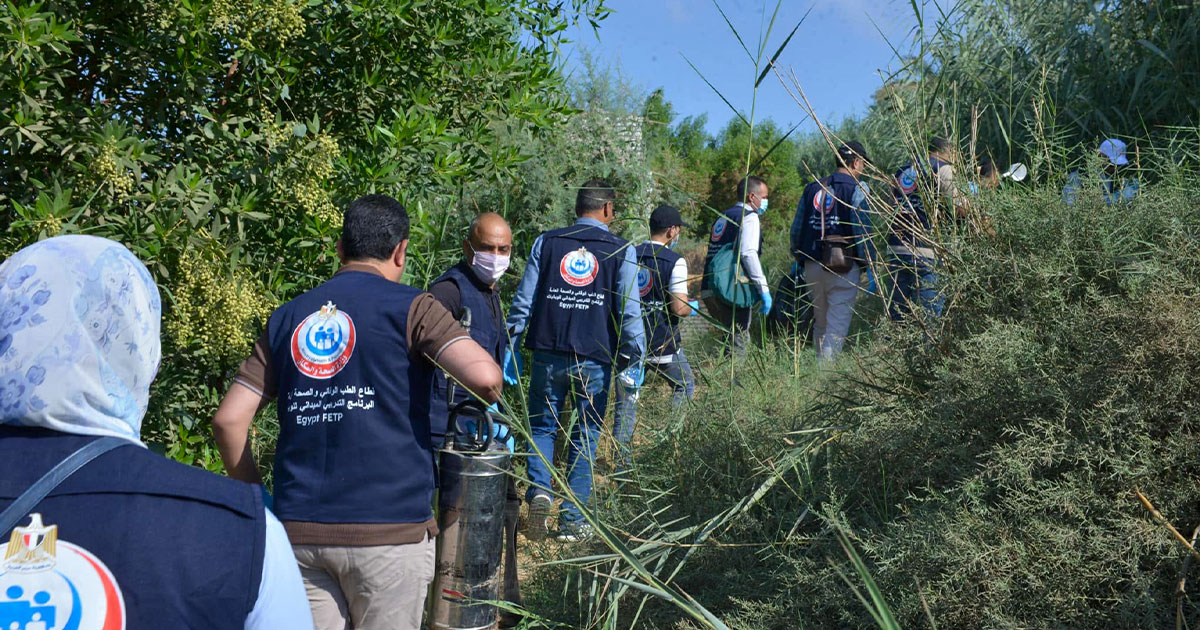
Supporting public health.. Accreditation of the Egyptian Epidemiology Program as the first collaborating center in Africa
Public health is one of the most important pillars of sustainable development, as it contributes to protecting societies from health risks, enhancing quality of life, and supporting countries’ ability to respond to epidemics and emergencies efficiently. Achieving these goals depends largely on developing prevention systems, improving the efficiency of human resources, and adopting specialized training programs that keep pace with the latest international standards.
Capacity-building efforts in the field of public health are gaining increasing importance, especially with the growing global health challenges, as investment in preparing national competencies and expanding cooperation with international institutions contributes to enhancing health security and supporting surveillance and response systems, in line with the third goal of the Sustainable Development Goals (SDGs).On good health and well-being, and the seventeenth goal on establishing partnerships to achieve the goals.
Accreditation of the Egyptian Epidemiology Program (Egypt FETP)
As a culmination of these efforts, the Ministry of Health and Population announced that the World Health Organization (WHO) had accredited the Egyptian Field Epidemiology Training Program (Egypt FETP), affiliated with the Preventive Medicine and Public Health Sector, to be a collaborating center with the organization in the field of field training for epidemiology.
The Egyptian program is the first collaborating center with the World Health Organization in this specialty in the Eastern Mediterranean region and the entire African continent, in a historic step that reflects Egyptian excellence in building national and regional capabilities in the field of applied epidemiology and public health.
Strengthening health security and building human cadres
Dr. Khaled Abdel Ghaffar, Minister of Health and Population, confirmed that this international accreditation is a culmination of the institutional and scientific capabilities of the preventive medicine and public health sector, and comes as a true translation of the directives of the political leadership on the necessity of strengthening health security and investing in building human cadres.
The minister explained that this step supports the Egyptian state’s readiness to deal with various health challenges, emergencies and epidemics, and consolidates Egypt’s position as a regional center of excellence in the health care, preventive medicine and public health sector, in line with the third goal of the Sustainable Development Goals (SDGs), which calls for achieving good health and well-being.
Adding that this accreditation represents a strategic step that confirms Egyptian leadership, as it will allow Egypt to play a pivotal role in transferring…Expertise, capacity building, and providing technical support to sister countries, in addition to implementing specialized training programs in applied epidemiology, which contributes directly to strengthening surveillance and response systems and supporting health security efforts regionally and internationally.
Accumulated experience to support health care
The field training program for epidemiology represents one of the national pillars in developing the public health system and enhancing its capabilities to deal with health events, as Dr. Amr Kandil, Deputy Minister of Health and Population, explained that the program, since its establishment in 1993, has succeeded in graduating 31 batches that include hundreds of qualified cadres who contributed to supporting the surveillance system and rapid response to health events in the various governorates of the Republic.
The program also carried out hundreds of field investigations and studies, and launched specialized training courses in the fields ofOne Health, vector control (such as mosquitoes and ticks) that transmit pathogens, and vaccinations, which support the efficiency of the health system and increase its ability to prevent and deal with health risks.
These efforts are consistent with the third goal of the Sustainable Development Goals (SDGs) on good health and well-being, by strengthening health systems and reducing the impact of epidemics, in addition to achieving the ninth goal, which supports industry, innovation, and infrastructure through developing monitoring tools and applied research in the health field.
International accreditation enhances regional health cooperation
It is worth noting that the Egyptian epidemiology field training program has obtained successive international accreditations, which is an affirmation of the quality of its training system and its efficiency in preparing specialized cadres in the field.public health; The program has previously obtained international accreditation from the Global Field Training Network in Epidemiology and Public Health (TEPHINET), and its accreditation as a collaborating center with the World Health Organization is the culmination of a long process of commitment to global standards in training and development.
This new situation opens broader horizons for strengthening regional health cooperation, through implementing joint training and research programs with countries of the Eastern Mediterranean region, and exchanging experiences in the fields of applied epidemiology, surveillance, and response to health emergencies. These efforts are consistent with the seventeenth goal, which calls for establishing partnerships to achieve the goals by expanding international cooperation and exchanging health knowledge and expertise.
In conclusion, the accreditation of the Egyptian Epidemiology Field Training Program as a collaborating center with the World Health Organization represents an important step in the development process.The public health system, and consolidating Egypt’s role in supporting regional efforts to confront changing health challenges.
The Earth Guards Foundation confirms that this achievement highlights the necessity of investing in knowledge, training and international cooperation as a basis for building health systems more capable of preventing, responding and protecting communities, stressing the importance of strengthening partnerships and exchanging experiences as key tools for achieving sustainable development, which contributes to building a safer and more sustainable health future, and supports efforts aimed at Achieving good health and well-being for all.