

Can the Trump administration block funds approved by Congress? 7 states resort to the judiciary to resolve the dispute
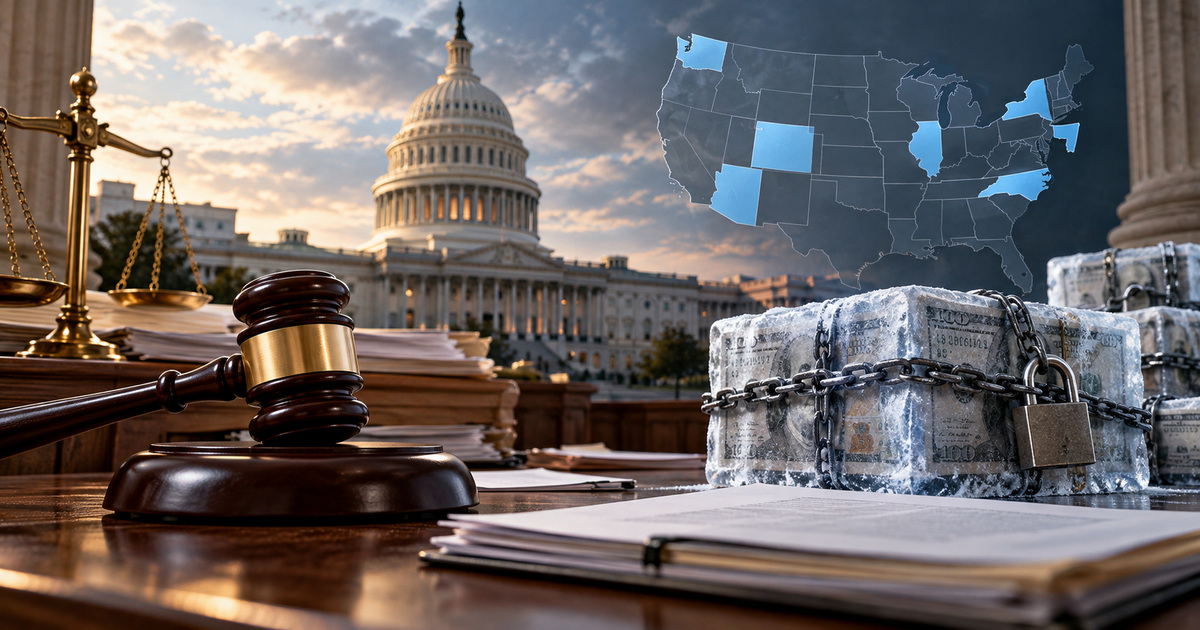

Can the Trump administration block funds approved by Congress? 7 states resort to the judiciary to resolve the dispute
Turn towards 810 Millions of dollars in federal funding At the center of a new legal dispute in the United States, after California and six other states filed a lawsuit against Trump administration، متهمة إياها بمحاولة وقف أموال سبق أن وافق الكونجرس على إنفاقها في برامج مرتبطة بالهجرة والتعليم وقضايا أخرى.
The case starts from a simple point: Congress He allocated the funds and determined their spending, then the administration moved a few days before the end of the fiscal year to request its cancellation, while withholding the amount until Congress considered the cancellation request.
The states believe that the president has exceeded the limits of his authority and interfered in a spending decision that belongs to Congress, while the White House said that the objectionable programs support policies that it rejects in the files of immigration, race, and the environment. The case is still before the court, and no ruling has been issued to determine whether the administration’s move is legal.
How did the financing crisis begin?
Congress had approved the funds within federal appropriations allocated to specific programs, including files such as the environment, immigration, and others. Congressional approval here means granting government agencies legal authority to use those funds during their specified period.
Last September 25, as the end of the fiscal year approached – which is the period of validity of the funds – it moved Trump administration To request the cancellation of this portion of funding, which led to it being withheld during the period in which Congress considers the request.
And from here the conflict began; The states say that the funds had already received Congressional approval, and that the administration did not have the power to stop them on their own before lawmakers decided whether to agree to cancel them, especially since the funds were still usable until the end of the fiscal year.
What did the Trump administration do?
The White House has used a mechanism known as "pocket rescission," which is simply that the president sends Congress a request to cancel funds that the latter has previously approved, but the request comes very close to the expiration of those funds.
In the current case, the expiration date for the funds was the end of the fiscal year on September 30, while the administration sent the cancellation request on September 25, just five days early. During these days, the funds were withheld, preventing federal agencies from using them before they expired.

If the funds expire and are still not tied to a grant, contract or legal obligation, they can no longer be used to create new obligations. And so it becomes The timing itself is part of the dispute: The funds could expire before Congress has enough time to resolve a request to repeal them.
The US Government Accountability Office (GAO) explained that the period for Congress' consideration of the September request would have extended to at least November 9, 2026, that is, after the funds expire on September 30. He also concluded that the law does not allow the president to use a repeal request to keep funds withheld until they expire if Congress does not agree to repeal them.
Why do the states object?
California is leading the lawsuit, which was filed in the federal court for the Northern District of the state, and the states say that the Constitution gives Congress what is known as “spending authority,” meaning that lawmakers decide how to allocate federal funds and what they will be used for.
From this standpoint, the lawsuit believes that the Trump administration’s withholding of funds allocated by Congress affects the distribution of powers between the legislative and executive branches.
California Attorney General Rob Bonta said that, from the state's perspective, the president's objection to a particular program does not give him the authority to withdraw funding approved by Congress. The lawsuit asserts that the dispute also relates to the way financial laws are implemented after they are passed.
What does the White House say?
The White House offered a different justification for the decision to cancel the funds, saying the targeted programs supported illegal immigration, exacerbated racial tensions, and promoted what it described as exaggerated approaches to environmental issues.
Thus, the two parties differ on two levels: The content of the programs themselves, and who has the authority to withhold funds previously approved by Congress.
Why does the case exceed $810 million?
The value of money is important, but the dispute raises a broader institutional question: What happens when Congress decides to fund a program, but the executive branch refuses to continue spending the money allocated to it?
The answer will be determined by the courts in the context of the current case, but the debate reflects the importance of rules that regulate the use of public money and determine responsibility between institutions.

Hence it is granted Sustainable Development Goal 16, on peace, justice and strong institutions, The issue has a dimension that goes beyond daily American politics; Effective institutions need clarity of powers, accountability, and the ability of public decisions to pass through the channels specified by law.
How can educational, social and environmental programs be stabilized if there is disagreement over who has the final say in financing them?
To learn how financing is linked to institutional efficiency and transparency in resource management, read on: Between the financing crisis and weak governance.. What is the real challenge facing sustainable development?.
Finance needs stable rules
The case reveals that Federal funding Represents more than one number in the budget; Its impact is felt in the programs and services for which Congress appropriates funds, which thus become enforceable grants, contracts, and commitments.
Therefore, clarity in the relationship between Congress and the administration becomes an essential element in the ability of these programs to continue. When legislators allocate funds and then there is disagreement over implementation, the issue quickly moves from budget to governance.
And put down The Earth Guards Foundation This issue is part of a broader debate about public resource management; Sustainable development requires financing, as well as institutions with clear powers and rules that ensure that funds are used in accordance with approved decisions and that those decisions are subject to accountability.
The decision now remains before the courts, while the dispute puts a clear question on the table: To what extent can the executive branch withhold money that Congress has already agreed to spend?


