The opening of the Nahtay Water Station within the projects of the Decent Life Initiative to develop the villages of the Egyptian countryside
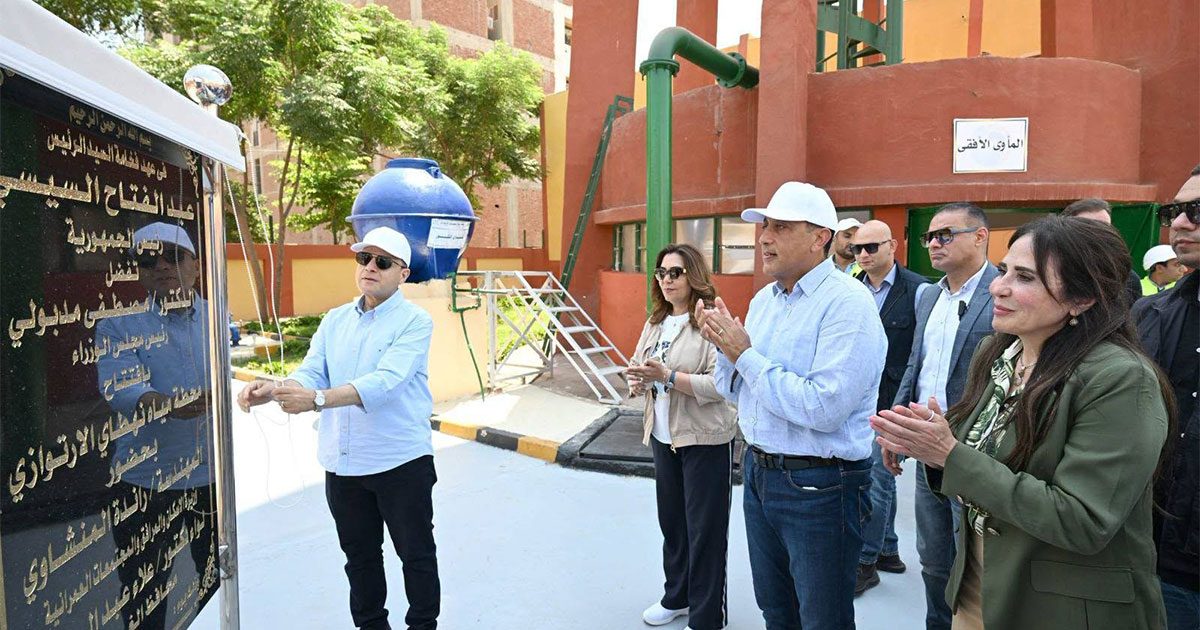

The opening of the Nahtay water station within the projects of the Decent Life Initiative to develop villages in the Egyptian countryside
Developing the Egyptian countryside is one of the basic paths in the process of achieving sustainable development, especially with the necessity of comprehensive development to improve basic services and raise the standard of living in the various regions of the Republic. In this context, the “Decent Life” presidential initiative continues to implement projects aimed at supporting infrastructure and improving services provided to citizens, thus enhancing their ability to meet daily needs and supporting quality of life and social well-being.
The Egyptian countryside cannot be viewed in isolation from the basic services system on which sustainable development is based. Providing safe drinking water and improving the efficiency of its facilities are directly related to the health of citizensThe stability of local communities and their ability to grow. Hence, investing in village infrastructure becomes part of a broader vision for development, which aims to build a more suitable environment for life and work, and ensures that the fruits of development extend to the various segments and regions of society.
Development of Nahtay Water Station in Zefta Center
From this standpoint, Dr. Mostafa Madbouly, Prime Minister, during his inspection tour today in Gharbia Governorate, inaugurated the Nahtay Artesian Water Station in the Zefta Center, which was developed and raised as part of the projects of the Presidential Initiative “A Decent Life” to develop the villages of the Egyptian countryside, within the framework of the state’s ongoing efforts to raise the level of drinking water services and improve the quality of life for citizens in Egyptian villages.
The Prime Minister confirmed that the drinking water sector receives great attention from the state as one of the sectorsVitality directly related to the daily lives and health of citizens, noting that the projects implemented within the presidential initiative “A Decent Life” contribute to creating a qualitative shift in the level of basic services within the targeted villages, thus enhancing the comprehensive development efforts witnessed by the various governorates.
Dr. Mostafa Madbouly added that the drinking water projects implemented by the state, within the “Decent Life” presidential initiative, aim to provide safe, high-quality water while improving the level of services provided to all citizens, in line with the sixth goal of the Sustainable Development Goals (SDGs) related to providing clean water and supporting sanitation.

Completion of water and wastewater treatment projects
For her part, Engineer Randa Al-Minshawy, Minister of Housing, confirmedUtilities and urban communities, the Ministry’s agencies and its affiliated executive bodies continue field visits and continuous follow-up of various work sites for water plant and sewage treatment projects, in implementation of the government’s directives to quickly complete the Presidential Initiative projects, while working to remove any obstacles that may affect implementation rates, to achieve the maximum benefit from these projects and improve the quality of life of the Egyptian citizen in the targeted villages.
Engineer Randa Al-Minshawy pointed to the great concern for the speedy completion of projects according to the highest quality standards, which contributes to improving the level of services provided to citizens and achieving the state’s goals in developing the Egyptian countryside.
A new impetus to stabilize drinking water services
The Nahtay Artesian Water Station represents an important addition to the drinking water system in Gharbia Governorate.Due to its major role in supporting the stability of the service and raising its efficiency, in light of the development work that the villages of the Zefta Center are witnessing in various sectors within the presidential initiative “A Decent Life,” and this is directly reflected in the level of services provided to citizens.
The station serves about 21 thousand people from the villages of “Nahtay” and “Al-Daghaida,” in addition to a number of neighboring farms, with a design capacity of 4,920 cubic meters per day, after the completion of work to raise the efficiency and comprehensive development of the station.
This expansion in the provision of water services to citizens contributes to supporting the principle of providing basic services more equitably between regions, in line with the tenth goal of the Sustainable Development Goals (SDGs), related to reducing inequalities, by enhancing the opportunities of village residents to obtain services necessary for quality of life in a more efficient and stable manner.
Integrated development to support the needs of the Egyptian countryside
The development work included increasing the design capacity of the station by 105% compared to the previous capacity, by increasing the number of wells from 3 to 4 wells, in addition to developing the expulsion lines and raising their efficiency, which contributes to increasing the quantities of water produced, improving pumping rates, and stabilizing the service provided to citizens.
The works also included raising the efficiency of the general site, constructing a new wall for the station, developing the administrative building, and rehabilitating the upper tank with a capacity of 100 cubic meters, as well as implementing new water networks with a length of 6 kilometers, which supports the water distribution system and raises the efficiency of service in the region, bringing the total length of the networks served to 26 kilometers.
This development comes as part of the state’s ongoing efforts to improve drinking water projects in the villages of Zefta Center, and improveThe quality of basic services, keeping pace with the current and future needs of citizens and supporting the path of development of the Egyptian countryside.

In conclusion, the development of the Nahtay Artesian Water Station reveals that development in the Egyptian countryside is measured by its ability to transform infrastructure into stable services whose impact the citizen feels in the details of his daily life.
Increasing the design capacity, expanding the number of wells, extending water networks, and raising the efficiency of the station’s components, all ultimately translate into a greater ability to provide water to more citizens and accommodate the future needs of the targeted villages.
Here, “a decent life” takes on its broader developmental meaning. As a path to rebuilding the elements of life in the countryside on a more efficient and sustainable basis, so that improving service becomes part of improving the environment in which citizens live and grow.Within it is society.
Hence, The Earth Guards Foundation confirms that investing in water creates a development impact that goes beyond the boundaries of the facility itself; Because safe water is linked to good health, stable service supports the well-being of families, and more efficient infrastructure gives villages greater ability to meet their growing needs. Therefore, Egyptian rural projects achieve the essence of sustainable development, which is that public resources and investments are transformed into a real ability to improve human life, and that this ability extends to the villages and communities that constitute an integral part of the country’s future.