

305 houses engulfed in flames… Forest fires cause widespread devastation in Indonesia
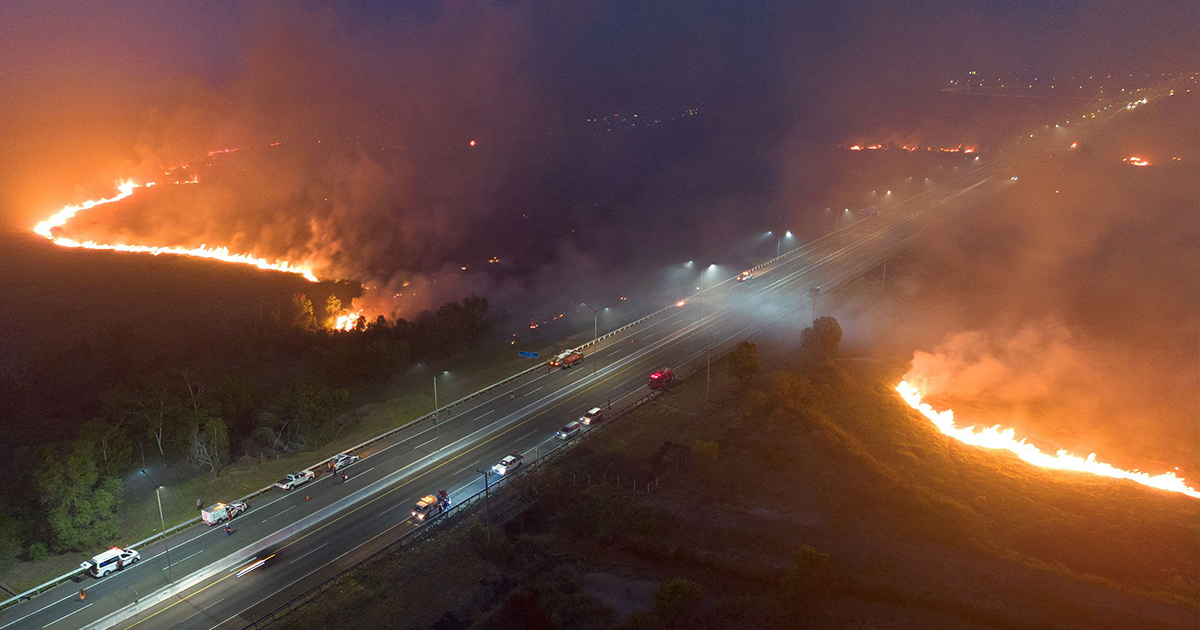

305 houses engulfed in flames… Forest fires cause widespread devastation in Indonesia
In the Indonesian village of Serdang, the afternoon of Saturday, October 10, turned into the beginning of two days of fear and destruction, after the fires exceeded the surrounding lands and reached neighboring homes. As the wind pushed the flames towards the residential area, the circle widened forest fires Leaving behind 305 destroyed homes, and hundreds of residents who were forced to seek shelter far from their homes.
In Bangka Belitung province, the disaster revealed how the combination of strong winds, flammable terrain and water shortages can turn an openland fire into a humanitarian crisis. Thousands of people were affected, and hundreds of others were evacuated, in what is the first incident in 2026 in which Indonesian fires have destroyed hundreds of homes.
When the fire crossed into the village
The fire started on Saturday afternoon in Serdang village in South Bangka district, and continued until late Sunday, while firefighting teams faced difficulties in containing the flames that spread to a dense residential community.
And according to Local disaster management agencyThe fire completely destroyed 305 homes, while the area of the burned land amounted to about 83 thousand square meters. The authorities announced that no human casualties had been recorded at the time of issuing their statement, despite the widespread destruction.

These numbers reveal another side of environmental disasters. The area consumed by fire does not alone convey the magnitude of the loss, after the homes that used to receive their residents turn into destroyed buildings, and returning to them becomes an issue that goes beyond the end of the fire.
Why did the fire spread so quickly?
Several factors came together to control forest fires The terrain is more difficult in Serdang; Strong winds helped push the flames towards the residential area, while nature contributed Peatlands complicates control efforts.

These lands contain accumulations of organic plant materials, which easily ignite during periods of drought, and some of their layers may continue to burn under the surface, making extinguishing them a difficult task.
The lack of water made the work of fire brigades more difficult, while the use of wood to build the damaged homes helped the fire spread between the buildings.
A school and a mosque open their doors
While emergency teams were facing the fire, hundreds of residents found themselves in urgent need of a safe place. The people found their refuge in a nearby mosque and school, where about 500 evacuees took refuge, while the authorities set up shelter tents and a field kitchen, and distributed food, water, and clothes to those affected.
In these details, it becomes clear that disasters do not end once the source of danger is controlled. Families who lose their homes need shelter and basic services, and then face a longer journey to regain stability.
Target 11.5 of Sustainable Development Goal 11, on sustainable cities and communities, starts at the core of this human suffering.; It calls for reducing human and economic losses resulting from disasters, paying special attention to groups most vulnerable to risks.
Serdang's experience makes this principle tangible: protecting communities means protecting homes, preparing for evacuation, and providing for residents when disaster forces them to leave.
Indonesia is under fire
The Serdang fire came within a severe season of forest fires Witnessed by Indonesia, carriers described it as the most violent in eleven years, especially on the islands of Sumatra and Borneo.
During the period from January to July 2026, fires destroyed about two billion and twenty million square meters across the country. Non-governmental organizations estimated that an additional 6 billion square meters or more would be burned during the following months. These numbers are based on the estimates of these organizations and were not announced as a consolidated official tally.

But what distinguishes the Bangka Belitung incident is that the fire reached a residential area and caused widespread destruction in homes, showing that the dangers of fires may extend to the daily lives of residents far beyond the boundaries of forests and open lands.
How do we protect homes before fire arrives?
If winds can carry fires to homes in a short time, how can communities prepare before fires become catastrophic?
This issue opens a practical door to target 13.1 of Sustainable Development Goal 13, on climate action, which aims to enhance resilience to climate-related hazards and natural disasters.
The conditions of the Serdang fire indicate the importance of providing the necessary water sources for extinguishing, monitoring flammable areas, and improving response and evacuation plans, taking into account building materials and the degree of exposure of homes to surrounding dangers.
Preparedness extends to making use of modern monitoring methods and technologies. It is an issue I addressed The Earth Guards Foundation in an article about the role of robots and technology in confronting forest firesThis opens the way for consideration of tools that can support prevention and control efforts.
The Serdang tragedy reveals an essential aspect of the relationship between environmental protection and human safety, a relationship that is conveyed in a message The Earth Guards Foundation, Taking care of the lands surrounding residential communities and developing disaster preparedness represents an investment in the safety of families and the stability of communities.
And while being measured forest fires Typically with burned areas, the village of Serdang leaves behind another scale that is difficult to reduce to numbers; Behind hundreds of destroyed homes, there are families waiting to regain a roof to protect them and a life that was proceeding in its usual calm, before the fire reached their doors.


