

A court ruling requires Eskom to address water pollution in South Africa

Court ruling requires Eskom to address water pollution in South Africa
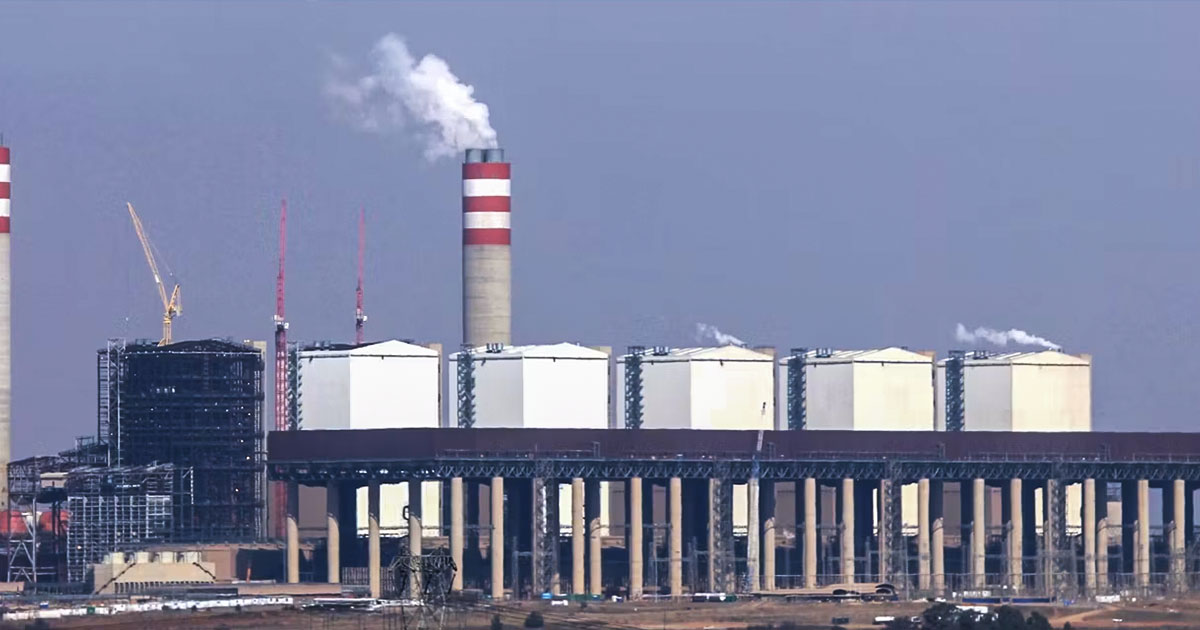
The case began with water beneath one of South Africa’s largest coal-fired power stations, after indications emerged of contamination of groundwater and nearby wetlands and streams. As the problem continued, the environmental damage turned into a legal dispute over the responsibility of the power station and the role of government agencies charged with protecting the water.
The dispute brings together Topigs Norsvin “Topigs Norsvin”, which operates a farm near the Kusile coal plant, and the state electricity company Eskom “Eskom”, responsible for operating the station. She said The agricultural company said that pollution from Kusili reached the water sources located below it, prompting it to resort to the judiciary and demand that Eskom be obligated to comply with the environmental conditions associated with the operation of the station.
Topgs Norsfin also called on the government agencies responsible for water and the environment to use their powers to reduce pollution and address its effects. On 14 August 2026, the Supreme Court of Appeal accepted an important part of the company’s appeal, ruling that Eskom and a number of government agencies had failed to fulfill legal obligations to protect water sources, and obliging them to take steps to address violations and monitor water quality.
The issue raises an equation that goes beyond the boundaries of the farm and the station: How can electricity supplies be maintained in a country that relies heavily on coal, while ensuring the protection of the water and the environment surrounding the energy facilities?

A farm facing a power station
The Kusile plant is located in the Mpumalanga Province, one of the most important coal producing regions in South Africa. The station began operating in 2017, with a capacity sufficient to supply more than three million homes with electricity.
Before building the plant, the company that owns Eskom had to obtain environmental approvals and water use licenses, which included binding conditions to contain polluted water, prevent its leakage into the surrounding environment, monitor water quality, and adhere to permissible limits for use and discharge.
But Topgs Norsven, which operates a farm below the plant, said contaminated water from the Kusili plant had reached groundwater, wetlands and nearby streams, threatening its water sources and agricultural operations.
and joined The company referred to the station’s environmental monitoring committee, which was supposed to follow up on Eskom’s compliance with environmental conditions, but the pollution continued, which prompted it to resort to the judiciary.
How did pollution get into the water?
The legal dispute began in 2023 when Topgs Norsven asked the Supreme Court to oblige Eskom to comply with environmental conditions, and to force water and environmental authorities to intervene.
The Supreme Court rejected the application in June 2024, before the case moved to the Supreme Court of Appeal, which reached a completely different result.
The ruling found that some environmental monitoring information was provided late or not at all, while other reports contained scientific gaps and errors. Eskom has also not implemented some of the measures it said it would take To address problems.
Water tests repeatedly showed levels of contamination exceeding permissible limits, while the company did not deny that the Kusili plant had actually caused damage to the water sources located below.
It is highlighted here that the issue is linked to the sixth goal of the Sustainable Development Goals, which is concerned with ensuring the availability of water and its sustainable management, especially with regard to protecting water quality, reducing pollution, and preventing pollutants from reaching water systems and sources of human and agricultural use.
For more about the effects of water pollution on ecosystems, read: How did water pollution turn the largest lake in El Salvador into a fish graveyard? .
Environmental approval is not an open permit
The court confirmed that Eskom had obtained environmental approvals and licences The use of water does not entitle it to ignore the conditions associated with these permits after commencement of operation.
It was found that the company violated binding environmental and legal requirements, and did not take sufficient reasonable steps to reduce water pollution or repair the damage resulting from it.
This aspect of the ruling is one of the most important points of the case, because it confirms that environmental approvals go beyond being merely administrative procedures completed before the project is established, to being ongoing obligations throughout the operation period.
The ruling also linked the violations to the right to a healthy environment protected by Section 24 of the South African Constitution, which expands the case from a dispute between a farm and a power station to an issue related to public environmental rights and the extent of the law’s ability to protect them.

Regulatory authorities in front of Accountability
The responsibility for the violations did not stop with Eskom, as the court found that senior officials in the Ministry of Water and Sanitation and the Ministry of Forests, Fisheries and the Environment acted illegally when they failed to force the company to comply with the rules.
South Africa’s environmental laws give regulators powers to intervene when conditions of environmental approvals or water licences are violated, but the case showed that having these powers is not enough if they are not used when needed.
The court affirmed that government agencies can choose appropriate means to stop pollution, but they cannot choose to do nothing.
This aspect relates to Goal 16 of the Sustainable Development Goals, which is concerned with building effective and accountable institutions. Environmental legislation loses a large part of its value if there is no implementation, while the protection of natural resources depends on the clarity of responsibilities and the ability of institutions to implement the rules and hold violators accountable.
Countdown to tackle pollution
The court went further than simply declaring that the actions of Eskom and the government agencies were unlawful, and set clear dates for the next actions.
It also required Eskom to submit a written, documented plan to address the issues within 30 days, and then report on progress within 60 days.
In return, senior government officials for water and environment must submit a report within 75 days outlining the actions that should be taken against the company.
Eskom can apply to the Constitutional Court for permission By appealing the ruling, but the appeal is not automatic, as the court must first agree to hear the case.
In the end, the number of reports or plans that are presented does not express the end of the problem as much as it expresses the extent to which levels of water pollution have been reduced and the quality of the sources located below the Kusili station has improved.
On this basis, The Earth Guards Foundation proposes a view that the importance of the case goes beyond obligating a government company to correct its violations, because it provides a clear model of the relationship between industrial activity, environmental responsibility, and law enforcement. The existence of rules to protect water represents the first step, while their ability to have a real impact remains linked to follow-up implementation, clarity of responsibility, and the transformation of judicial rulings into a measurable improvement in the environment and water quality.


