

Social protection programs in Egypt.. How to transform cash support into sustainable development?

Social protection programs in Egypt.. How do you turn cash support into sustainable development?
Social protection programs in Egypt are moving during the current stage towards a more expansive concept of providing financial assistance. Policies and initiatives tend to build a system that links protection with empowerment, care for quality of life, support with job opportunities, and service with human rights.
From this standpoint, the recent moves of Dr. Maya Morsi, “Minister of Social Solidarity,” reveal a remarkable development in the field of solidarity, solidarity, and care for the elderly and people with disabilities, as well as:
- Organizing household work
- Qualification of psychological support specialists
and those Pathways and others that directly intersect with a number of sustainable development goals, most notably poverty eradication, good health and well-being, quality education, decent work, and reducing inequalities.
The most important thing is that these programs – we mean social protection programs in Egypt – do not operate separately; When the person in care receives financial support and then finds a path to training and work, when the elderly person receives health and psychological care that preserves his dignity, and when the person with disabilities becomes able to access education, work, and services; Social protection is transformed from a temporary safety net into a development path that protects people and increases their ability to participate and produce.
Social protection programs in Egypt
One of the most prominent program files Social protection in Egypt, which reveals the breadth of the concept of solidarity and interdependence, is the file of the elderly and Alzheimer’s patients. During the graduation ceremony of the first batch of the Dr. Abla Al-Kahlawi Secondary Technical Nursing Institute, Dr. Maya Morsi emphasized that caring for the elderly goes beyond providing basic needs to protecting dignity, improving the quality of life, and promoting health, well-being, and community integration.

Why does elderly care require specialized personnel?
The answer to the question: “Why does elderly care require specialized personnel” lies in the nature of the needs themselves; The elderly may need medical care, but at the same time he may need psychological and social support, human communication, and maintaining his independence and feeling that he is a part of the elderly. From the community.
Therefore, the graduation of the first batch from the Nursing Institute represents a step in the direction of building cadres who know the specifics of dealing with the elderly and Alzheimer’s patients, instead of being limited to general nursing training.
Elderly Care Fund and Care Market Regulation
These efforts are related to the role of the Elderly Care Fund, which aims to support the organization of the care market, establish quality frameworks, direct financing and investment, build partnerships, and fill priority gaps.
This shift is important in the context of the sustainable development goals. Because quality care requires qualified personnel, clear standards, sustainable financing, and data that helps in decision-making. In line with the dimensions of sustainable development socially and economically.
Protection Social starts with mental health
Social protection programs in Egypt are not limited to confronting poverty or providing care for the elderly; This is because psychological and social support for children and adolescents, in turn, represents one of the components of building a human being. Hence the cooperation protocol between the Ministry of Social Solidarity and Ain Shams University to launch the professional diploma for guidance and psychological support for children and adolescents.

What does this path add to the protection system?
The goal of graduating new specialists is constructive cooperation, cooperation that aims to develop professional practices, prepare tools for psychological diagnosis and evaluation, conduct applied research, and link training to the needs of psychological counseling centers affiliated with the Ministry of Social Solidarity.
The Ministry also looks forward to the psychological support and counseling centers becoming a base for qualifying cadres capable of providing services in accordance with international standards, while developing psychological standards that can meet broader Arab needs. This highlights the fourth goal of the sustainable development goals: quality education, as building an effective protection system requires investment in knowledge as much as it needs investment in the service itself.
People with disabilities at the forefront
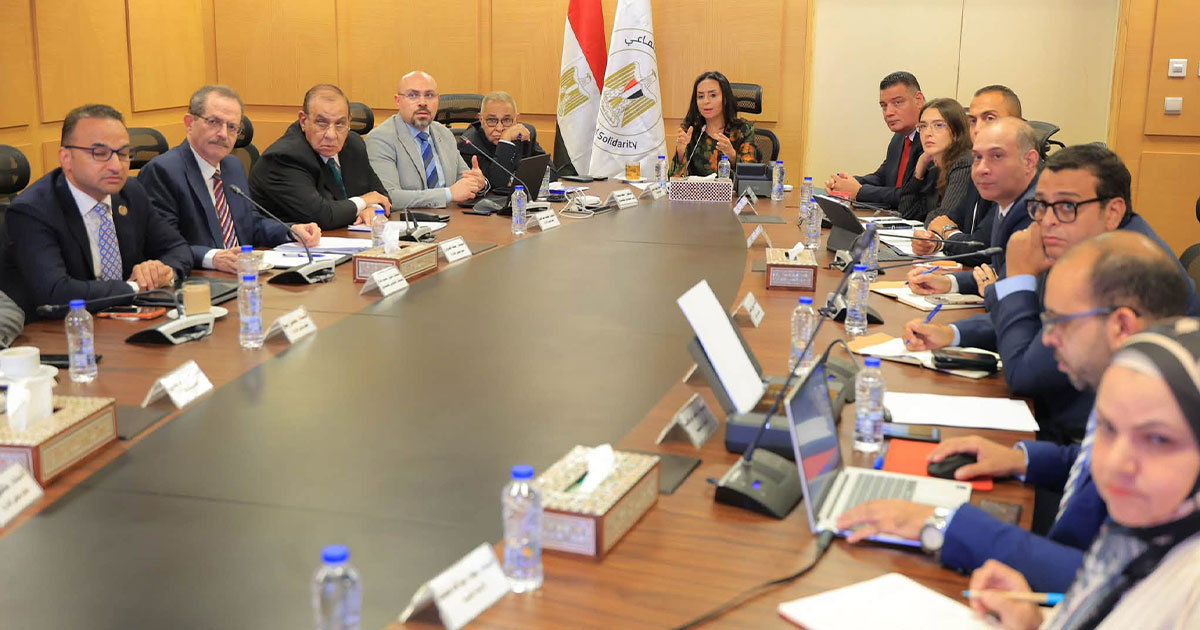
As for the file of persons with disabilities, social protection takes on another dimension that is directly related to the principle of equal opportunities and removing barriers to participation, which was represented in the meeting of the Board of Directors of the “Capable with Different” Fund, where the Minister of Social Solidarity reviewed the Fund’s strategy, which is based on Six main axes include:
- Health and Rehabilitation
- Economic empowerment and decent work
- Education and development of capabilities and talents
- Accessibility and Inclusive Environments
- Community Awareness
- Research and Evaluation

Economic Empowerment and Social Protection
Independence is built by providing education, training, and work, and by creating an appropriate environment that gives the person with a disability a greater ability to manage his life and contribute to society.
It is noteworthy in this context that the Fund’s strategy combines short interventions Scope – to improve existing services – and build partnerships, with a long-term path to developing a map of resources and stakeholders, benefiting from international practices, and building a national data system that can be used in impact assessment.
All of this is directly related to the eighth goal of the sustainable development goals, regarding decent work and economic growth, as well as the tenth goal: reducing inequalities, and other goals whose goals are aimed at supporting the social dimension.
Domestic work protecting a group that remained outside regulation
Also one of the files most indicative of the expansion of social protection programs in Egypt is the issue of domestic workers. Domestic workers perform actual work for the benefit of millions of families, but the nature of the work inside homes Many years have made it more in need of a clear legal and regulatory framework.
The data presented by Dr. Maya Morsi, “Minister of Social Solidarity” – based on a report by the International Labor Organization – indicates that there are about 75.6 million domestic workers around the world who are 15 years of age or older, and women represent about 76.2% of them.

How does domestic labor turn into organized work?
The path that was proposed in the workshop “Towards a legislative and executive framework for decent work for domestic workers in Egypt” is based on an interconnected set of tools, namely: contract, training, accreditation, registration, social security, regulation of employment agencies, databases, and the electronic platform that links supply with demand.
These sustainable tools protect the worker, and also give Egyptian family members a great deal of clarity regarding skills, services, rights, and obligations, within a framework of comprehensive social justice.
The care economy at the heart of social protection
Domestic labor is also related to the care of children, the elderly, people with disabilities, and the family in general; Therefore, organizing this profession and developing the skills of its workers can become part of building a more efficient and sustainable care economy, which directly links social protection to decent work, equality, and the sustainability of services.
Volunteer work is a social resource
If The question was: What are social support programs? The broader answer also includes programs and initiatives that expand society’s ability to support its members, most notably volunteer work and organized civil work.
Therefore, at the Arab Summit to Promote Volunteering, it was emphasized that volunteering has become a tool for enhancing social cohesion, building human capital, raising the resilience of societies, and supporting the goals of sustainable development socially, economically, and environmentally.

International cooperation in the field of social protection
The meetings held by the Minister of Social Solidarity with officials from Italy and Singapore also reveal another aspect of the system, which is exchanging experiences and building international partnerships. It happened with the Italian side Discussing cooperation in empowering and integrating people with disabilities, developing the alternative care system for children who are missing or deprived of parental care, and strengthening child protection systems, in addition to cooperation with the Italian Agency for Development Cooperation in exchanging experiences.
The meeting with the Singaporean Minister of State for Foreign and Home Affairs dealt with social protection, response to crises and disasters, relief and humanitarian work, in addition to exchanging experiences and building capabilities.

Here the seventeenth goal of the Sustainable Development Goals clearly appears: establishing partnerships to achieve the goals; Modern social protection requires cooperation between the state, civil society, the private sector and international institutions.
Therefore, the real value of protection programs Social security in Egypt lies – according to the estimation of The Earth Guards Foundation – in its ability to change the position of man within the development equation; Because the most cared for citizen should not remain confined to the category of beneficiary of the service, but rather needs a path that opens the doors of ability, independence, and participation before him.
Hence, the success of this system is measured by the lasting impact that this support leaves: a child who is more capable of learning, a young person who is closer to the labor market, a person with a disability who participates more widely, an elderly person who receives care that preserves his health and dignity, and a domestic worker who knows his rights. Let care become a bridge to empowerment, and solidarity become one of the actual tools for creating a more just and sustainable future.


