

Space debris threatens Earth’s orbit. Will solar sails succeed in cleaning it up?

Space debris threatens Earth’s orbit. Will solar sails succeed in cleaning it up?
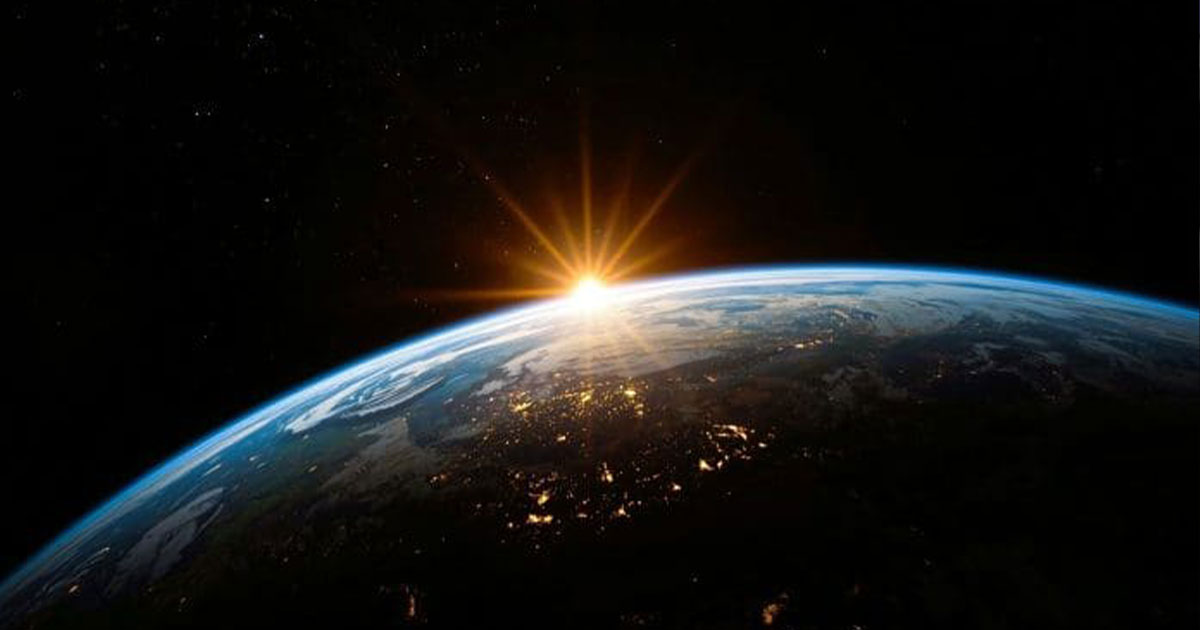
The problem of space debris expands with the increase in the number of objects moving in Earth’s orbit, and this is after near space has transformed from a wide, almost empty area to an environment crowded with inactive satellites, the remains of missiles, and fragments resulting from previous collisions. Which raises a question about the extent of human ability to manage space responsibly in accordance with comprehensive sustainability standards.
This is because estimates indicate that there are more than 40,000 tracked objects larger than 10 centimeters in size, along with hundreds of thousands of smaller pieces, all of which are moving at speeds approaching 7 kilometers per second. That is, about 25 thousand kilometers per hour, which gives it – even shrapnel Small – the ability to cause severe damage when they collide with satellites or spacecraft.
The effects of the problem extend beyond the boundaries of space. Because satellites support basic services on Earth, including:
- Navigation
- Communications
- Weather Forecast
- Disaster Monitoring
- Climatic data collection
Therefore, such space waste is relevant to Goal 9 of the Sustainable Development Goals, especially Goal 9.1 related to building a reliable and resilient infrastructure; Because the safety of satellites is necessary for the continuation of these services.
Space debris also contacts the target Thirteenth, in particular target 13.1 on strengthening resilience to climate risks and disasters; Satellites, for example, provide data that helps in early warning and monitoring of weather and environmental phenomena.
Space debris threatens vital orbits
Active satellites are forced to perform periodic maneuvers; In order to avoid objects that may pass near it, and as the density of waste increases, the possibility of collisions increases, which in turn generates thousands of new fragments.
This scenario is known as “ Kessler Syndrome “, and it means that one collision may lead to a successive series of collisions, as the debris increases rapidly, and some orbital regions become more dangerous for future space missions.
has Continuing this path would restrict the use of orbits on which navigation, communications, and Earth observation systems rely, and could also raise the costs of operating new satellites; Due to the need for protection systems, more complex maneuvers and higher insurance.

Fuel restricts orbit clean-up operations
On the other hand, active removal operations usually rely on a spacecraft that approaches an abandoned object, then captures it using a robotic arm, net, or tethering system, before directing it into the atmosphere to burn up safely.
In recent years, multiple scenarios have emerged for dealing with space debris, most of which rely on chemical or electrical propulsion. This means that each orbit transition or modification consumes a huge portion of the fuel carried by the vehicle.
This problem limits the duration of the mission and the number of objects that the vehicle can reach. This is why many projects focus on removing a single piece, and then the job is finished after the fuel is consumed or the specified goal is achieved.
Despite what such missions offer, they lack – so far – the broad capability that enables them to deal with hundreds of dangerous objects; Hence the search for means of propulsion that would last for long periods of time without relying on a limited stock of fuel.
Solar sails convert light into propulsion
To address the above challenges, a group of researchers is studying within the “SWEEP” project the possibility of using solar sails in multi-purpose space debris removal operations, and the technology relies on a large and thin membrane. A reflector that interacts with photons of sunlight.
When the photons collide with the surface of the sail, they transfer a small amount of momentum to it, and the resulting force remains very limited, yet they continue to work constantly; This allows the vehicle to gradually change its speed and path without consuming conventional fuel. Previous space missions have demonstrated the possibility of deploying and controlling solar sails, including NASA’s “LightSail” and NASA’s “ACS3” missions.

One mission to visit multiple targets
The project also seeks to find out whether a solar sail can reach a piece of space debris and help remove it, then move to another object and repeat the process several times. And you need this idea To accurate models that predict sail movement in a complex environment that includes: atmospheric resistance, gravitational disturbances, eclipse periods, and the effect of radiation from the Earth.
Researchers also need to determine the order of goals and the timing of reaching each one; Because the vehicle and pieces of debris are constantly moving in different orbits, the choice of route depends on the distance, the shape of the orbit and its direction relative to the sun, and the time available for maneuvering.
This is similar to the traveling salesman problem, who searches for the best path that allows him to visit several locations, but it becomes more complex in space; Due to the constant movement of targets, as well as the difference in time required to move between them.
Therefore, researchers use multiple techniques to improve paths, including: mathematical control and learning methods reinforcer; So they can reach a sequence that is close to the optimal path, and reduce the latency as much as possible.
Challenges that separate the idea from the implementation
No matter how useful solar sails are in removing space debris, there are limitations to them, most notably the weak propulsion force. Therefore, the spacecraft needs large areas of light film, and it also needs long times to achieve a noticeable change in speed or orbit.
On the other hand, the direction of propulsion is related to the position of the sail relative to the sun; This makes the control less flexible compared to traditional engines, meaning that the technology is suitable for gradual maneuvers, and this is when it is difficult to use it in rapid or emergency changes.
The challenges become more severe when approaching a piece of space debris that may rotate irregularly. In this case, the vehicle needs a safe path that ensures control of the approach, especially since the sail cannot stop the effect of sunlight in the same way that an engine stops.
The large size of the sail increases the area exposed to collision with fragments, and although research indicates the possibility of implementing avoidance maneuvers using some forces, the success of these steps depends on the accuracy of risk prediction and the availability of sufficient time to adjust the course.
These restrictions indicate that the success of the models and simulations represents a first stage, and that the real test remains in launching an experimental mission that proves the vehicle’s ability to move between several targets and carry out safe approaches in orbit.
In conclusion, it appears that protecting space from fragments and debris is essentially changing the way humans deal with orbit as infrastructure. They must be responsible for it; Therefore, The Earth Guards Foundation sets out its vision that the true value of solar sail technology – and other sustainable technologies – lies in opening a path towards more sustainable management of space, on which the life of planet Earth and those on it from current and future generations depend.


