

Australia is considering banning smart glasses within government institutions over privacy concerns

Australia is considering banning smart glasses within government institutions over privacy concerns
With the spread of wearable devices and their increasing imaging and recording capabilities, smart glasses are transforming from an innovative technical tool into a new challenge for privacy and security within the workplace. In government institutions in particular, the question becomes more sensitive due to the nature of the information being circulated and the need for employees and visitors to know when they are being photographed.
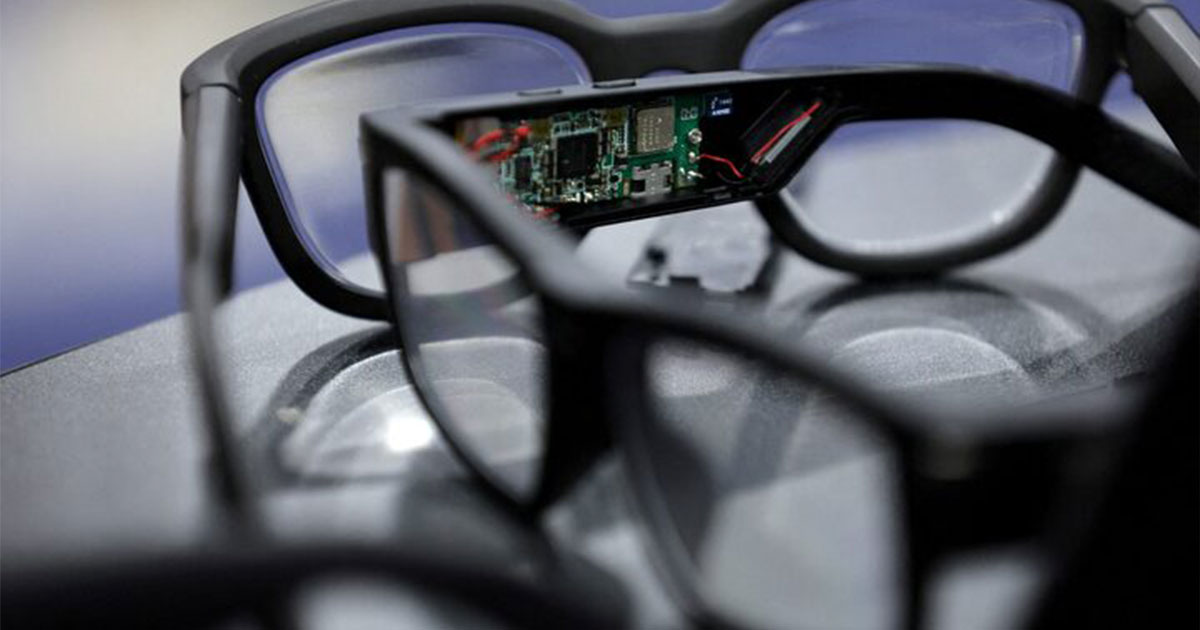
In this context, Australia is considering banning the use of smart glasses equipped with cameras within government workplaces, due to privacy and security concerns, in a move that the government said may be the first of its kind.
This comes in conjunction with the government’s preparations The Australian also discussed a set of guidelines for the use of artificial intelligence in the workplace, in an attempt to establish controls that keep pace with the rapid development of digital technologies.
Australia is considering a ban
Australian Public Service Minister Katie Gallagher has asked the Public Service Commission to advise on the possibility of banning recording-capable smart glasses within government workplaces.
She explained that these devices raise legitimate concerns about privacy and security, especially because of their ability to record people or capture information, which requires setting clear and consistent guidelines for government employees.
This trend comes within a broader policy adopted by Australia towards digital safety. Prime Minister Anthony Albanese stressed the importance of putting in place appropriate protection measures as technology develops. Pointing to his country’s endeavor to set strong standards in the field of digital security. This does not mean that the ban has already become effective, as the government is still in the stage of studying the proposal and obtaining advice on its scope and implementation mechanism.
Why do smart glasses cause concern?
Smart glasses combine the traditional form of glasses with digital functions such as photography, recording, and access to smart services, which gives them useful uses in multiple fields.
These devices have received praise in some groups, including people with visual impairment, because of their ability to provide assistive functions and improve access to information.
But the main concern is that it could be used to photograph or record people without explicit consent, especially since the built-in camera may be less visible than a mobile phone or Traditional photographic equipment.
The sensitivity of the matter increases within government workplaces, as meetings, offices, and documents may contain information that is not intended for recording or circulation outside the institution.

Privacy enters government workplaces
The case demonstrates that privacy protections used to be tied to apps and websites, and now also include devices worn by individuals during their normal day.
In a government work environment, the ability of a small device to record audio or images can create challenges related to the protection of information, the rights of workers and visitors, and the limits of personal use of technology within official facilities.
The issue’s connection to Goal 16 of the Sustainable Development Goals is highlighted here. Concerned with building effective, responsible and inclusive institutions. Clarity of rules regarding the technologies used within organizations helps protect information, enhance trust, and ensure that individuals know their rights and the limits of using devices that may record them. This is why Australia seeks to establish unified guidelines instead of leaving dealing with smart glasses to the discretion of each employee or institution separately.
Similar restrictions appear globally
Concerns about these devices extend to Europe, as the Norwegian capital, Oslo, has banned the use of smart glasses in schools, while the Norwegian government is considering regulating their use on a broader scale. In England and Wales, the use of Meta smart glasses has been banned in courts, in light of concerns related to recording and privacy.
The companies producing these devices also face legal challenges, as a German human rights body filed a complaint Criminal action against Meta and other parties involved in the sale of its devices, based on privacy laws.
These developments indicate that the rapid spread of wearable technology has begun to push various governments and institutions to review their current rules and their ability to deal with devices that can continuously collect information.
For more on governments’ tendency to impose controls on digital technologies, read: The circle of social media bans expands… Europe joins the global movement .
Technology needs clearer rules
The discussion about smart glasses coincides with the Australian government preparing to hold a meeting that includes a number of the country’s largest employers, among them Microsoft, Commonwealth Bank, Telstra and AGL, to discuss guidelines for using AI in the workplace.
This reflects a broader challenge: technology is evolving rapidly, while regulations need to adapt without closing the door on innovation.
This aspect is linked to the ninth goal of the Sustainable Development Goals, which is concerned with innovation and infrastructure, because supporting technological development requires at the same time clear frameworks that guarantee safe and responsible use and protect individuals and institutions from new risks.
In conclusion, the case smart glasses reveals the wide range of challenges associated with wearable technologies, with photography, recording, and information gathering moving to small devices that accompany the user in the work environment. This development makes it necessary to establish clear rules for use An essential part of protecting privacy and security, especially within organizations that deal with sensitive information and need known limits for using technology.
For its part, The Earth Guards Foundation stresses that keeping pace with innovation requires regulation that defines responsibilities and controls for use in a transparent manner, so that institutions benefit from the new capabilities of technology while preserving the rights of individuals and protecting information. As the capabilities of devices expand, the rules that regulate their presence in the work environment and maintain the balance between innovation, trust and security become more important.


