

A cyber attack turns French refrigerators into ovens… A temperature of 50 degrees Celsius spoils food
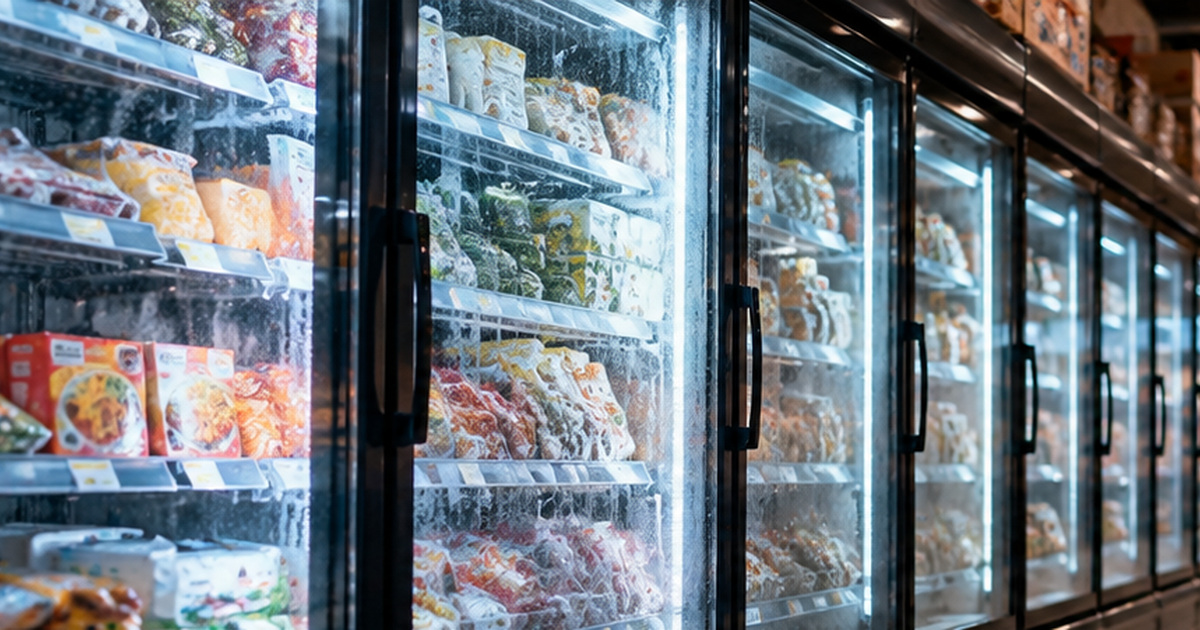

A cyber attack turns French refrigerators into ovens… Temperatures reaching 50 degrees Celsius spoil food
On the night of October 11th and 12th, 2026, the refrigerators of hundreds of French stores lost their basic function; The temperature of some refrigeration systems designed to preserve food rose to 50 degrees Celsius, and the malfunction lasted six hours in a number of Intermarché stores. Behind this rise was a cyberattack that targeted digital control systems, leaving spoiled food, business losses and reports of fires.
The incident revealed a disturbing facet of the risks of Internet of Things “ Internet of Things “ ( IOT ) ,, which allows devices and equipment to connect to the Internet, exchange data with them, and manage each other remotely. The effects of electronic manipulation have extended to the products that consumers rely on daily, and have raised questions about the integrity of the technical infrastructure responsible for preserving food and maintaining its supply.
Store refrigerators are attacked
Les Mousquetaires Group,, which owns the Intermarche chain, announced that about 150 of its stores were damaged, according to its initial toll, after they were targeted by a cyber attack during which the attackers tampered with the cooling systems and raised temperatures to unusual levels.
The attacks also targeted stores belonging to the Cooperative U chain, whose CEO Dominik Schilcher described targeting equipment necessary for preserving fresh produce and supplying food to the population as extremely dangerous and inappropriate. preceded.
As the investigations expanded, a more comprehensive outcome emerged. Information published on October 13 indicated that at least 350 stores in France were affected, including other commercial chains such as Carrefour and Monoprix.
Thus, devices that usually operate out of the sight of shoppers have become the focus of a widespread crisis. Controlling temperatures has become a gateway to disrupting an essential service that stores rely on to maintain the validity of their products.
Food waste behind refrigerated doors
In the face of rising temperatures, Intermarche took the decision to dispose of the food in the affected refrigerators, to avoid any health risks to consumers. Food safety required this measure, despite the economic and environmental losses it entailed.
Every product that reaches store shelves has consumed resources during the growing or manufacturing, packaging, transportation, and storage stages. When it ends up as waste, the loss extends to water The energy and raw materials used to produce it.

The incident reveals that food protection begins before it reaches the consumer, and includes the efficiency of storage and the safety of the technology that manages it to avoid any cyber or technical attack. This is an issue that The Earth Guards Foundation also addresses in an article: From fields to waste bins…the food waste crisis and the solutions proposed.
Cybersecurity under test
As the extent of the damage became clear, French Prime Minister Sebastien Lecornu directed the National Agency for Information Systems Security (ANSSI) to investigate the attack, while the Paris Public Prosecution Office opened a criminal investigation.
Initial technical information indicated vulnerabilities in software used to control cooling devices, including systems linked to the Danish company Danfoss. The published technical details showed problems related to outdated software and control interfaces available over the Internet, while the investigation continued to determine how the attacks were carried out and those responsible for them.
These systems work through electronic units that monitor the temperature of the refrigerators and adjust their operation. When they are connected to networks, security updates and access control become an essential part of their safe operation.
The danger of any cyber attack targeting these systems lies in the connection of the digital world with the physical structure of daily life. It might start A defect in a program or control device then manifests its impact in the form of spoiled food, broken service, and a loss that shop owners and society pay for.
Concern extends beyond France
The French authorities announced coordination with their European partners, in anticipation of the possibility of another cyber attack spreading to neighboring countries, and to verify the presence of additional French facilities at risk.
At a similar time, the Dutch company Ahold Delhaize faced a security problem in its network, which prompted it to disconnect some systems as a precaution.
Albert Heijn stores in the Netherlands and Belgium continued to receive shoppers, while the app and delivery services were disrupted, and incorrect information sometimes appeared on electronic price cards.
The announced disruptions also included services linked to Delhaize stores in Belgium and Luxembourg. But the authorities and companies have not proven a link between the Dutch group’s problems and the attack on the cooling systems French, so treating them as two separate incidents remains more accurate.
These simultaneous events reveal the retail sector’s expanding dependence on software. From refrigerators and warehouses to shopping applications and price cards, making the continuity of services linked to the safety of an interconnected technical system.
Protecting food supply chains
If refrigerators protect products from damage, who protects the systems controlling those refrigerators? Here comes Target 9.1 of the Sustainable Development Goals, calling for the development of quality, reliable, sustainable and resilient infrastructure.
This goal gains practical meaning in the food sector. The ability to confront a cyber attack or technical failure requires updating software, protecting control systems from unauthorized access, and providing alternative means of operation in the event of an emergency.
This becomes more important as the use of connected devices expands With the Internet in warehouses, stores and distribution networks. A malfunction that occurs in one of the preservation or transportation links may affect the quality of the products, the cost of operation, and the continuity of their provision to consumers.
In this context, cybersecurity becomes part of facilities’ resilience, and maintaining digital devices transforms from a technical task into an investment in protecting food, resources, and trust in services.
The cost of digital glitches
A cyber attack on French supermarket refrigerators redraws the boundaries of technical risks; The manipulation went beyond software to real food products, and demonstrated how a flaw in control systems can combine economic loss, waste of resources, and threat to consumer safety.
This incident leads to one of the issues that The Earth Guards Foundation is concerned with, which is the ability of societies to benefit from innovation while preserving on its basic resources and services. Achieving this balance begins with designing safer systems, monitoring and updating them, and preparing for disruption before technical problems turn into tangible losses.
Refrigerators are designed to extend the life of food and protect it from spoilage, but the attack revealed that this protection in turn depends on systems that need to be protected. As everyday services become increasingly dependent on connected systems, protecting their digital infrastructure becomes a direct investment in preserving resources, economic stability, and societal security.