

Congo faces a dangerous surge in Ebola cases amid health and security challenges
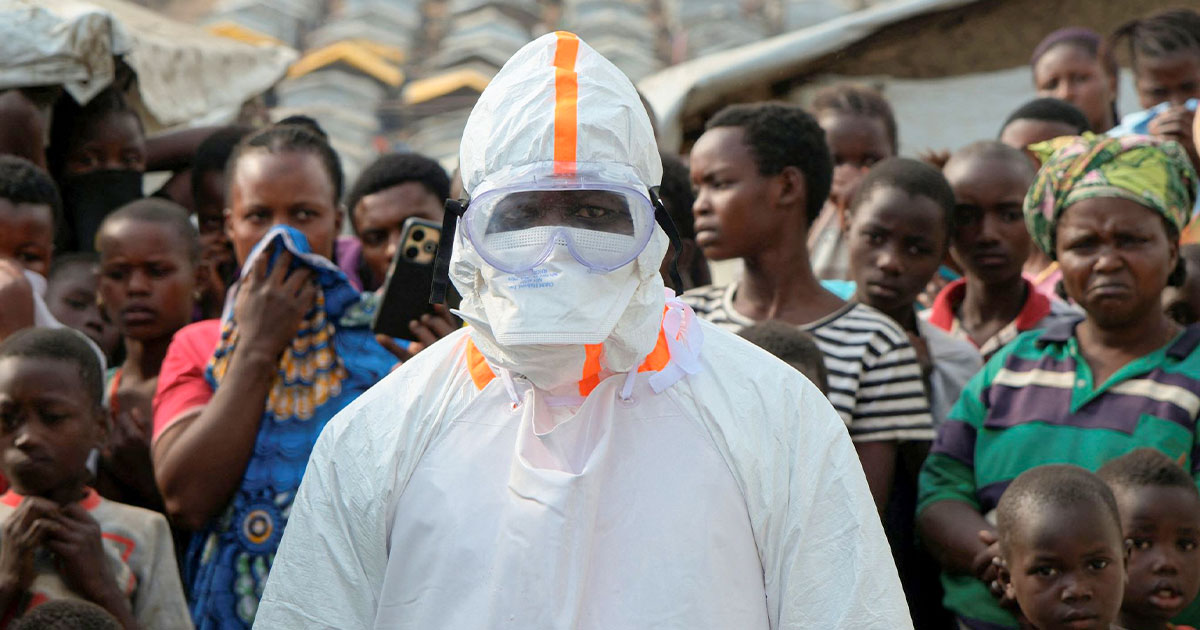

Congo faces a dangerous surge in Ebola cases amid health and security challenges
Every day, people find themselves in health situations, epidemic dangers, and infectious diseases that portend an uncertain future! Such global problems place many consequences and impacts on health systems, drain economic resources, and affect food security, education, and the labor market.
In this turbulent health situation the Ebola virus has returned, renewing serious fears after the number of infections and deaths escalated in the Democratic Republic of the Congo, reflecting the continued ability of epidemics to threaten the lives of millions and disrupt development efforts, especially in countries that suffer from fragility in their health and security infrastructure.
What is itEbola virus?
The Ebola virus first appeared in 1976 in areas of the Democratic Republic of the Congo and South Sudan, and since then the African continent has witnessed several outbreaks, the most prominent of which was the West African epidemic, which between 2014 and 2016 resulted in thousands of infections and deaths.
The Ebola virus is considered one of the most dangerous viruses that cause hemorrhagic fever. It belongs to the family of filoviruses, and is characterized by its ability to cause an expansion of the outbreak if cases are not detected early and urgent measures are not taken to control them.

Ebola virus cases escalate
From this angle, the Congolese Ministry of Health announced that the number of deaths resulting from the outbreak had risen – approximately – to 930 deaths.Out of 2,344 confirmed infections as of last Saturday, in one of the fastest waves of the spread of the virus that the country has witnessed.
The Ministry explained that the last twenty-four hours recorded 37 a new death, which is one of the highest daily death rates since the announcement of the outbreak of the disease in 15 Last May in the east of the country; Which clearly reveals the continued rapid transmission of infection despite containment efforts.
In response to this serious health crisis, the United Nations warned of the possibility of the Ebola virus spreading in camps for displaced people in eastern Congo more severely than before. It also confirmed that infections had been recorded in 16 camps in Ituri province, which includes more than 270,000 displaced people.
The United Nations Office for the Coordination of Humanitarian Affairs also called for strengthening international support; In order to confront the outbreak of the virus, the reason for this urgent call is the lack of a vaccine or approved treatment for the “Bundebugyo” strain causing the current outbreak.

Health threat and security disturbance
This health crisis is exacerbated in light of unstable security conditions. Response teams face great difficulties in reaching the most affected areas, especially in Ituri Province. Due to repeated attacks on health facilities and their workers, which hinders the diagnostic, isolation and contact tracing processes, and limits the effectiveness of preventive interventions.
In this context, the Congolese authorities announced the recording of 12 attacks Health facilities and teams have been targeted since the beginning of the outbreak, and a large number of health sector workers have gone on strike. In protest against the delay in disbursing their financial dues, at a time when the health sector lost 36 of its staff as a result of them being infected with the virus while performing their duty.
Hospitals and treatment centers in the Democratic Republic of the Congo continue to receive infected people, as the Ministry of Health confirmed that 724 patients are currently subject to isolation or receiving treatment, while response efforts continue to intensify in the affected health areas to limit the spread of infection; In an effort to achieve good health goals and standards.
Global quarantine
The repercussions of this crisis – the Ebola virus crisis – extended beyond the Congolese borders. It was announcedThe Canadian government has imposed temporary border measures prohibiting the entry of any foreigner who has visited the Democratic Republic of the Congo in the past three weeks, as a precautionary step aimed at reducing the risks of transmission of the virus through international travel.
In conclusion, the Ebola crisis in the Democratic Republic of the Congo requires concerted global health efforts, and this is through partnership mechanisms and sustainable cooperation methods. Therefore, The Earth Guards Foundation confirms in light of these tragic conditions that investing in prevention and scientific research is a goal that no one should neglect, and it is what the third goal of the Sustainable Development Goals (SDGs) calls for: good health and well-being.


