

Foreign investment is heading towards the industries of the future and threatens to marginalize developing economies

Foreign investment is heading towards the industries of the future and threatens to marginalize developing economies
rose Foreign investment Globally during 2025, but the increase conceals a more important shift in capital movement, as flows have become more concentrated, selective, and linked to industries that will determine the shape of economic growth in the coming years.
Investments are increasingly directed to… artificial intelligence Data centres, semiconductors, critical minerals, energy transition technologies and advanced manufacturing, after these sectors have turned into infrastructure for economic competitiveness, industrial security and supply chains.
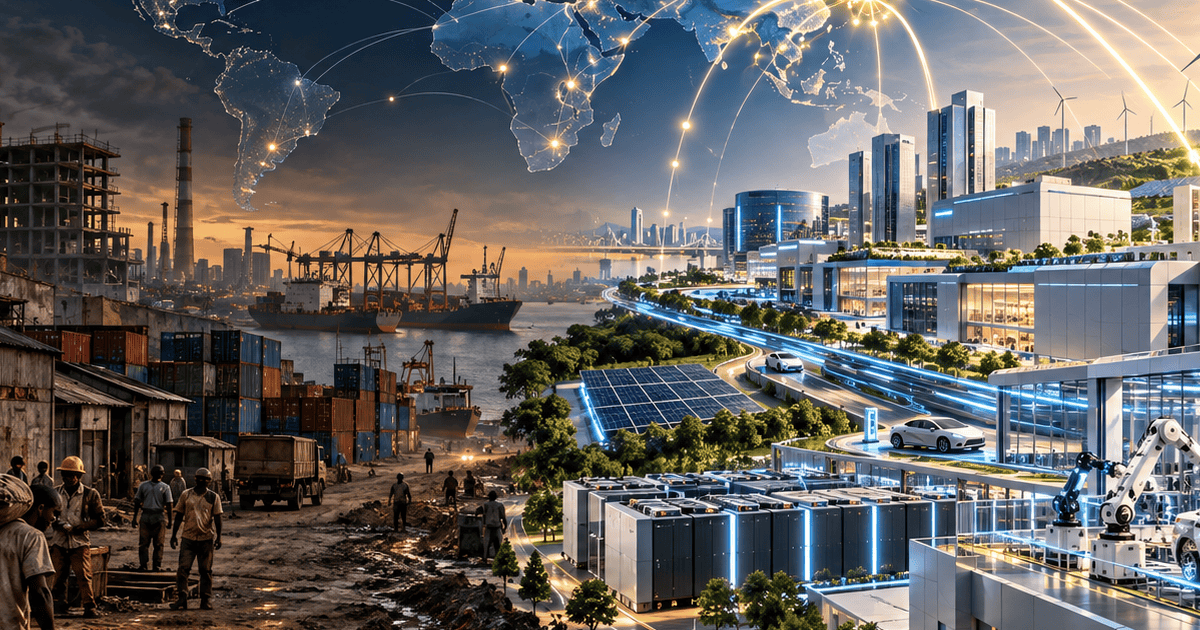
This trend gives an advantage to countries that possess technology, skills, large markets and reliable infrastructure, while many developing economies risk receiving a limited share of investments or falling away from the value chains that will drive future production, trade and development.
Rising foreign investment masks an unbalanced recovery
flows reached Foreign direct investment Globally, about $1.6 trillion during the year 2025, according to the 2026 World Investment Report issued by the United Nations Conference on Trade and Development, but the recovery remained fragile and concentrated in advanced economies and a limited number of capital- and technology-intensive sectors.
Data centers led the announced investment projects, followed by the oil and gas and semiconductor sectors, while parts of manufacturing, infrastructure and renewable energy recorded weaker activity.
The value of new investment projects announced in strategic sectors increased from $109 billion in 2020 to $576 billion in 2025, while their share of total new investment globally increased from 16% to 44% during the same period.
These figures reveal that growth is heading to industries related to computing, data, energy, and advanced technology, which are areas that require large capital and technical and institutional capabilities that are difficult to provide in a number of developing economies.
Capital is directed to sectors of the future
AI applications need data centres, computing capabilities, digital infrastructure and stable power grids, while the energy transition depends on critical minerals, batteries, electrical grids and clean technologies.
The semiconductor, electric vehicle, and advanced manufacturing industries also require more secure and resilient supply chains, prompting governments and companies to direct… Foreign investment Towards countries that have the appropriate markets, skills, natural resources and infrastructure.
This approach is consistent with the ninth goal of… Sustainable development goals on industry, innovation and infrastructure, specifically target 9.2 to promote inclusive and sustainable industrialization, reflecting the ability of economies to transform investments into domestic production and value.
But low- and lower-middle-income economies account for only about 10% of new investment in strategic sectors, compared to more than 20% in other sectors, indicating a widening gap between countries in access to future industries.
Government policies give major economies an advantage
Governments have become more influential in determining where capital goes, through incentives, subsidies, local content conditions, investment screening and targeted promotion of strategic projects.
The year 2025 recorded a record number of measures related to investment policies, and the majority of measures remained supportive of investors, but became more focused on specific sectors, technologies and projects. Incentives also constituted half of the positive measures, coinciding with the expansion of restrictions related to national security and the increase in domestic value.
This shift reflects a policy shift from a general focus on market openness to managing foreign investment as a tool to achieve specific industrial, technological, and security goals.

Major economies can offer broad financing and support packages for semiconductors, clean technology and digital infrastructure, depending on their financial capabilities and the size of their markets and institutions. Developing countries face constraints that make competing directly with these subsidies a high-cost option with limited results.
A continued race could attract projects toward economies that already have strong advantages, reinforcing existing disparities in technology, manufacturing, and skills.
Traditional paths for developing countries are narrowing
Over the past decades, many developing economies have relied on labor-intensive manufacturing as an entry point into global value chains, benefiting from low production costs and the availability of the labor force.
But this path is becoming more difficult as automation expands, digital capabilities become more important, and requirements for supply chain security, proximity to key markets, and compliance with standards and regulations rise.

Thus, low-cost labor alone is no longer sufficient to attract foreign investment, Investors also look at the stability of energy supplies, the quality of infrastructure, the availability of skills, the speed of procedures and local supplier networks.
The varying opportunities of countries to attract these flows is linked to Goal 10 of the Sustainable Development Goals on reducing inequalities, especially Goal 10.b, which calls for encouraging financial flows, including foreign direct investment, towards countries most in need. Indicator 10b.1 measures total resource flows for development by beneficiary countries and types of flows.
Realistic opportunities within new value chains
A widening gap does not mean there are no opportunities for developing countries. Many of them have important assets, including critical minerals, renewable energy, a young workforce, growing digital markets, regional trading platforms, and emerging industrial capabilities.
But transforming these assets into investable opportunities requires realistic goals. Not every economy is required to build an integrated semiconductor industry or host the largest data centers, while it can participate in specific links of value chains.
Possible entry points include metal processing, component manufacturing, digital services, infrastructure maintenance, renewable energy equipment production, logistics, recycling, and creating infrastructure resilient to the effects of climate change.
Incentives provided to attract foreign investment can also be linked to clear development outcomes, such as worker training, technology transfer, development of local suppliers, increased value added, and improved environmental performance.
This relates to Goal 9 on industry, innovation and infrastructure, specifically Goal 9.b on supporting technological development, research and innovation in developing countries.
Cooperation prevents the race from turning into a development gap
Countries need clear rules, prompt administrative procedures, and transparent mechanisms to manage risks related to security, sensitive resources, and technologies. Risk-based review systems can protect the public interest, while maintaining clarity and stability for investors.
Regional cooperation also helps overcome market size limitations, by building common infrastructure, standardizing standards, and creating cross-border industrial and trade corridors.
This path is linked to the seventeenth goal of the Sustainable Development Goals, which is related to establishing partnerships to achieve the goals, especially goal 17.5 related to adopting systems that encourage investment in developing countries. Indicator 17.5.1 monitors the number of countries that adopt and implement systems to encourage investment for the benefit of developing countries, including the least developed countries.
In this context, it indicates The Earth Guards Foundation The success of foreign investment in supporting development depends on its ability to build skills, transfer technology, expand the supplier base, and create local economic value. Distributing strategic investments to a larger number of countries enhances the diversity and flexibility of the global economy, and gives developing economies a real opportunity to participate in the value chains that will drive future growth.


