

Roads over water… How did river transport become an artery for food and trade in the Congo?

Roads over water… How did river transport become an artery for food and trade in the Congo?
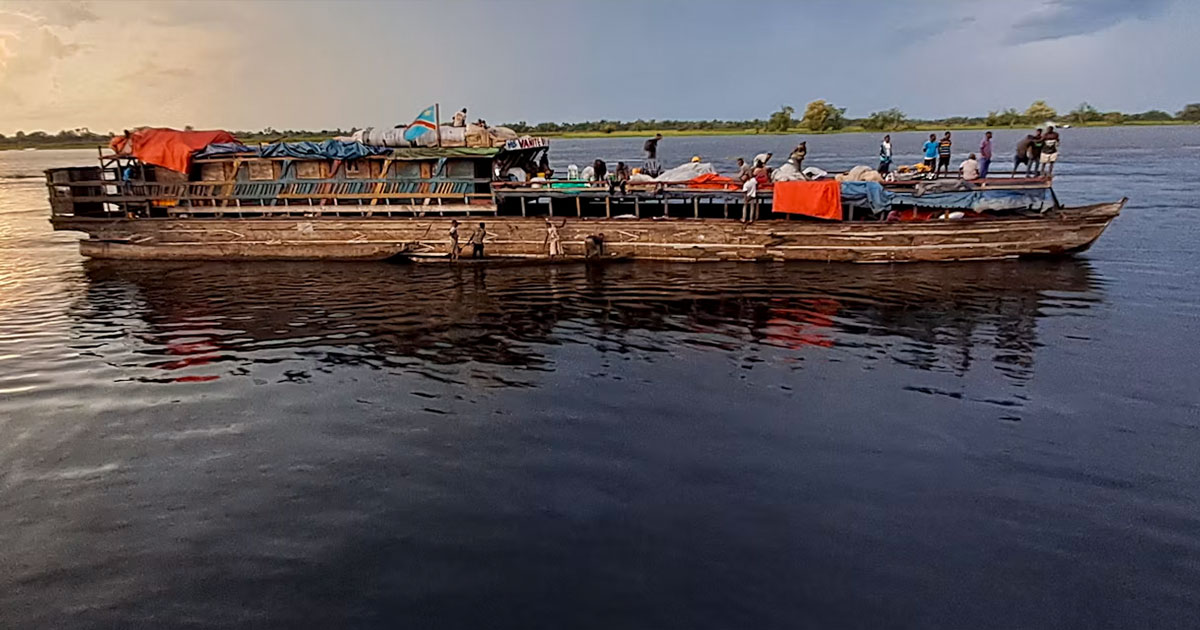
In large parts of Democratic Republic of the CongoThe main road leading to the city may be over the water. Long wooden boats move between forests and urban centers, carrying food, goods and passengers, and performing roles that go beyond… River transport To become at the same time a means of trade, a source of income, and a bridge linking areas that are difficult to reach by land.
These boats reveal an important aspect of economic life in a country with a huge network of waterways, about 25,000 kilometers of which are classified as navigable. With poor land connectivity between many regions, small and medium-sized vessels have become an essential element in the movement of food and goods, especially for major cities such as Kinshasa, Kisangani and Mbandaka.
The most prominent of these means are wooden boats known as “Balineseer”, ranging in length from 20 to 40 meters, and they have developed locally to connect growing cities with agricultural communities spread along the banks of distant rivers.
Road over water
These boats do more than just transport passengers, helping to keep cities connected to food-producing regions inland, making them directly important to food security and daily trade.
In the city of Kisangani, which has a population of about two million and is located on the upper navigable part of the Congo River, about 80 such boats arrive at the private secondary ports every month.
Each boat carries on average about 150 tons of cargo, along with approximately 150 passengers. As for Kinshasa, with a population of about 17 million people, it is estimated that it receives hundreds of boats every month.
These numbers illustrate the extent of dependence on river transport in a country where large parts suffer from weak road networks and difficulty connecting cities and inland areas.

Economy on boats
Boats to cities carry products from agricultural and rural communities, including rice, cassava, palm oil, poultry, fish, livestock and other food commodities.
In the opposite direction, it returns to the villages carrying manufactured products including roof panels, furniture, motorcycles, medicines, mosquito nets, telephones and clothes.
The merchants themselves board the boats with their goods, because the profit margins in this type of trade are limited, which forces many to follow the goods themselves from the time they leave until they are sold.
This pattern reflects what researchers describe as a survival economy, in which a large number of the population depends on small trade that provides a daily or limited income, and requires constant movement of goods to remain viable.
Hence the reason for continuing trips at night despite the risks. Stopping sailing during the dark hours means reducing the number of possible trips, which may directly affect the ability of merchants and crews to generate income that covers their costs.
Local industry
Modern wooden models of these boats began to appear as early as the 1960s, when Congolese craftsman André Bibiye developed designs that combined carpentry skills acquired in the colonial period 1885-1960 with ancestral local knowledge.
The construction of the boats used local wood, along with bitumen (a sticky, black petroleum substance), plant leaves, and strips of reused aluminum, which allowed for the construction of low-cost boats capable of operating in a difficult river environment.
During the 1980s and 1990s, workshops for building these boats spread over a number of major waterways, before new improvements were introduced in the following years.
In the late 2000s, craftsmen began using low-cost Chinese diesel engines to develop a new propulsion system, and then local mechanics modified the cooling systems and added more than one engine to a single boat.
This method helped increase reliability; If one engine needs repair, the other engines can continue to operate. Over time, what began as a simple solution for intermittent travel turned into a more regular system of river transport service.
Congolese expertise has also extended beyond the country's borders, with boat builders setting up mobile workshops in the Republic of Congo, Central Africa and Cameroon, making these boats one of the few indigenous technologies developed by Congo and transferred to neighboring countries.
Mobile port
The flexibility of this system is clearly evident when loading and unloading goods in places that lack berths, cranes, and equipped ports.
Workers rely on local methods that adapt to changing water levels and river conditions. Among them is a method known as "Kutendika", where porters descend into the water to push the loaded boat when it settles on the bottom of the river, until it reaches a deeper area that allows it to move.
The boats also carry small boats with them that are mobile lanes for loading and unloading, which gives them the ability to operate in multiple locations without relying on fixed infrastructure.
In this sense, the boat carries part of its “port” with it, combining muscle power with local expertise and available materials to transcend the constraints imposed by the lack of infrastructure.
This model intersects with the ninth goal of the Sustainable Development Goals on industry, innovation and infrastructure, as it reflects the ability of communities to develop local solutions for mobility and trade in environments that lack extensive traditional transportation facilities.
A solution that carries risks
This flexibility comes at a high cost, as these boats are notorious for frequent, potentially devastating accidents. It is estimated that hundreds and perhaps thousands of people lose their lives every year in accidents related to river transport.
The risks are linked to several factors, including weak hulls on some boats, lack of professional training, constant operating stress, as well as limited time and resources allocated to maintenance and comfort.
Economic necessity also compounds the problem, as crews and traders work according to a fast pace imposed by the movement of markets and trips, which makes improving safety standards more difficult than simply imposing new rules.
Some initiatives have attempted to regulate ship design and construction according to external standards, but their impact has been limited when they do not take into account the local nature of operation and the ways in which communities carry out these activities.
This reality reveals a fundamental paradox in river transport in the Congo. The system provides food, work, and communication to millions of people, while at the same time operating amid great risks and weak protection and regulation.
In this context, shedding The Earth Guards Foundation Highlighting the importance of developing this system based on its local reality, by improving training, maintenance and safety while maintaining the flexibility that made it able to serve remote communities, supporting safe access to food, markets and services and preserving the role of rivers as a major economic and social artery.


