
Children ask about cancer medicines, and the World Investment Summit in Samarkand answers

Children ask about cancer medicines, and the World Investment Summit in Samarkand answers
Medicines Cancer A major medical issue, as well as a development and justice issue; Because when more than 80% of infected children in high-income countries recover, and the percentage is less than 30% in many low- and middle-income countries; The difference lies in the ability to diagnose the disease, provide effective medicine, and provide appropriate health care.
Therefore, Sustainable Development Goal 3 – good health and well-being – places access to safe and effective essential medicines as a health equity priority. This is what was discussed by the “Global Investment in Child Well-Being Summit”, which opened in Samarkand, Uzbekistan, with the participation of more than 600 experts from 100 countries.
In this article, it will be explained to you The Earth Guards Foundation As an aspect of the issue of cancer and chemotherapy, after we learn about the most prominent themes of this global summit in light of the 2030 Sustainable Development Plan, the dimensions of which are based on health and social justice; So keep reading.
Topics of the World Investment in Well-Being Summit
The themes of the “Global Investment in Child Wellbeing Summit” – which was held between 21 and 22 October this year – were based on main pillars, the most important of which are:
- Investing in children's health
- Investing in children's education
- Expand investments directed to children
- Developing social protection systems for children
The discussions also dealt with building integrated systems for child protection, in a way that enhances efforts aimed at providing the necessary care for them, before the discussants on the second day continued to focus on investing in health systems for children, and building more equitable and resilient systems, part of which was allocated to education, the first years of life, and continuous learning.
Parallel sessions were then held with the participation of the World Health Organization, UNICEF, the Council of Europe and the International Social Security Association, on social policies, ending violence against children, and adolescent health and protection.
The summit concluded with the “Samarkand Declaration.” The declaration crystallized the main messages, commitments and final document, and its axes reflected the expanding international interest in directing investments and policies towards a more sustainable and just future for future generations.
Among the most important conferences witnessed by the World Summit on Investing in Children’s Well-being was the Second International Conference on Childhood Cancer, which came under the title “From Healing to Well-being,” and was dedicated to children’s tumors and blood diseases, and that is what we will explain to you in the following lines.
Cancer medicines are in the balance of sustainability
A medicine – any medicine – is linked to more than one developmental goal at the same time. A patient who cannot find medicine, or whose family cannot afford treatment, will stumble in achieving both health, economic, and social goals.
Hence the concern of the United Nations, the signs of which appeared in the discussions of the “World Summit on Investing in Children’s Well-Being.” Therefore, General Assembly President Khalil Rahman explained that only 36% of the assessable sustainable development goals are making moderate progress, and he called on countries to accelerate collective action instead of lowering their ambitions.
UN Secretary-General Antonio Guterres also warned in his message that gains in child well-being are threatened by conflicts, economic pressures, health emergencies, and climate shocks. He pointed to the decline in humanitarian and development aid, and the continued heavy debt burdens on developing countries. This picture means that health budgets – including oncology budgets – are the first to be affected when resources are tight.

Numbers sum up the gap
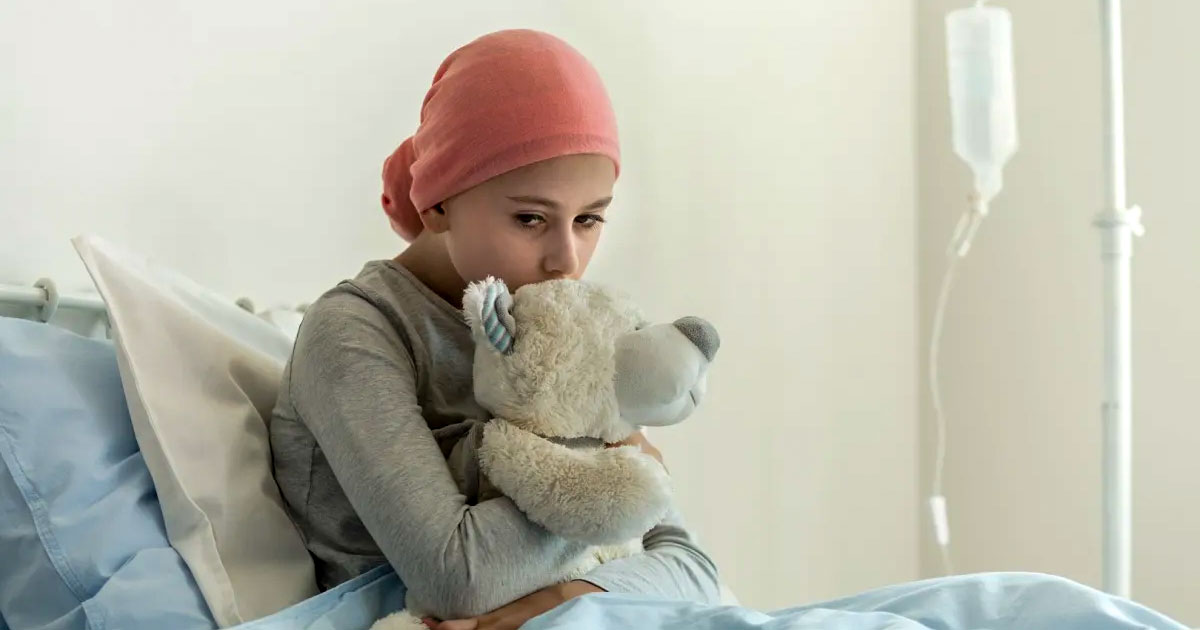
More specifically on the issue of cancer drugs, United Nations data confirms that more than 80% of children with cancer are cured in high-income countries, while rates are below 30% in many low- and middle-income countries.
Data also indicate that about 400,000 children and adolescents around the world are diagnosed with cancer every year! Therefore, the United Nations aims to raise the global survival rate to 60% by 2030.
Why is the gap widening?
In the same context, Guterres described this gap as resulting from a lack of investment and weak social services. That is, the problem is the lack of investment that children with cancer need. As late diagnosis, lack of supportive medications, and the distance of specialized centers from the family’s location; They are all links in one chain.
Why are cancer drugs expensive?
Cancer drugs are expensive because their development is long and expensive, and because many of them are protected by patents that determine their price for many years, and treatment lasts months or years, and often combines more than one supportive drug.
Who pays the price in the end?
The President of the United Nations General Assembly, Khalil Rahman, also expressed the issue clearly when he called on governments to reflect their commitments in their budgets, saying: “An advertisement cannot vaccinate a childHe added that applause does not buy cancer drugs.
The practical message here is that reducing the price of medicine and expanding health insurance are a practical translation of the goal of good health. That is, the third goal of sustainable development. Data alone will not treat a patient nor save a society from the clutches of cancer.
Therefore, the real test of any health system begins with the ability of every affected child to access the treatment he needs, regardless of his family’s income or the country in which he was born. Therefore, achieving the goals of treating childhood cancer by 2030 requires reconsidering health care financing, drug pricing policies, and the fair distribution of specialized services. So that no child is left behind in health and development.
Accordingly, the Samarkand Summit reveals that a child’s well-being is tested by the services and opportunities he receives that protect his life and future, which is what it believes The Earth Guards Foundation Embodied in investment that transforms the right to health into measurable and accountable guarantees.


