

The semiconductor industry is expanding and giving Taiwan new leverage in the AI race
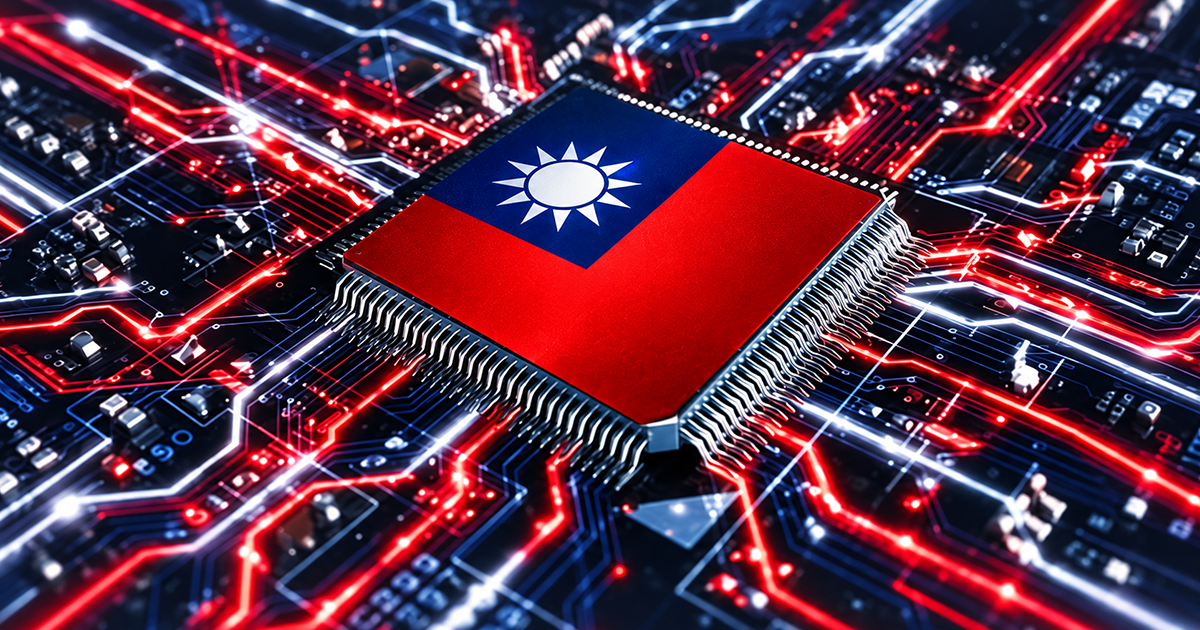

Semiconductor industry expands, giving Taiwan new leverage in AI race
Semiconductors have turned into one of the most important power cards that Taiwan relies on in its international relations, with the increasing global demand for chips that power artificial intelligence applications, data centers and advanced technologies.
During the SEMICON Taiwan exhibition, Taipei sought to present itself as a democratic and reliable partner in the global technological revolution, benefiting from the presence of major companies such as TSMC, which manufactures chips that power artificial intelligence applications around the world.
But this power also puts Taiwan in front of a delicate equation; It is the allies who depend At the same time, they want to attract a greater portion of chip manufacturing to their territories, which turns the semiconductor industry into a space that combines cooperation, competition and geopolitical interests.
Chips turn into leverage
Taiwan is suffering from widespread diplomatic isolation due to pressure from Beijing, which considers the island part of its territory and seeks to limit its international presence. In the face of this reality, technology has become a means of strengthening Taipei’s relationships with partners who see its continued production capacity as an important component of global supply chains.
During SEMICON, Taiwanese President Lai Ching-te stressed that Taiwanese companies’ global expansion could create greater resilience and shared prosperity, linking the strength of his country’s chip sector to democracy and the rule of law.

Thus, semiconductors in Taiwan have become more than a profitable industrial sector; It represents a strategic asset that the island uses to build economic and political partnerships with the United States, Europe, and other countries that rely on advanced chips.
This role intersects with the ninth goal of the Sustainable Development Goals, which focuses on industry, innovation and infrastructure, especially as advanced technologies become an essential element in the ability of economies to compete and develop the industries of the future.
America wants industrialization
The United States is at the forefront of countries seeking a greater share of Taiwanese manufacturing operations. TSMC is investing about $265 billion in factories in Arizona, while the Taiwanese Minister of Economy announced that Taiwanese companies are planning additional investments amounting to about $20 billion in… US.
Earlier this year, Taiwan and Washington also reached an agreement to increase Taiwanese investments within the United States in exchange for reducing some duties on exports.
Despite this, American pressure continues; US Commerce Secretary Howard Lutnick said that semiconductor tariffs would be imposed on companies that do not manufacture chips in the United States.
Thus, Washington is trying to reduce its dependence on production coming from Asia, while Taiwan needs to expand its overseas operations without losing the central role that gives it its strategic importance.
Manufacturing goes beyond the island
Taiwanese companies themselves are beginning to treat this shift as a new reality. Yong Liu, president of Foxconn, said companies are becoming more demanding By thinking about manufacturing with Taiwan within the markets it serves, rather than limiting production to the island.
An official at ASE, the largest global provider of chip packaging and testing services, agreed, noting that overseas expansion has become a political and economic necessity.
This reveals an important shift in the semiconductor industry model. Value is linked to the location of the factory, as well as to the networks that connect design, production, packaging, testing and end markets.
With an increasing portion of production moving outside the island, there are many reasons for Taiwanese companies to expand their industrial presence in other markets.
Why are chip companies expanding outside Taiwan?
This step was linked to several economic and strategic considerations, the most prominent of which are:
- Getting closer to the major markets that consume chips.
- Reducing the risks of relying on a single manufacturing center.
- Responding to pressures and industrial policies of the Allies.
- Building more resilient supply chains.
- Maintaining market access in the face of tariffs and trade tensions.
To learn about another aspect of the innovations that are reshaping this industry, read also: How can air revolutionize the world of semiconductors? .
Europe enters the competition
The United States is not the only party that wants to benefit from Taiwan’s technical strength. The European Union, in turn, seeks to attract more Taiwanese companies’ investments in semiconductors .
During the SEMICON exhibition, an official from the European Commission participated to promote the Chips Act 2.0 plan to Taiwanese officials and companies, in an attempt to enhance Europe’s ability to develop the chip sector and reduce its dependence on external supplies.
Interests between Taiwan and the European Union also intersect at the political level, as both parties seek to expand cooperation in light of their trade and diplomatic disputes with China.
This rapprochement also gives Taiwan an opportunity to transform its industrial superiority into a broader network of international relations rather than relying on one partner.
A power linked to artificial intelligence
Taiwan’s importance is increasing with the global boom in artificial intelligence, because chips Advanced technology has become one of the most important components of the infrastructure needed to train and operate new models and applications.
And companies like TSMC, Foxconn, and ASE occupy various positions within this ecosystem, from manufacturing semiconductors to producing artificial intelligence servers and packaging and testing chips.

This connection makes the economic gains resulting from artificial intelligence an international topic, as the United States and Europe want to obtain a greater share of the investments, jobs, and manufacturing capabilities associated with it.
Expanding these partnerships intersects with the seventeenth goal of the Sustainable Development Goals, which focuses on building international partnerships and exchanging technology and knowledge, especially in sectors whose production chains have become Distributed among a large number of countries.
Taiwan’s difficult equation
Taiwan ultimately faces a delicate equation: Expanding semiconductor production beyond its borders helps strengthen its ties with allies and diversify supply chains, but at the same time raises questions about how much manufacturing can be moved offshore while maintaining the island’s strategic value.
Taipei’s strategy appears to be based on sharing part of the chip industry’s gains with its partners, while maintaining its pivotal role in knowledge, technology, and production chains.
In this regard, The Earth Guards Foundation confirms that Taiwan’s experience highlights how advanced technical industries have become part of economic and political relations between countries, especially with the rise of intelligence. artificial intelligence and increased reliance on chips. In this landscape, the ability to build resilient supply chains and balanced partnerships is a key element in sustaining innovation and reducing the risks of dependence on a single production center.


