

Earth Guards Launch Sustainable Cultural Salons in Egyptian Universities to Promote Rule of Law
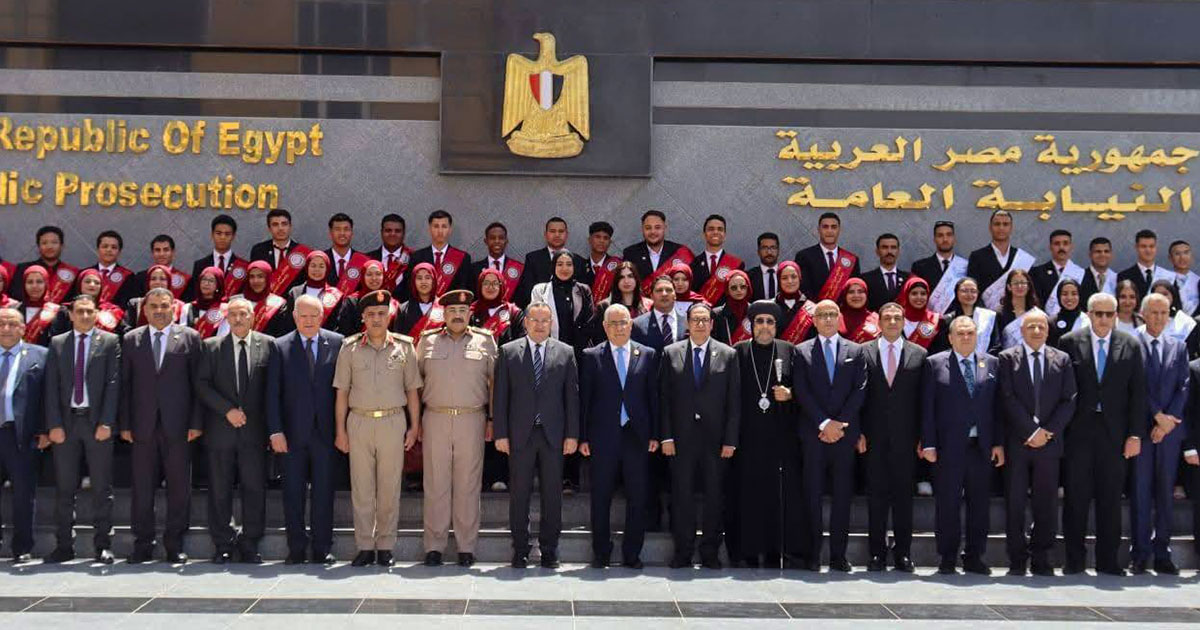

To strengthen the rule of law, launch sustainable cultural salons in Egyptian universities
Within the framework of sustainable Egyptian efforts to strengthen the rule of law, Egyptian universities are witnessing a new phase of initiatives aimed at consolidating intellectual and legal awareness among Egyptian youth, which is what cultural salons are based on achieving; In order to provide spaces for constructive dialogue within Egyptian universities, and to enhance their role in shaping the awareness of new generations.
HenceEarth Guards highlights the most prominent development partnerships in the field of strengthening the rule of law, and this is within the framework of empowering young people and enhancing their awareness of the seventeen Sustainable Development Goals (SDGs), and their social, economic and environmental goals. So keep reading.
Rule of Law in Egyptian Universities
Dr. Abdel Aziz Qanswa, “Minister of Higher Education and Scientific Research,” and Counselor Mohamed Shawqi, “President of the Public Prosecutor,” witnessed the launching activities of cultural salons in Egyptian universities, which were held at the Public Prosecution headquarters in Cairo, in the presence of: Dr. Mohamed Diaa Zein Al-Abidin, “President of Ain Shams University,” and Dr. Mohamed Sami Abdel Sadiq, “President of Cairo University,” along with the leaders of the Public Prosecution, and the leaders of The Ministries of Higher Education and Foreign Affairs, as well as the leadership of the Armed Forces.

On the sidelines of the events, a cooperation protocol was signed between the Ministry of Higher Education and Scientific Research and the Public Prosecution. With the aim of supporting joint cooperation in the areas of spreading legal awareness, implementing training programs for law school students, in addition to organizing…Cultural salons and awareness seminars within Egyptian universities.
The protocol also aims to enhance legal, societal and cultural awareness among students at the undergraduate and postgraduate levels, in addition to developing their legal and judicial skills, through practical training within the headquarters of the Public Prosecution and the Institute of Criminal Research and Training.
In addition to the above development goals, the protocol includes supporting scientific research in the field of legal sciences, linking its outputs to the needs of practical reality, as well as enhancing the exchange of experiences between the two sides, and providing technical and logistical support for the implementation of joint programs.

Universities and their role in building intellectual awareness
In the same context, the Minister of Higher Education confirmed that the launch of salonsCultural is a qualitative step that helps enhance dialogue within Egyptian universities, explaining that it comes within a comprehensive vision aimed at consolidating intellectual and legal awareness among young people.
Dr. Abdel Aziz Qanswa also stated that universities have become a major focus in shaping students’ awareness and preparing them for positive participation in societal issues, stressing that these initiatives contribute greatly to building a generation capable of critical thinking and facing contemporary challenges.
And that is before clarifying that the timing of launching cultural salons comes in light of accelerating intellectual challenges; This requires fortifying young people with correct knowledge, and opening spaces for dialogue based on respect for opinions and other opinions.
Public Prosecution and Promoting Legal Awareness
For his part, Counselor/Mohamed Shawqi “The Attorney General” expressedHe expressed his pride in launching this initiative, stressing that the integration between the Public Prosecution and the Ministry of Higher Education enhances efforts to spread national and legal awareness among Egypt’s youth, and that commemorating the anniversary of the liberation of Sinai represents an inspiring national occasion to consolidate the values of belonging and sacrifice, stressing that the battle of the present is a battle of awareness and understanding, and that protecting the state begins with the awareness of its children.
Then Counselor/Mohamed Shawqi explained how the Public Prosecution works – based on its national role – to enhance cooperation with academic institutions; So that generations can be prepared who are aware of their history, aware of their challenges, and capable of protecting the stability of the homeland.
Universities are platforms for community dialogue
Regarding the role of universities, Dr. Mohamed Sami Abdel Sadiq, “President of Cairo University,” confirmed that these activities come within the framework of enhancing cooperation.Institutional cooperation with the Public Prosecution, in line with the training strategy (2025–2030), aimed at developing human capabilities and building qualified legal cadres.
On the other hand, Dr. Mohamed Sami Abdel Sadiq explained that the experience of cooperation between Cairo University and the Public Prosecution represents a successful model of integration between academic study and practical application, stressing the importance of cultural salons as platforms for dialogue and strategic tools that support national belonging.

Cultural Salon Sessions
The events witnessed the launch of the first sessions of the Cultural Salon under the title “A Generation Knowing the Story of Crossing and Liberation,” where attendees discussed the importance of drawing inspiration from historical lessons to build contemporary awareness and enhance the awareness of new generations about the value of national belonging. Then the activities concluded with a tourCheck out the accompanying photo gallery, which documented prominent moments in national history, and reflected the state’s efforts to promote awareness and belonging among young people.
In light of these activities, it becomes clear that the launch of cultural salons in Egyptian universities is a profound shift in the philosophy of building awareness within university educational institutions. The university is a strategic arena for shaping societal awareness, consolidating the values of citizenship, and the rule of law among new generations.
From this standpoint,The Earth Guards Foundationsees cultural salons as a sustainable platform that creates critical awareness, builds bridges of dialogue between academic, legal, and societal institutions, and contributes to preparing a generation more knowledgeable about its national responsibilities, and more capable of conscious participation in development pathsSustainable.


