

The labor market in South Africa is witnessing high unemployment and vacant jobs… So where does the crisis lie?

The labor market in South Africa is witnessing high unemployment and vacant jobs...So where does the crisis lie?
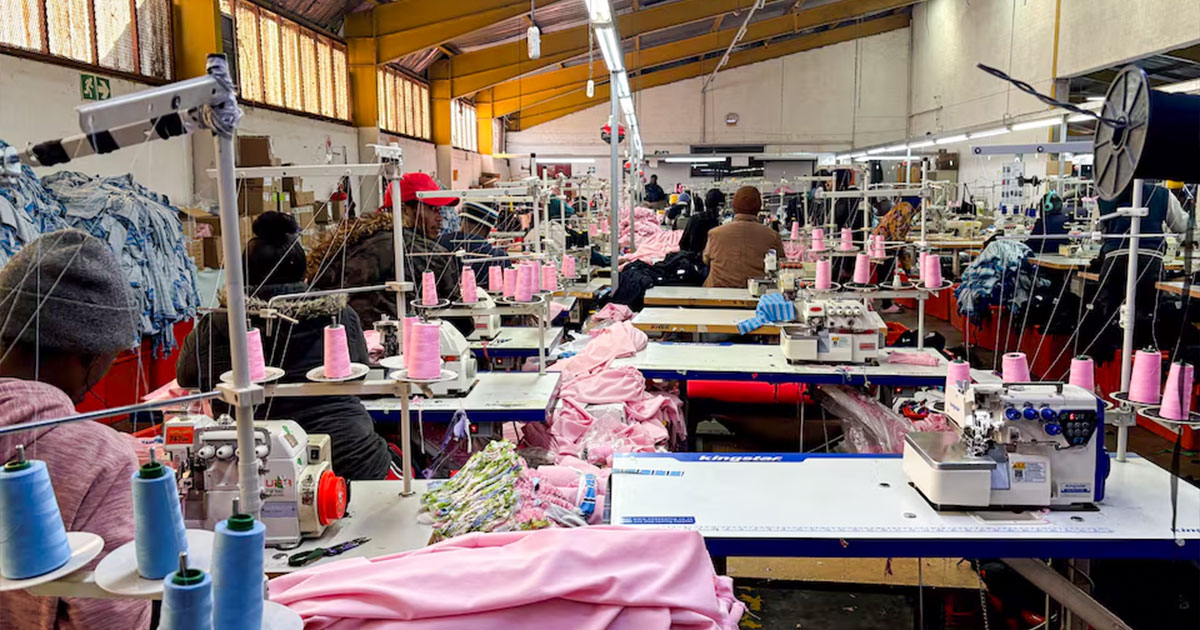
In the city of Newcastle, South Africa, rows of sewing machines stood without workers after weeks of protests against the presence of immigrants. Which prompted thousands of foreign workers to leave, and the declared goal of the campaign was to make more jobs available to citizens living in a country where about a third of the population suffers from severe unemployment, but what happened inside some factories revealed a more complex crisis within thelabor market!
With the departure of a number of migrant workers, clothing factories found themselves facing vacant jobs that are difficult to fill quickly, at a time when several factors intersect; From low wages and relocation costs to the required experience, working conditions and opportunities for career advancement.
Machines without workers
The owners of three factories in Newcastle reported that the protests caused the loss of between 12% and 19% of their workforce; These are significant losses in a city that is considered one of the prominent industrial centers in the KwaZulu-Natal region, where the clothing and textile industry constitutes an important part of its local economic activity.
The South African Garment and Textile Workers Union also estimated that about 15% of the city’s textile sector workforce of 15,000 workers left during the protests.
Because of this, a clear paradox has emerged within the labor market; The mass departure actually created vacant jobs, but factory owners said that finding alternatives with the same experience and in the current circumstances was not easy.

Why did the workers leave?
The departures came after months of anti-immigrant marches and attacks carried out by vigilante groups, before the “March and March” group announced a deadline for the departure of irregular migrants; Because they are the cause of the economic problems facing South Africa, most notably high unemployment, and it also saw that some employers prefer foreign workers. Because they are willing to accept lower wages.
On the other hand, factory owners say: The vast majority of their workers are from South Africa itself, and some workers coming from neighboring countries – such as Eswatini and Lesotho – have accumulated experience within the clothing industry that is difficult to replace in a short time.
Skills gap
The lack of some skills is one of the explanations offered by factory owners. One factory owner said that he could not replace the expertise that left immediately, while another factory began a program to train seven local workers after losing about forty foreign workers during June. However, the financial capacity of the factories does not allow for the training of a larger number; This shows that converting vacancies into actual job opportunities requires time, cost and training.
This point reveals an important aspect of the labor market; Because the presence of a vacant job does not necessarily mean that there is a worker immediately ready to fill it, especially in industries that depend on technical skill, speed of production, and practical experience.
The wage changes the picture
The trade union interprets the problem differently. It believes that South Africa has a sufficient number of qualified sewing machine workers, but some jobs are not attractive to local workers due to low wages, in addition to another factor, which is the costs of transportation to factories, especially since some migrant workers were residing on the job sites. Which reduces daily expenses associated with transportation.
Concerning this, labor market researchers point out that attracting citizens to industrial jobs requires a broader improvement in the sector, including wages, working conditions, and the possibility of promotion and professional development.
Here the relationship between the past transformations in the South African labor market and the eighth goal of the Sustainable Development Goals (SDGs), related to decent work and economic growth, becomes clear. The quality of the labor market there depends on the availability of jobs that provide adequate income and conditions that help the worker to continue and advance.
Unemployment and job vacancies!
The contradiction in this crisis becomes clearer when looking at the high unemployment rate in South Africa; The presence of a large percentage of job seekers in conjunction with job vacancies within factories reveals that the number of jobs alone does not provide a complete picture of the labor market.
This is because the worker also looks at the net amount he will receive after moving costs, the nature of working hours, the level of stability, and the opportunities to acquire new skills or move to a better job. Therefore, some jobs may remain vacant even in an economy suffering from high unemployment, if their conditions do not attract enough groups capable of filling them.

Wages under pressure
Many garment factories in Newcastle also rely on the piece-rate system, where a worker’s income is linked to the number of pieces he completes, and there only the most productive workers are able to reach the national minimum wage, which amounts to 30.23 rand (South African currency) per hour; That is, about $1.83, while others get less than that.
In this regard, factory owners say that their ability to raise wages is limited; Because of the low prices that retailers pay for the products, what a manufacturer gets for a pair of jeans, for example, may start at about R11.50, when some shirts cost less than half that figure.
The industry is thus facing pressure from both directions: workers searching for better wages, and factories operating with limited profit margins, trying to maintain their competitiveness.
Who loses in the end?
The crisis reveals that reforming the labor market requires more than transferring jobs from one worker to another. If migrant workers leave and jobs remain unattractive or require skills that cannot be quickly provided, production may decline and pressures on factories increase. Which also threatens the jobs of citizens working there.
This is again linked to the concept of decent work within Goal 8 of the Sustainable Development Goals (SDGs), which combines creating job opportunities, improving their quality, and supporting sustainable economic activity.
Hence,Earth Defenders Foundationindicates that the Newcastle factory experience demonstrates the importance of looking at the labor market as an interconnected system that includes wages, training, skills, working conditions, and the ability of companies to continue; Because the real challenge facing South Africa is to build jobs in which workers find economic value and a real opportunity for stability and development.


