

The COP17 agreement accelerates the protection of biodiversity… and financing hinders progress

The COP17 agreement accelerates the protection of biodiversity… and financing hinders progress
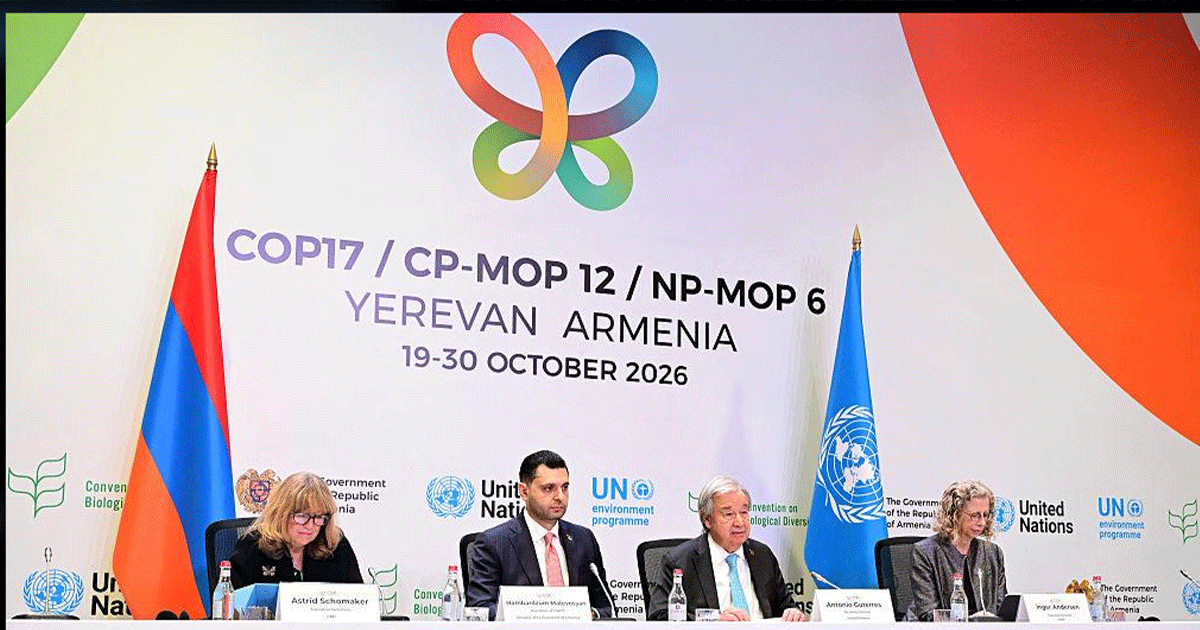
Countries of the world have left the United Nations Biodiversity Conference COP17 With an agreement to accelerate the protection of nature, after negotiations extended throughout the night in the Armenian capital, Yerevan, before the conference concluded on October 31, 2026. But the agreement came with a disturbing result; The first global review of international commitments showed that current efforts are still far from achieving most protection goals Biodiversity and ecosystems by 2030.
While governments agreed to increase the pace of work, providing the necessary funds for implementation remained a major challenge. This paradox sets the future Biodiversity We are faced with a crucial question: Can countries transform their pledges into actual measures before the end of the remaining years of the contract?
Yerevan Path to Accelerate Nature Protection
The participating governments adopted a resolution called Yerevan Pathway, It includes priorities to accelerate the implementation of international commitments, most notably reducing government support that is harmful to nature, increasing funding directed to developing countries, and aligning national spending with the goals of protecting biodiversity.
The decision came after a review Kunming-Montreal Global Biodiversity Framework, which was approved in 2022, sets a set of targets aimed at halting the degradation of nature and restoring ecosystems.
Participants acknowledged that the progress achieved so far is insufficient, which necessitated identifying priority actions to accelerate work until 2030.

In light of the pressures facing international cooperation, Anita De Horde, Executive Director, said: Finance Corporation for BiodiversityThe conference demonstrated the continued ability of countries to reach joint agreements, stressing that its true success will be measured by what governments implement before the next conference is held.
Ambitious goals and less than desired results
The Kunming-Montreal Framework targets protecting at least 30% of terrestrial, inland waters, marine and coastal areas by 2030, along with restoring 30% of degraded ecosystems.
These percentages appear clear on paper, but converting them into results requires measures related to land and natural resource management, habitat protection, and monitoring the changes to which living species are exposed.
What does the global review reveal about the distance between goals and implementation?
According to the United Nations, about 90% of Parties to the Convention on Biodiversity have set national targets, while assessments have shown that less than half of the countries reviewed are on track.
This result reveals that adopting plans represents the beginning of the path; The value of commitments is determined by their ability to slow the degradation of natural habitats and improve the condition of ecosystems.
Hence a direct connection emerges Target 15.5 of Sustainable Development Goal 15, on life on land, which calls for urgent action to reduce the degradation of natural habitats and halt the loss of biodiversity.
As for the protection of marine and coastal areas, it gives the agreement a continuous dimension The fourteenth goal, concerned with life under water, where nature conservation efforts overlap across land and seas.
Billions announced and a continuing financing gap
On the financial side, conference organizers announced funding exceeding $1.8 billion from governments, philanthropies and investors. Although these announcements are important, they come in light of an existing global goal to mobilize $200 billion annually to protect biodiversity.
The two numbers represent two different levels of commitments; The first relates to funding announced during the conference, while the second expresses a broader annual target to provide the necessary resources to protect nature.
Daoudi Simba, chief nature conservation officer in the… World Wildlife Fund (WWF)He noted that the global review sent a strong message about the need for action, stressing the need to support this message with adequate funding.

But the money issue has another side: What happens when economic policies support activities that harm natural resources, while governments seek to finance their protection?
The agreement addressed this contradiction by calling for accelerated efforts to achieve the target of reducing incentives and subsidies harmful to biodiversity by at least $500 billion annually by 2030.
Here the importance of redirecting public spending becomes clear. Fiscal policies can help alleviate pressures on ecosystems, while providing resources for protection and restoration projects.
Governments also agreed to review existing financing arrangements and set criteria for a permanent financing mechanism in the future, while expanding the shareholder base on a voluntary basis.
These negotiations are an extension of previous attempts to develop financing for nature protection, including: Launch of the Cali Fund to support biodiversity during COP16, which was addressed by The Earth Guards Foundation in the context of international partnerships and providing resources to ecosystems.
Implementation testing before COP18
The next biodiversity conference, COP18, is scheduled to be held in the Ecuadorian capital, Quito, in 2028, giving governments an opportunity to review what has been achieved after the Yerevan Agreement, before the deadline for the 2030 goals is reached.

Catherine Wheeler, director of global policy at the organization, warned Fauna & Flora, From continuing at the current pace without correcting course, indicating the need to accelerate procedures during the next stage.
Here it is important The seventeenth goal of the Sustainable Development Goals, concerned with establishing partnerships to achieve the goals; Protecting biodiversity requires cooperation that links international funding with national policies and field results, especially in developing countries that face challenges in providing the necessary resources.
Target 15.a, on mobilizing and pooling financial resources for the conservation and sustainable use of biodiversity and ecosystems, also gives the debate on financing practical meaning related to the ability of countries to implement their commitments.
Does the agreement turn into actual protection?
He repeated COP17 conference Confirming countries' commitment to accelerating nature protection, and at the same time revealing the amount of work required to bridge the gap between plans and results. Between the objectives of protection and restoration, announced funding, and a review of harmful subsidies, the features of an international test that extends until the end of the decade are determined.
This issue is of interest The Earth Guards Foundation On the relationship between natural resource protection and sustainable development; The continuation of ecosystems in performing their functions is linked to the ability of societies to preserve their resources and build a more stable future.
As 2030 approaches, the impacts of decisions made on the ground will become more important than the number of agreements announced in conference halls.
The success that the world expects from the “Yerevan Path” will appear in the forests, waters, and habitats that countries succeed in protecting, and in the funds and policies that make that protection possible.


