

Egypt and Namibia collaborate to advance healthcare and boost medical self-reliance
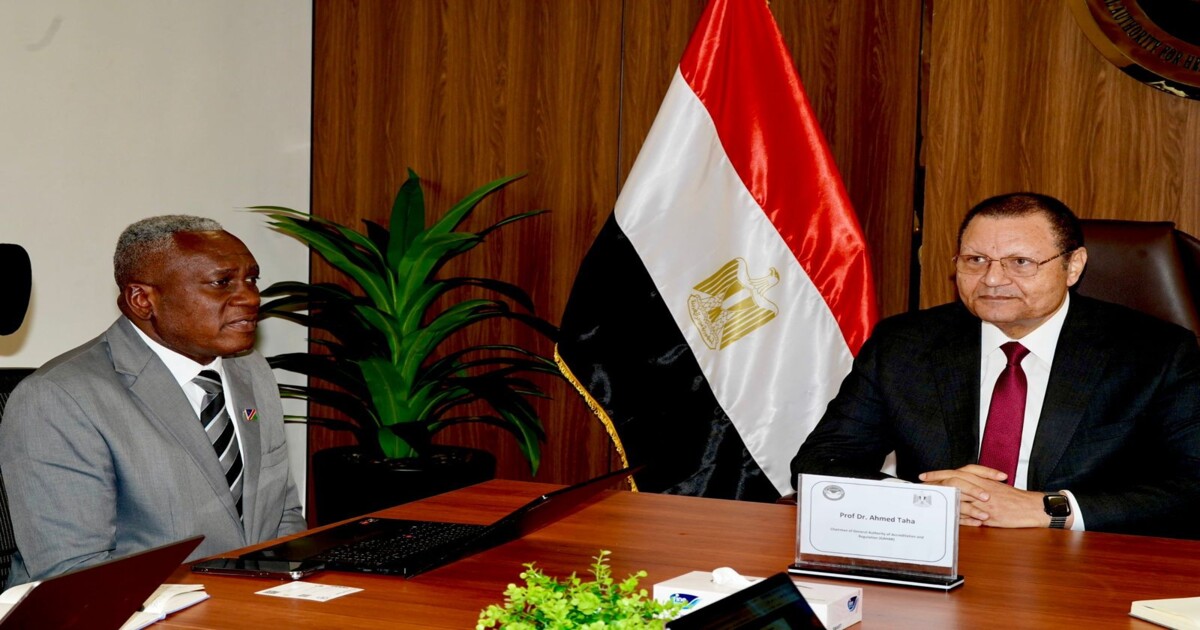

Egypt and Namibia cooperate to develop health care and enhance medical accreditation
The importance of the quality of health care is increasing globally in light of the rapid changes taking place in the health sector, as improving the standards of medical services and relying on qualified health institutions has become an essential element for ensuring the health of citizens and supporting the Sustainable Development Goals (SDGs) in their various dimensions.
In this context, the General Authority for Health Accreditation and Control received a high-level delegation from the Ministry of Health and Social Services of the Republic of Namibia, as part of an official visit program in order to discuss strengthening joint cooperation in the areas of quality and health accreditation. This is whatThe Earth Guards Foundation sheds light on in the following lines. So keep reading.
Egypt is a model for health excellence
In this meeting, Dr. Ahmed Taha, “President of the General Authority for Health Accreditation and Control,” presented a comprehensive presentation of Egypt’s experience in establishing a national system for accreditation and oversight of health facilities. The presentation focused on the role of the General Authority for Health Accreditation and Oversight in updating the quality standards internationally approved by the International Society for Healthcare Quality (ISQua), and issuing the latest standards for accrediting hospitals and centersPrimary Care.
The presentation also included efforts made to support the readiness of health facilities to implement these standards and raise the efficiency of services provided to citizens, reflecting Egypt’s commitment to providing advanced health care. Then the head of the General Authority for Health Accreditation and Control explained how this system contributed to improving institutional performance and raising the level of medical service, taking into accountInternational standards for safety and quality.

Accreditation and quality are at the heart of development
Dr. Ahmed Taha also stressed that the success of the comprehensive health insurance system in Egypt depends on a strong political will and a clear national vision, which places citizens’ health at the top of sustainable development priorities. He explained that exchanging experiences with African countries has become a major focus of the Authority’s agenda. In order to enhance Egypt’s regional role in developing health care systems in the African continent.
In the same context, the head of the General Authority for Health Accreditation and Control indicated that medical accreditation includes a technical evaluation of facilities, and also includes promoting a culture of quality among medical personnel and citizens, and adopting clear policies for health safety.
Transferring expertise to advanceIn the health sector
Dr. Ahmed Taha also confirmed in this high-level meeting Egypt’s full readiness to provide technical and training support to the State of Namibia, including preparing health facilities to become qualified to apply international standards, training cadres on the latest quality and safety methods, and promoting health culture among citizens and service providers.
Then, the head of the General Authority for Health Accreditation and Control indicated that this transformation requires continuous cooperation between government institutions and civil society. In order to ensure the sustainability of the results and achieve a tangible impact on the health of citizens.
On the other hand, Dr. Ahmed Taha stressed that Egypt supports its brothers on the African continent – through the health sector – by exchanging experiences in the field of accreditation and health quality, explaining that this support is an essential focus of the authority’s agenda,Reflecting Egypt’s regional role in strengthening health care systems across the continent.

Namibia appreciates the Egyptian experience
For their part, members of the delegation of the Ministry of Health and Social Services of the Republic of Namibia expressed their great appreciation for the progress made by Egypt in organizing the health sector, implementing the comprehensive health insurance system, and improving the quality of medical services.
The delegation affirmed its sincere desire to benefit from Egyptian expertise. In order to develop health accreditation and oversight systems in Namibia, train medical personnel, and set clear standards that guarantee the safety of patients and the quality of health services provided to them.
Future cooperation prospects
In the same meeting, the two sides agreed to study joint cooperation mechanisms, which are expected to include programsSpecialized training, exchanging visits and experiences between Egyptian and Namibian experts, and preparing action plans to develop health accreditation and quality systems in Namibia.
In conclusion, this visit is an undoubted confirmation of Egypt’s pivotal role within the field of health care at the regional level, as Egyptian health initiatives have become a tool for African integration. Therefore,The Earth Guards Foundation believes that cooperation between Egypt and Namibia in enhancing health sector services supports – in one way or another – the construction of advanced health accreditation systems, and enhances patient safety and the efficiency of medical facilities. This establishes the foundations and Sustainable Development Goals (SDGs), and deepens its social, economic and environmental dimensions in the long term.


