

The sea devours Aitoro… Coastal erosion turns the happy city into a disaster land
The sea devours Aitoro… Coastal erosion turns the happy city into a disaster land
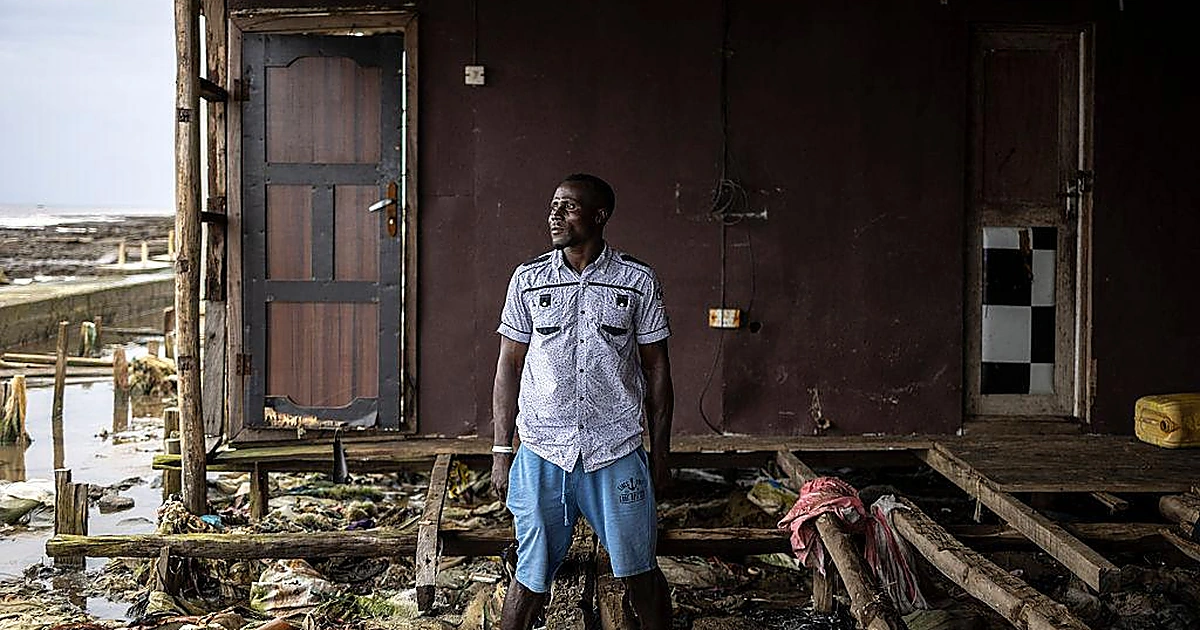
In the early hours of the morning on February 15, 2019, Aroo Victoria woke up to the sounds of her neighbors knocking on her door, warning of the advancing waters of the Atlantic Ocean towards buildings near the coast. Victoria,, 60-year-old retired midwife, rushed to her small shop, but arrived after it had been completely washed away. In one of the incidents that reveals how coastal erosion threatens the lives and livelihoods of the people of Aetoro.
Victoria had previously borrowed money to set up her shop after many years of working, hoping to secure an income during retirement. The store disappeared, while the debts remained, and she found herself paying every month for a project that had not returned exists. Her story embodies a broader crisis experienced by the people of Ayetoro, Ondo State, southwestern Nigeria, where coastal erosion is gradually transforming the sea from a source of life into a threat to homes, livelihoods, and the future of society.
Half of the Itoro disappeared
Aetoro was once known as the “Happy City”, after it was founded in the 1940s by a group that sought to build a community based on a cooperative way of life and management.
As the decades passed, the landscape changed. City residents told that the Atlantic Ocean swallowed more than half of their area in about twenty years, while tsunami waves washed away hundreds of homes and other buildings, including schools and churches.
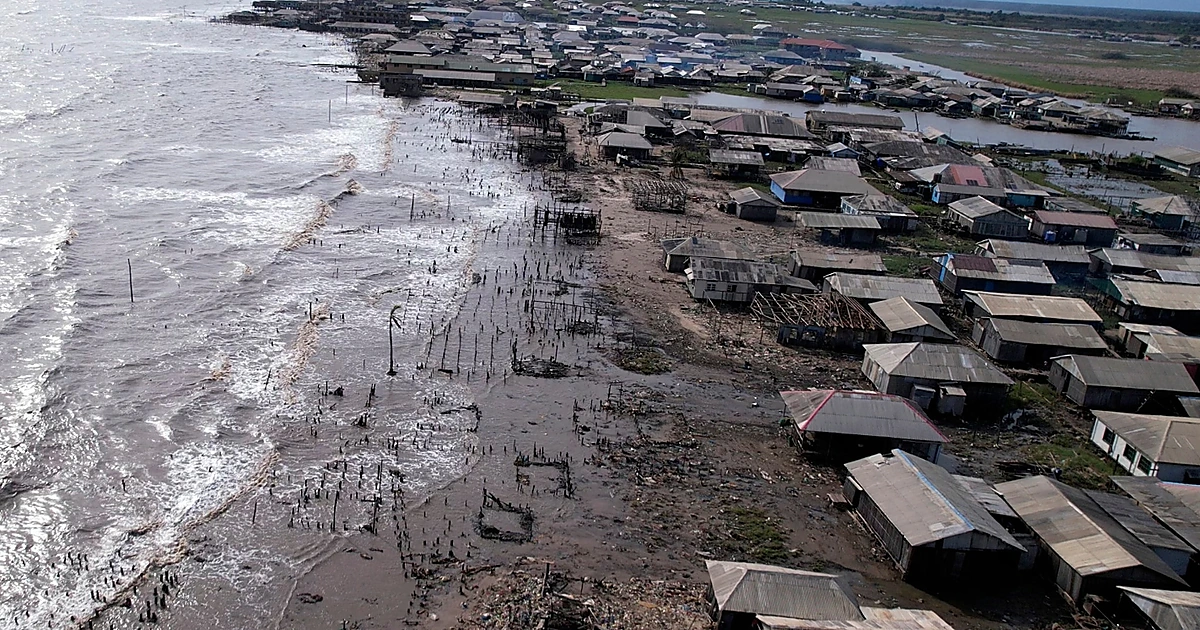
Emmanuel Arallo, 35, remembers large areas where children used to play Football during his childhood. Today these lands have disappeared with the advance of the sea, while his uncle’s house is now very close to the water, raising fears of its loss during a new strong tidal wave.
Ayetoro’s losses did not stop at the houses that disappeared behind the waves; It has spread to stores, schools, churches and spaces where children used to play. As the land retreated, the places where residents lived, worked, and learned shrank, until the city’s memory became linked to sites that no longer existed on Earth.
These losses reveal a facet of coastal erosion in Nigeria, where small communities face the advancing sea with limited capabilities, while protecting buildings and services requires investments beyond the capacity of many residents.
Families starting from scratch
In another part of Aitoro, you remember Motonrayo Asakaseki the day her mother lost her grocery store after water rushed into the area. Residents tried to salvage what they could, while parts of the store had already been washed away.
The family then moved their shop to Alaba Street, believing it was safer, but the sea continued to advance towards the new location. The family faces the recurring question of how many times life can be rebuilt from scratch.

The same story is repeated in different forms. In 2023, Lawrence Limanu, 79 years old, lost his 10-room house after many years of working to build it and raising his children inside it, and was forced to reside in the palace of the traditional leader of Ayetoro after his house was washed away by waves.
Limano lost the house in which he raised his children, while… The Asakaseki family is trying to maintain its second store. Between the house and the store, a loss unfolds that cannot be measured in the amount of land swallowed by the sea; It extends to savings, economic stability, and the memories that families have made over many years.
Fishing loses its safety
Fishing has long been a pillar of Aetoro’s economy, but it has become more dangerous and less predictable as sea conditions change. Local fisherman Egba Taiwo says the movement of the waters has become more turbulent, and that some fishermen feel afraid when going out to sea, while the quantities of fish they are returning are smaller than before.
For a community that depends on fishing for its livelihood, sea turbulence threatens the safety of boats and exposes household income to fluctuations that are difficult to predict.

Thus, the impact of coastal erosion extends to the economic activity that has helped residents remain in their city for generations, at a time when safe spaces on land are declining.
Health and education on the edge
The sea has also reached the doors of vital institutions in Aetoro. Hannah Olanrewaju, in charge of the primary health care centre, says that opening the back door of the center now exposes the sea directly, while the situation was completely different when she started working there in 2016.
Health teams face difficulty in implementing vaccination programs and malaria tests due to the difficulty of movement across the wooden bridges that residents rely on within the community.
In the education sector, students and teachers at Aetoro College work under a constant feeling of worry about water reaching the building. Ogungbori Isaac says, Director of Happy City College, said that this fear leaves a psychological impact on students and is reflected in their academic performance.
Here, coastal erosion losses exceed homes and stores; Every difficult road to a health center, and every educational building close to the sea, adds a new burden to the lives of residents.
These risks relate to Target 11.5 of the Eleventh Sustainable Development Goal, which is concerned with reducing human and economic losses resulting from disasters, especially among the groups most at risk. In Aetoro, the losses extend to services that may become more difficult to access.
Why do coasts erode?
Environmental experts see Aetoro as one of the most striking examples of the vulnerability of coastal communities in Nigeria to risks. Coastal erosion resulting from the interplay of natural factors and human pressures.
Dr. Nemo Bassi, from Mother Earth Health Foundation “Health of Mother Earth Foundation”, describes what is happening as a clear picture of the losses and damage that It is at the forefront of global discussions about climate change, especially in societies that have already lost large parts of their land and property.
Meanwhile, Dr. Joseph Onoja, from Nigerian Conservation Foundation “Nigeria Conservation Foundation”, points out the role of weak environmental protection and human interventions In increase The problem. He cites the Commodore Channel “Commodore Channel”, a 3-kilometre-long waterway connecting the sea to the ports of Lagos, as an example of projects that can change the movement of currents and waves along the coast.
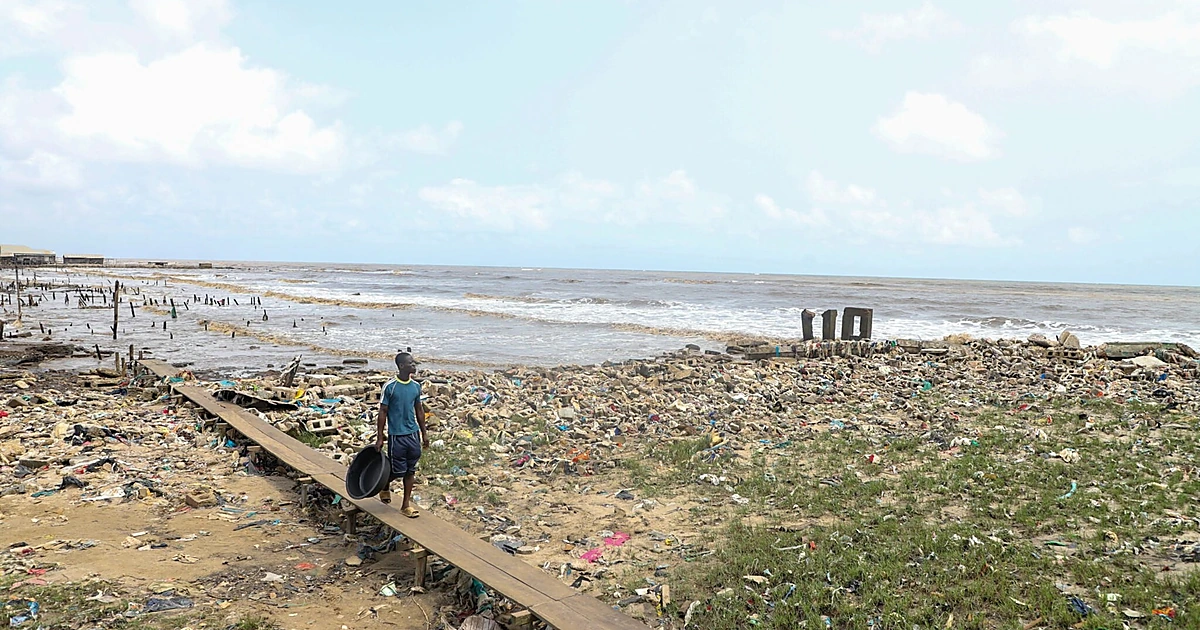
Added to these pressures is the risk of sea level rise associated with climate change, which could increase the vulnerability of low-lying communities to inundation and water advances. To understand one of the aspects of change that threatens coastal areas globally, read also : NASA detects an unprecedented rise in sea levels .
These factors put Aetoro to the test Target 13.1 of the Thirteenth Sustainable Development Goal, which calls for strengthening resilience to climate-related hazards and natural disasters.
However, resilience in a city whose land is declining requires more than rebuilding after each wave; It needs to understand the causes of coastal erosion and develop means of protection that are appropriate to the nature of the coast and the needs of the population.
Survival despite danger
Despite the advancing sea, leaving Aetoro remains an extremely complex decision for many residents; The city is linked to their families, their work, their memories, and the history made by successive generations.
While major cities can invest in sea barriers and protection projects, many Aetoro residents depend on rebuilding after each new wave, in Facing coastal erosion that threatens what remains of their homes and land, their lives remain suspended between their desire to survive and the fear of losing what remains.
Ayetoro embodies one of the human dilemmas of concern The Earth Guards Foundation in its approach to issues of sustainable development and environmental justice; The tragedy of its residents reveals that climate adaptation begins with human protection, and that coastal protection projects gain their true value when they preserve residents’ homes, sources of livelihood, and basic services, and give them the opportunity to remain safe on their land.
As for Emmanuel Arallo, whose childhood play areas have disappeared and his uncle’s house is now close to the sea, he sums up the city’s residents’ predicament with a painful question: This is our homeland, so where do we go?


