

The Truth Behind the Orca Attack on “Jessica”: Fabricated Tragedy or Real Ecological Warning?
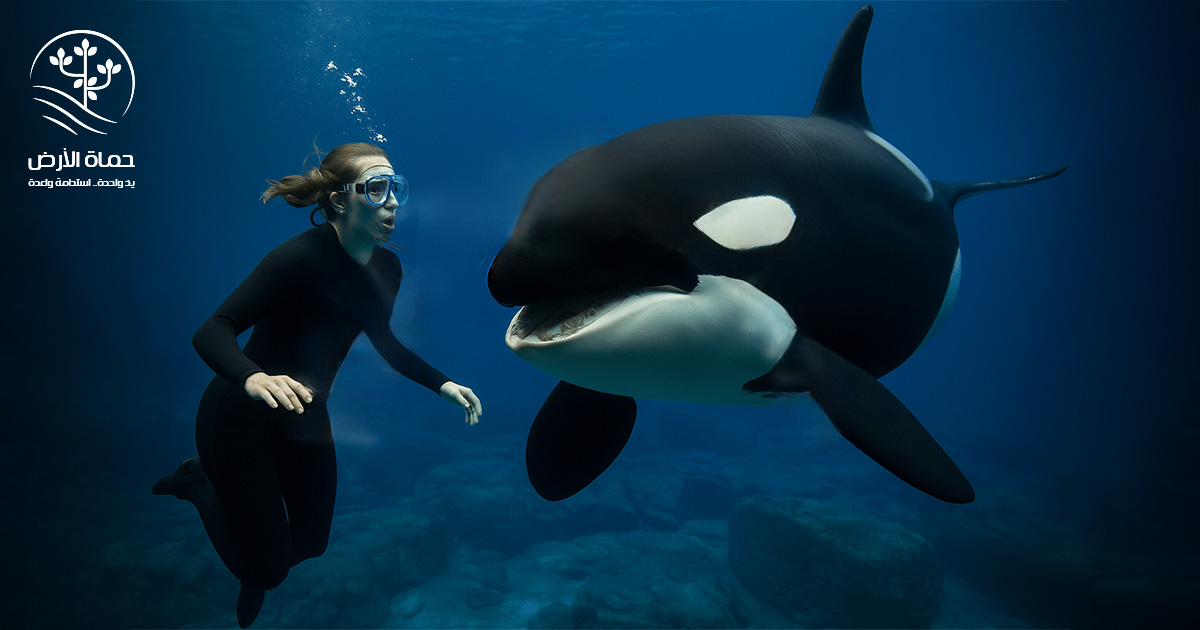
The truth about the orca whale’s attack on “Jessica”…a fabricated tragedy or a real environmental warning?
The morning of that day did not suggest any tragedy. World champion Jessica Radcliffe was accustomed to starting her training sessions with a wide smile, amid a familiar water environment and strict safety procedures. However, she did not know that this day would bring an exceptional moment, as her life met with a sudden fate at the hands of a sea creature she had always loved dealing with, the orca whale known for its amazing intelligence and strength. The enormous.
This news was shocking, as this is not a common incident in the world of water sports, but rather a rare incident in a training environment that is supposed to be the safest. So the media around the world reported the story at lightning speed, while many wondered: How could it be?Moments of harmony between humans and marine creatures turn into a tragedy of this magnitude?

From the first moment, speculation began to escalate, and viewpoints varied, between those who believed that the accident was the result of sudden aggressive behavior by the whale, and those who believed that a communication defect or human error had sparked a series of tragic events. However, in the midst of all this, the image of Jessica Radcliffe – who spent her life spreading awareness of the beauty of the oceans – remained strongly present, as if her passing was an unwritten message about the limits of interaction with nature.
Accident timeline
According to initial accounts, the training session began normally in an aquarium under the supervision of a specialized team, where everything was carefully prepared, from reviewing the equipment to ensuring the emergency plan was ready, and Jessica was swimming briskly alongside the orca, which seemed cooperative and accustomed toOn routine movements.
However, within minutes, the scene changed, as the whale was observed approaching closer than usual, before displaying unusual behavior, followed by violent contact that surprised even the most experienced trainers; There were no previous signs that this giant creature would suddenly change its mood.
Immediately, the rescue team rushed to the site, adhering to the approved protocols, in a race against time to try to extract “Jessica” from the whale’s grip, but the injuries she sustained were so severe that resuscitation attempts were powerless to extract her from her inevitable fate.
For those present, the moments turned into a vivid nightmare scene, in which the sounds of the waves intermingled with calls for help, in a scene heavy on the hearts. As of the moment of writing these lines, the relevant authorities – according to what the circulating story tells – continue to collect recordings and analyzeData, in search of an answer that reveals what happened in the depths, and whether there were defining moments that could have changed the course of events.
The orca whale in the eyes of science
The orca whale, or(Orcinus orca), is classified among the large dolphins, and is known for its social intelligence and its ability to communicate complexly within groups called “pods.” Despite its reputation as a killer whale, field studies confirm that fatal attacks on humans in the wild are extremely rare.
Research explains this rarity by the fact that humans are not part of the orca’s diet, and most interactions with them are motivated by curiosity and exploration. However, orca whale behaviors vary from one region to another, depending on their dietary habits and cultural memoryTransmitted between herd members.
However, these creatures, no matter how friendly they may seem at some moments, are still powerful predators. Any error in estimating the distance or ignoring behavioral signals may upset the interaction in seconds, and here lies the dilemma of marine shows and closed exercises, as they place the human and the creature in a shared space through which things with undesirable consequences may happen.
Marine life at the heart of sustainability
Jessica’s story – whether real or fabricated – reminds us that our relationship with marine creatures is inseparable from the Sustainable Development Goals (SDGs), especially Goal (14) “Life Below Water,” which calls for preserving the oceans and using their resources sustainably; Orcas, like other top predators, have a vital role in maintaining the balance of marine food chains, and any threat to their natural habitats is reflected in ecosystems.Entirely.

Keeping killer whales in closed environments for entertainment purposes may seem to some to be a cultural or touristic activity, but it raises fundamental environmental and ethical questions. Studies confirm that restricting the movement of these creatures in small ponds changes their natural behavior and increases their stress levels. This reality contradicts the principles of sustainable development, which call for protecting wildlife and providing them with the opportunity to live freely in their natural habitats, as part of preserving ecosystems and preserving their biodiversity.
The shocking truth
Although the story spread like wildfire on social media platforms, independent journalistic investigations revealed a surprise; Her: The character “Jessica Radcliffe” does not exist in any official records, nor is there any evidence that this incident occurred, and what was circulated was a mixtureFrom edited photos and old videos that were repurposed in a way that suggests it is a new reality.
This style of fake news is not new. It takes advantage of the public’s memory of similar real incidents, such as the death of coach Dawn Brancheau in 2010, to lend credibility to a made-up story. They are often published on suspicious websites and anonymous accounts with the aim of attracting views.
In the end, the story of “Jessica” – whatever its truth – reflects a deeper problem that goes beyond the limits of the incident itself, raising questions about the nature of the interaction between humans and large marine organisms. The issue is not limited to evaluating the behavior of the orca whale or the feasibility of detaining it, but rather extends to the responsibility of providing information accurately and consciously.
In this context, theFoundationEarth Guards indicates that protecting marine life and preservingThe balance of ecosystems also requires a sound cognitive environment, where public debate is based on reliable facts and solid scientific analysis, far from sensationalism or distortion.


