

Al-Qabbari station train.. when Africa saw the first railway lines
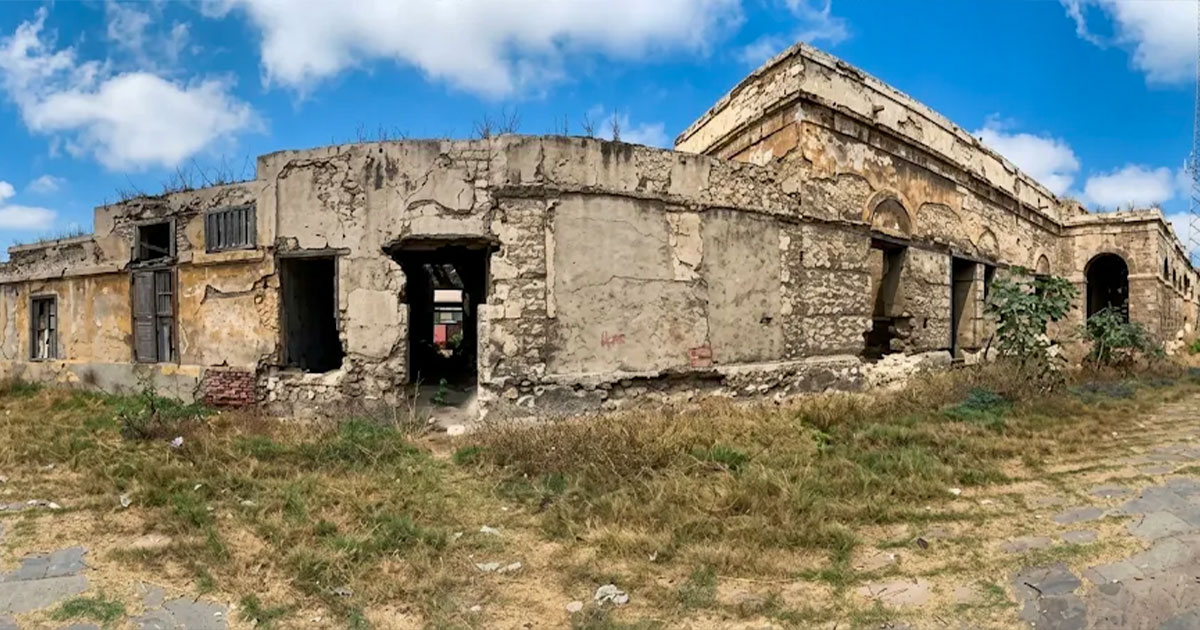

Al-Qabbari station train.. when Africa saw the first railway lines
To understand Egypt's historical projects in building railway lines, we must all be aware that Egypt has sustainable national projects throughout its ancient and modern history, which are projects that were founded on sustainable concepts before the sustainable development plan with its seventeen goals existed.
In light of this sustained historical momentum, the need to extend railway lines in the nineteenth century – in accordance with the goals of Goal 12: Responsible Consumption and Production – was necessary and of great importance to achieve social dimensions and raise economic indicators, as part of a new episode in a long series of projects in which Egypt realized that its location was a wealth to be managed, and that roads were arteries built to last, especially since the era was an era of industrial revolution, where time had a high price.
Thus, you can imagine the state of the city of Alexandria in the 1850s, where ships coming from European countries docked carrying messages, merchants, officers, and goods, heading the long way to India. At that time, Egypt was the link between the countries of the West and the countries of the East. The path that passed through it was called the “Indian Postal Route.”
Despite this importance to Egypt, the path was slow. Goods and passengers are transported on ships across the country Mahmoudiyah CanalThen on the Nile to Cairo, and from there to Suez, before sailing in the Red Sea, and from there to the Indian Ocean. It is a journey that takes days, and the new industrial world cannot bear all this waiting!
The story begins with a signature
So the Egyptian story began to create a line train It makes Egypt a faster transportation route between the West and the East. In 1851, the Governor of Egypt, Abbas Helmy I, signed a contract with the English engineer Robert Stevenson, son of George Stevenson, the inventor of the steam locomotive. What was required was the establishment of railway lines capable of connecting Alexandria and Cairo. In order to speed up the transportation of mail and travelers between the West and the East.

1854: The first whistle
Then, in 1854, the city of Alexandria was about to implement this historic event, which changed the face of transport and trade globally, as the first official train set off from Alexandria to Kafr El-Zayat, and then Africa entered the era of railways. Then in 1856 – during the reign of Saeed Pasha – the line to Cairo was completed, and culminated in the “Bab Al-Hadid” station, which later became the “Egypt Station”, and after that came the Raml Tram, which is also still the oldest tram lines in Africa.

Egyptian land and forearms
In detail, the Egyptian documents – including the documents of the Archives House, as well as the compromise plans of Ali Pasha Mubarak – present a complete picture, saying that the treasury of Egypt and the hands of its children have borne the burden of this achievement. On the outskirts of Alexandria on the western side – in the Al-Qabbari area specifically – a station rose, designed by architect Edward Baines, to be the first train station and the first locomotive maintenance workshop on the entire African continent.

Beyond the stone: an international goal
These historical stations tell the story of a city that realized that a thriving trade could not last without a sustainable infrastructure to support it. Expanding the ports, allocating a train station for goods, and building a modern station for passengers; They are all links in one chain that links a person to the market, work and life.
This is what coincides with the ninth goal sustainable development: Industry, Innovation and Infrastructure, which calls for building resilient infrastructure, promoting inclusive and sustainable industrialization, and supporting innovation. This is proven by the Al-Qabbari train station. Since 1854, the Egyptian railways have proven that investment in transportation opens the doors to trade, urbanization, and decent job opportunities.
So, the story of the Qabbari Station train reveals that a train may speak about the logic of development – through its social and economic dimensions – when it moves on its rails, thus redefining Egypt’s position to the entire world. It offers a profound economic lesson: a good road is essentially a good economy.


