

Health is following up on the readiness of the medical mission during the Hajj season and directs to intensify field follow-up

Health follows up on the readiness of the medical mission during the Hajj season and directs to intensify field follow-up
The Hajj season represents one of the greatest religious and spiritual seasons in which the meanings of faith and closeness to God are evident, as millions flock from various countries of the Islamic world to perform the rituals in an atmosphere dominated by striving to win reward and adherence to rituals, in conjunction with the atmosphere of the blessedEid al-Adha and the religious and human values it carries related to solidarity, compassion and the glorification of rituals.
In light of this momentum of faith and large human gatherings, the importance of health awareness and preventive measures is highlighted as a basic pillar for ensuring the safety of pilgrims and enabling them to perform their rituals safely and reassuringly.
Therefore, health and organizational efforts during religious seasons gain double importance, in light of the challenges imposed by human densities and continuous movement that require full readiness and speed of response, in a way that enhances the efficiency of the health care system and preserves the safety of the guests of God.
From this standpoint, the Egyptian state continues its efforts to provide various aspects of medical and preventive support to pilgrims, through integrated plans aimed at enhancing health protection and following up on cases on the ground around the clock.
The Ministry of Health directs to raise the maximum level of preparedness
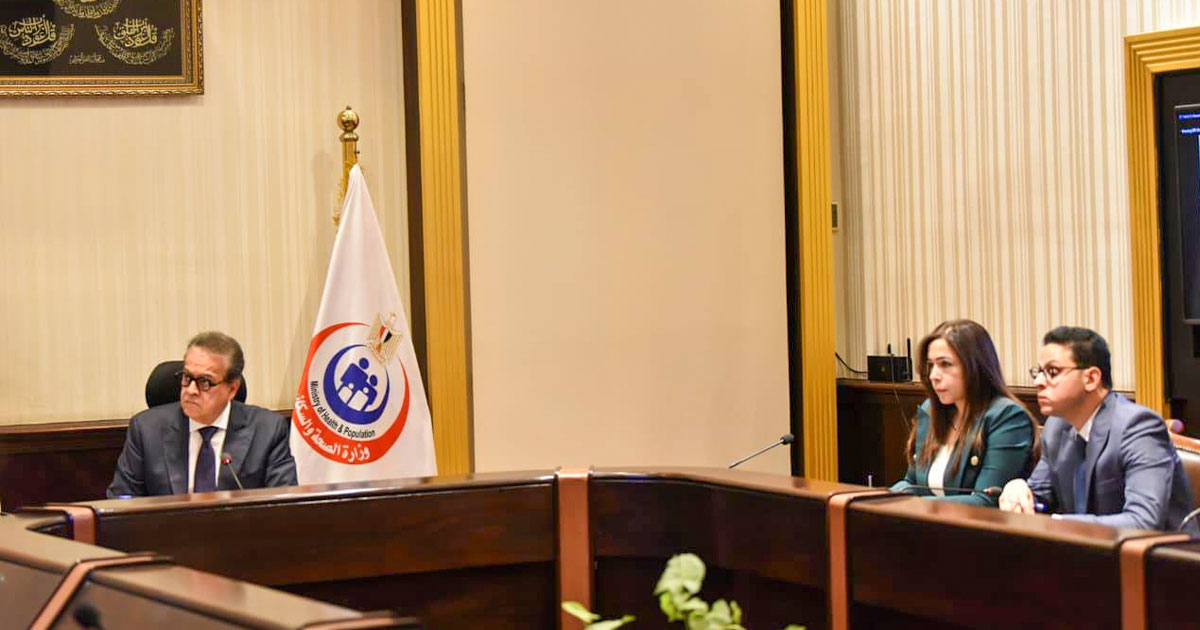
In this context, Dr. Khaled Abdel Ghaffar, Minister of Health and Population, held an expanded meeting via video conference technology with the leaders and members of the Egyptian medical mission in the Kingdom of Saudi Arabia, to follow up on the progress of work and ensure its complete readiness to provide the best medical and preventive services to the guests of God during the Hajj season among Egyptian pilgrims.
During the meeting, the Minister directed to raise the highest levels of preparedness and intensify round-the-clock field monitoring of the health status of pilgrims, especially during their performance of rituals in Mina and Arafat, with the need for continuous follow-up and rapid intervention in any emergency cases, in close coordination with the Saudi health authorities.
These efforts come in the context of a direct connection to a number of Sustainable Development Goals (SDGs), most notably the third goal concerned with achieving good health and well-being, which focuses on strengthening preventive health care systems and effective emergency response, ensuring a healthy and safe life for all, especially in times of large human gatherings such as the Hajj season.

Intensifying awareness efforts and completing logistical support
Dr. Hossam Abdel Ghaffar, the official spokesman for the Ministry of Health and Population, explained that the medical mission intensified its preventive and awareness efforts, as it carried out 1,869 awareness seminars for pilgrims, in addition to 42 inspection visits to their places of residence and gatherings to ensure compliance with health guidelines and provide the necessary support to ensure that the Hajj season ends in a safe and healthy manner.
The official spokesman indicated that the mission’s logistical and pharmaceutical preparations were completed, as eight tons of medicines and various medical supplies were provided, supported by 28 fully equipped specialized clinics in Mecca and Medina, to serve approximately 80,000 Egyptian pilgrims.
Stability of the health status of Egyptians during the Hajj season
He also confirmed that the Egyptian Medical Mission’s clinics provided their services with high efficiency and professionalism, as the total number of visitors to them exceeded 20,000 cases, during which pilgrims received the necessary examinations, medications, and health care, with general stability in the Egyptian Mission’s health condition.
The Ministry of Health and Population confirmed the continuation of full coordination and fruitful cooperation with the Saudi side, to ensure the safety of Egyptian pilgrims and provide all means of medical care until their safe return to the homeland, which intersects with the seventeenth goal of establishing partnerships to achieve the goals, through continuous coordination between the Egyptian medical mission and the Saudi side, reflecting a model of health integration and international cooperation in managing seasonal health crises.
In light of this integrated movement that combines the health, organizational and humanitarian dimensions, it becomes clear that managing the medical care file during the Hajj season has become a practical model for a preventive health system based on proactiveness, raising preparedness, and integrating roles between countries.
The continued field presence, the intensification of close follow-up of health cases, and the strengthening of the medical mission with logistical capabilities and specialized personnel, reflect a clear transition towards the concept of health risk management during religious seasons as part of a broader health security system.
This integrated performance also enhances the state’s ability to protect its citizens in the most crowded and complex environments, and at the same time emphasizes the importance of international partnerships in ensuring the sustainability and effectiveness of health services.
While the sanctity of space and time is evident, the efficiency of medical organization emerges to be a crucial element in enabling pilgrims to perform their rituals in a safe atmosphere, reflecting a delicate balance between the spirituality of the ritual and the requirements of public safety, and embodying in its essence one of the deepest meanings of sustainable development in its human and health dimension.
The Earth Guards Foundation appreciates the efforts made by the Egyptian authorities concerned with preserving the health and safety of Egyptian citizens during the Hajj season and ensuring that they perform the blessed rituals in a healthy and safe manner. These efforts also confirm the Egyptian government’s keenness to achieve the Sustainable Development Goals (SDGs), most notably (Goal 3) concerned with providing good health. And well-being.


