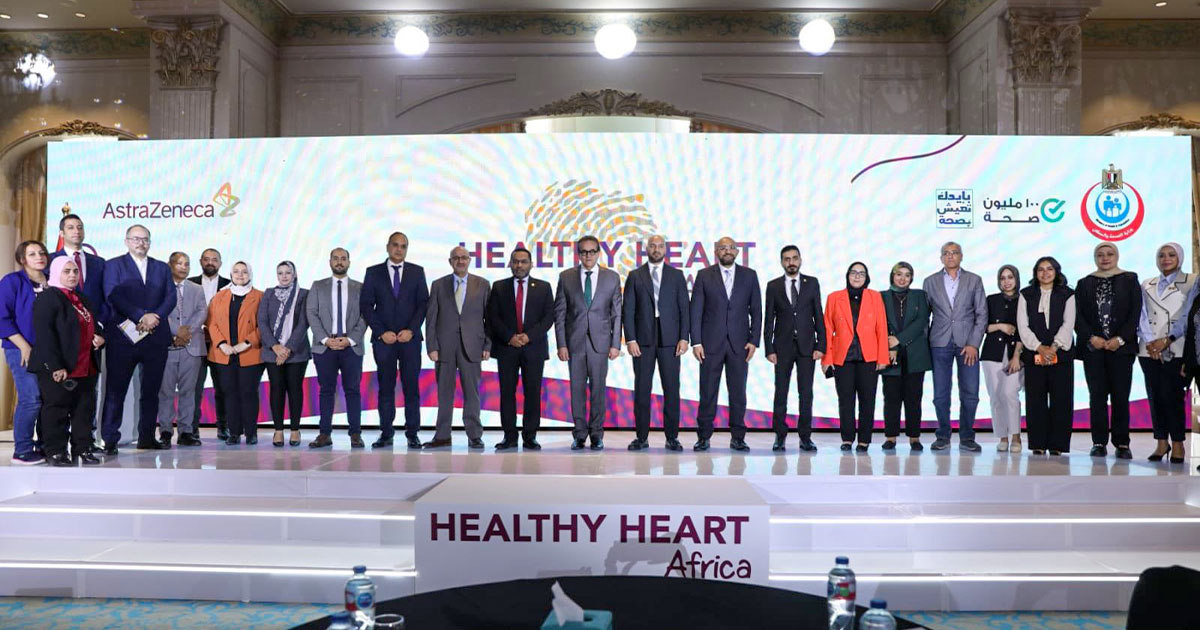
Egypt launches a heart health program in Africa to enhance healthcare and support good health
The Egyptian state is adopting a wide range of health initiatives that support the achievement of theSustainable Development Goals (SDGs)concerned with achieving good health, and these initiatives are no longer limited to Egypt only. In recent years, it has witnessed a remarkable expansion towards the regional environment, especially in the African continent, within the framework of a more comprehensive vision based on exchanging experiences and enhancing joint cooperation.
The Egyptian experience in multiple fields, most notably the health sector, has turned into a transferable and applicable model, reflecting a growing awareness of the importance of the regional role in supporting development paths and achieving stability.
By expanding the scope of these initiatives beyond borders, Egypt strengthens its position as an active partner in the continent’s development, and confirms its commitment to building more efficient and sustainable health systems, which will reflect positively on the quality of life and support the path of comprehensive development in African countries.
From this standpoint, the Egyptian Ministry of Health launched the “Healthy Heart Africa” program in a strategic step that enhances integration between early detection and treatment of heart disease, high blood pressure, and chronic kidney disease.
Dr. Khaled Abdel Ghaffar, Minister of Health and Population, confirmed that the program represents a qualitative shift in the integrated health care methodology adopted by the state, and comes in support of the President of the Republic’s initiative to examine and treat chronic diseases, early detection of kidney disease, and support good health and well-being within the African continent.
The Minister stressed that heart disease, diabetes, and high blood pressure are the most dangerous factors for kidney health, stressing that the program aims to besiege these factors from their roots to prevent reaching the late stages of the disease.
Enhancing medical capabilities and early detection
The Minister explained that the program focuses on two main axes: training medical personnel (doctors, nurses, and health workers) in accordance with the latest international protocols within the framework of supporting human capacity building and promoting continuous health education and training, and providing advanced early detection tools, especially through the concept of double screening, which combines creatinine and albumin screening.
They are two substances whose measurement is used to evaluate kidney function and early detect any defect in them. Creatinine is a result of the breakdown of muscles and is eliminated through the kidneys, while albumin is a natural protein in the blood, and its appearance in the urine in abnormal quantities indicates that kidney function is affected.
Presidential Chronic Disease Initiative
Dr. Khaled Abdel Ghaffar also reviewed the success of the Presidential Initiative for Chronic Diseases, where 21 million citizens have been examined since September 2021 through 3,600 basic care units, with an annual target of 3.9 million examinations, doubling during national campaigns such as “100 Health Days” in order to enhance equitable access to health services.
The initiative has contributed to supporting the goals of good health, especially the third goal concerned with achieving good health and well-being. He also pointed out that Egypt won the United Nations Task Force Award for the years 2024 and 2025 in recognition of its leadership in detecting non-communicable diseases, on the sidelines of the 80th session of the United Nations General Assembly.
Awareness campaigns to change unhealthy patterns
The Minister noted that the first phase of the program starts from within hospitals to link early detection with immediate treatment in one place, while launching intensive awareness campaigns to change unhealthy lifestyles.
The launch of the program comes within the framework of the state’s keenness to build a comprehensive and sustainable health care system that guarantees a better quality of life for citizens and enhances Egypt’s leadership position regionally and internationally, in line with the third goal of the comprehensive Sustainable Development Goals (SDGs) concerned with achieving good health and well-being, which reflects the state’s orientation towards consolidating sustainable regional health partnerships.
Therefore, the launch of the “Heart Health in Africa” program reflects the Egyptian state’s orientation towards establishing an integrated health model whose impact is not limited to the interior only, but also extends to strengthening regional cooperation within the African continent, and embodies a more sustainable vision in dealing with non-communicable diseases.
For its part,The Earth Guards Foundation confirms that this path indicates the transition of the Egyptian experience from the stage of local initiatives to the stage of effective regional partnerships, in a way that supports the construction of health systems that are more efficient, fair and capable of responding to future health challenges, in line with the third goal of the Sustainable Development Goals (SDGs) related to good health and well-being, and the seventeenth goal on the Decade of Partnerships to achieve goals.