

ISO Board of Directors meeting chaired by Dr. Khaled Sufi to discuss smart sustainable development plans
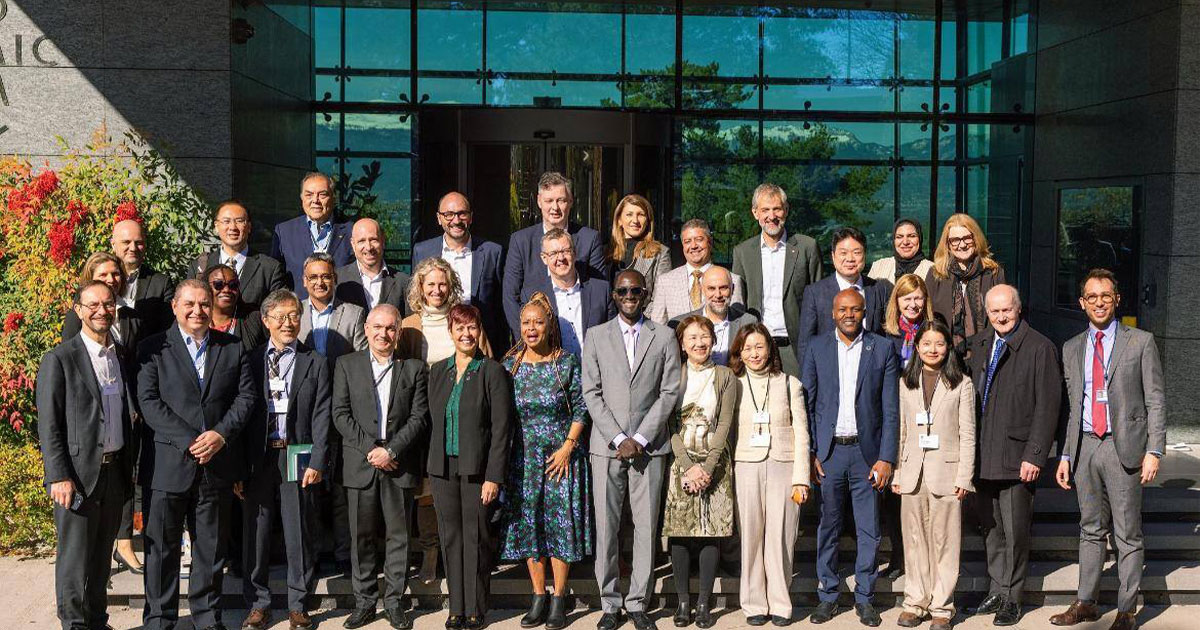

ISO Board of Directors meeting chaired by Dr. Khaled Sofi to discuss smart sustainable development plans
Standard specifications and the quality system represent one of the basic pillars of the success of industrial sectors and attracting investments, as they contribute to unifying standards, raising production efficiency, and enhancing market confidence in products and services. The more the business environment is characterized by technical discipline and adherence to internationally recognized standards, the greater its ability to access global markets, reduce costs, and reduce risks associated with technical and commercial obstacles.
For example, adopting international standards in automobile andelectronics factorieshelped these factories improve product quality and reduce defects, which led to greater confidence from consumers and global markets.
The impact of specifications and quality also extends to constitute a major support for comprehensive and sustainable smart development paths, by encouraging innovation, consolidating rational environmental practices, and stimulating long-term investment.
In this context, the system of standards intersects with a number of sustainable smart development goals, most notably the eighth goal on economic growth and decent work, the ninth goal on industry, innovation and infrastructure, as well as the twelfth goal on responsible production and consumption patterns, and the thirteenth goal on climate action, in a way that promotes the building of a more efficient and sustainable competitive economy, capable of achieving balanced growth that reflects positively on society and the environment together.
Discuss strategic directions and work priorities
Based on the above, the Board of Directors of the International Organization for Standardization held its meetings in the city of Geneva, headed by Dr. Khaled Sofi, Chairman of the Egyptian General Organization for Standardization and Quality and President of the International Organization for Standardization, in order to discuss strategic directions and work priorities during the next phase in light of the accelerating global economic and technological changes.

The Council also discussed performance indicators and international developments affecting the standards system, thus enhancing the role of international standards as a strategic tool supporting sustainable development and an essential source for enhancing the competitiveness of economies, in addition to its technical and regulatory role.
Dr. Khaled Sufi stressed that effective governance and the development of the institutional business model represent a fundamental foundation for maximizing the impact of international standards and ensuring their response to the needs of member states, thus supporting the sustainability of the organization’s work in the long term.

Digital transformation of specifications and quality
Sofi explained that the meetings focused on accelerating the digital transformation program for specifications and quality activities (SMART) by developing digital specifications models that can be integrated into industrial systems, and supporting artificial intelligence applications in technical compliance processes, which contributes to transforming international standards into integrated operational tools within modern production environments.
The Council also reviewed ways to integrate environmental and climate considerations into preparing specifications, in line with the requirements of markets with advanced environmental requirements, and contributes to reducing the risks associated with technical barriers to international trade.
The President of the International Organization for Standardization added that the Council followed up on the implementation of the plan to support developing countries (2026-2030), which is based on building technical capabilities, supporting effective participation in technical committees, and enhancing integration in the international standards system.
World Economic Forum “WEF”
In addition to holding a meeting at the World Economic Forum (WEF), to review the forum’s activities, the most important of which are the Center for Advanced Manufacturing and Supply Chains (CAMSC), and the “Global Lighthouse Network” initiative, which includes world-leading industrial sites in applying the concepts of advanced industrial transformation, based on innovation, flexible supply chains, sustainable production systems, and developing the skills of the industrial workforce.
These initiatives have helped factories improve the flexibility of supply chains and apply innovation in production lines while maintaining the sustainability of resources and developing employee competencies, which is consistent with the goals of smart sustainable development.

Egypt chairs the International Organization for Standardization (ISO)
It is worth noting that Egypt has assumed the presidency of the International Organization for Standardization (ISO) after an honorable and well-deserved victory represented by Dr. Khaled Sofi, head of the Egyptian General Organization for Standardization and Quality, thus becoming the first Arab and the second African to hold this position since the organization’s founding in 1947. This great victory came after Egypt gained the support of 63 countries compared to 49 countries for its competitor from Argentina.
Dr. Khaled Sofi, Chairman of the Egyptian General Authority for Standardization and Quality, confirmed that this achievement comes within the framework of the directives of His Excellency Abdel Fattah El-Sisi, President of the Republic, regarding improving the quality of life of the Egyptian citizen, raising the level of services provided to him, and achieving smart, sustainable development.
In conclusion, the meeting of the Board of Directors of the International Organization for Standardization under the chairmanship of Dr. Khaled Sufi highlights how specifications and quality have become strategic tools that extend to enhancing the competitiveness of industries and linking them to the goals of smart sustainable development. From the digital transformation of specifications and applications of artificial intelligence, to the integration of environmental and climate considerations and support for developing countries, it is clear that international standards have become integrated operational tools that make a tangible difference in production, innovation, and sustainability.
In this context,The Earth Guards Foundation confirms that Egypt’s presidency of the organization highlights the state’s ability to play a global leadership role, as it represents a real opportunity to direct the paths of developing specifications in a way that serves national industries and developing countries and enhances the path of comprehensive smart development. It also values the digital transformation in quality standards, and stresses that commitment to standards and advanced knowledge is the way to achieve sustainable economic growth. An effective innovation that protects the environment and society at the same time.


