

Japan joins Horizon Europe to enhance cooperation and support research and innovation

Japan joins Horizon Europe to enhance cooperation and support research and innovation
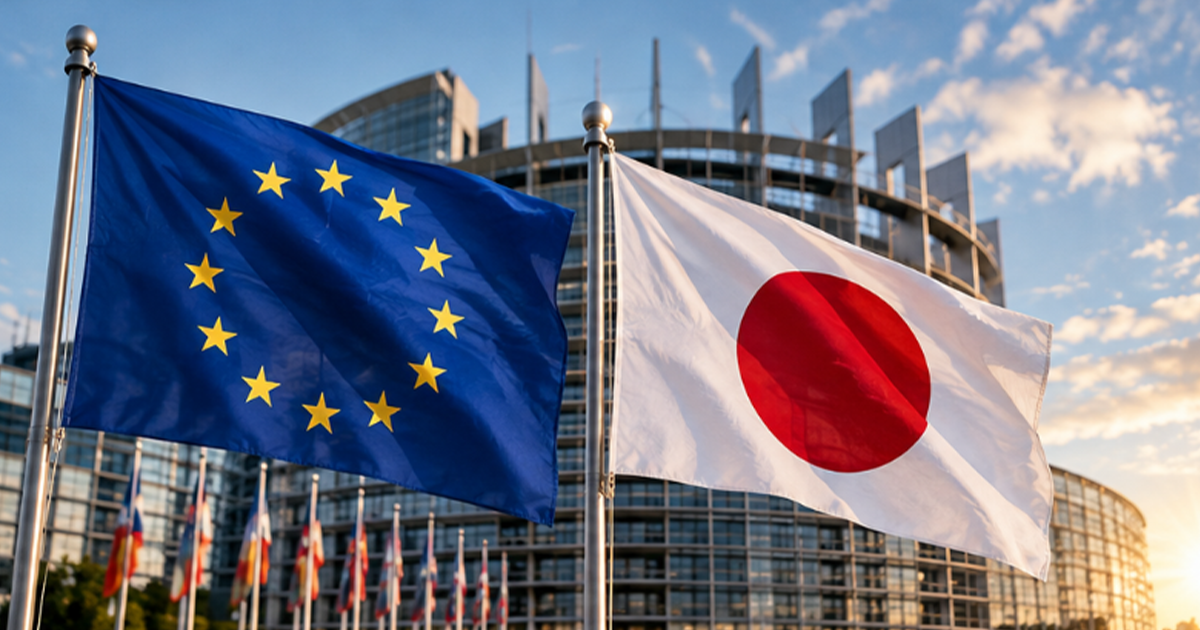
Japan’s official accession to the Horizon Europe program represents a new step in the path of scientific cooperation between Tokyo and the European Union, as it opens up broader opportunities for Japanese researchers and institutions to participate in international projects, lead research alliances, and benefit from funding sources that support the development of joint solutions to global challenges.
The importance of the step goes beyond expanding the program’s membership, as it adds to the Horizon Europe network an advanced research and innovation system that includes universities, research centers and institutions capable of contributing in the fields of health, digital transformation, and technologies that support climate neutrality.
The agreement places scientific cooperation at the heart of the path of sustainable development, at a time when climate, energy and health issues require cross-border partnerships that bring together funding, expertise and knowledge, and transform research results into applicable solutions within societies.
What does it mean for Japan to join Horizon Europe?
The agreement allows Japanese researchers, universities, research centers and companies to participate in Horizon Europe on similar terms to institutions in EU countries and other countries linked to the programme.
Under this participation, Japanese entities can join and lead international research alliances, apply for European funding, and work alongside scientific institutions from different countries to develop projects that address common societal, economic, and environmental challenges.
Japan’s association with the program means that it will obtain the status of a country linked to the research and innovation program, rather than its accession to the European Union, which reduces administrative and financing barriers for researchers and institutions wishing to cooperate with European partners.
The step comes after the end of negotiations between the European Commission and the Japanese government in December 2025, while transitional arrangements that began in January 2026 allowed Japanese entities to apply for funding calls for the second pillar of the program, and to be evaluated as potential eligible entities for support.
Financing worth 52.4 billion euros
The agreement mainly covers the second pillar of Horizon Europe, which has a budget of €52.4 billion and supports multinational research and innovation projects targeting a number of the most prominent societal challenges.
The areas funded by the second pillar include climate, energy, health, the digital economy and industry, in addition to developing technologies that can help countries improve the efficiency of services, reduce emissions, and build economies more able to adapt to global transformations.

Japan will also contribute financially to the program’s budget to cover the participation of Japanese entities, which makes the agreement a partnership based on sharing funding, opportunities and responsibilities, and not simply providing European grants to Japanese researchers.
This step is consistent with the ninth goal of the Sustainable Development Goals, concerned with industry, innovation and infrastructure, as it contributes to expanding opportunities for financing scientific research, and supporting the transformation of ideas into technologies and applications usable in the economic and service sectors.
Opportunities beyond The second pillar
Japanese participants will continue to access other parts of Horizon Europe that are open to non-EU countries, including the Excellent Science Pillar, the Innovative Europe Pillar, and the Marie Sklodowska-Curie Actions.
These measures support the education of doctoral students, the training of post-doctoral researchers, and mobility and cooperation between international scientific institutions, which helps build a generation of researchers capable of working within networks that transcend national borders.
This aspect is of particular importance; Because building human capabilities represents the basis for continued innovation. Funding equipment and laboratories alone does not guarantee long-term results without investing in training researchers, exchanging experiences, and providing opportunities for young talent.
Climate, health and digital transformation in Sadara Cooperation
The European Union and Japan are expected to expand their cooperation to address common challenges, especially in the areas of digital transformation, health and technologies that support achieving climate neutrality.
In the health sector, research cooperation may contribute to promoting the development of tools and technologies that help communities confront health risks, which is linked to the third goal of the Sustainable Development Goals of good health and well-being.

As for cooperation in climate neutrality technologies, it intersects with the seventh goal on clean energy, and the thirteenth goal on climate action, by supporting innovations that can help reduce emissions and improve the efficiency of resource use.
Digital transformation adds another dimension to the partnership, as digital technologies can To raise the efficiency of scientific research, public services, and industrial sectors, provided that it is directed in a responsible manner that ensures that societies benefit from its results.
Horizon Europe expands international partnerships
Japan has become the 23rd country associated with the programme, joining a network of non-EU countries including Canada, South Korea and the United Kingdom, while Australia is working to complete accession procedures.
The expansion of the Horizon Europe network confirms that scientific research has become an essential part of international partnerships, especially with the increasing challenges that are difficult for one country to deal with alone.
This path is consistent with the seventeenth goal of the Sustainable Development Goals, which focuses on establishing partnerships and exchanging knowledge and resources. And building the necessary capabilities to achieve goals. Cooperation between Japan and the European Union brings together funding, expertise, institutions and researchers within joint projects that can produce solutions applicable in more than one country.
From research to tangible impact
Japan’s success in joining Horizon Europe will be measured by the ability of joint projects to transform scientific knowledge into tangible impact, whether in the form of new health technologies, more efficient digital solutions, or innovations that help reduce emissions and support the transition towards low-carbon economies.
In this regard, Earth Defenders Foundation highlights that expanding international scientific cooperation represents an important path to accelerating sustainable development, especially when funding is linked to the needs of societies and research results are transformed into Practical solutions. It also highlights the importance of making knowledge available, building the capabilities of researchers, and directing innovation towards areas that promote health, protect the climate, and support equitable development opportunities.


